It’s all happening in Melbourne. Victoria's work-from-home bill has lapsed, a state election is 10 days away, and nearly 1000 HR professionals are heading to Melbourne to work out what comes next
Victoria's proposed legal right to work from home lapsed a fortnight ago. Intentional wage underpayment has been a crime for almost two years. And the state's psychosocial safety regulations turn one in a fortnight.
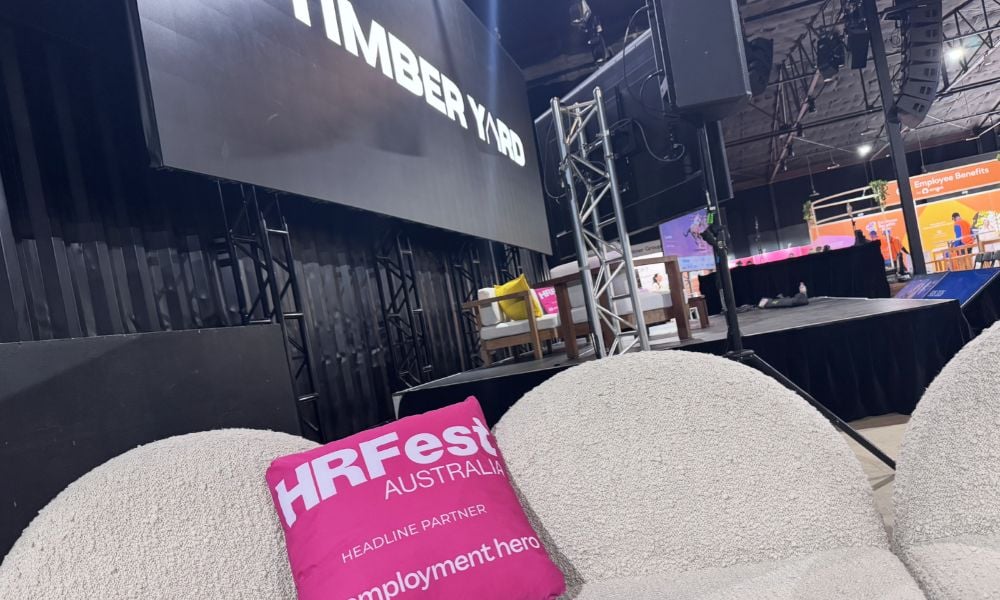
That is the backdrop as HR professionals head to The Timber Yard in Melbourne tomorrow, Wednesday 18 November, for HRFest Australia 2026. Organisers expect more than 850 senior HR professionals, executives and innovation leaders across four stages, with the program opening at 10am and closing with networking drinks at 4pm.
The official theme is "Rewriting the rules of HR – together". Read the published agenda closely, though, and it is clear plenty of rules have already been rewritten for HR this year, by parliaments, regulators and employees armed with their own AI subscriptions.
But it’s not just four concurrent learning streams – there’s mixology classes, wine tasting, an F1 simulator, professional headshot photos and… well, you get the picture, as well as plenty of important HR developments to discuss.
A WFH law that wasn't (yet)
Take working from home. When the Allan government introduced its bill in June, it would have given eligible Victorian employees a right to work from home up to two days a week where reasonable, enforced through the Equal Opportunity Act rather than the Fair Work system.
The Equal Opportunity Amendment (Work from Home) Bill 2026 cleared the Legislative Assembly unamended on 30 July. On 10 September the upper house voted to send it to a select committee instead, a move that came down to a single vote. The bill lapsed on 3 November when the 60th Parliament expired.
Whoever forms government after Victorians vote on 28 November would have to start the process again. Early voting opens tomorrow, the same day as HRFest. For HR teams that had started preparing for a start date first set for 1 September and later pushed back to 1 July 2027, that leaves a tricky question about what to do with the work.
The agenda offers one place to ask it. At 12.05pm, Tamsin Lawrence, a director at Australian Business Lawyers & Advisors, runs a session on new workplace risks covering Victoria's proposed WFH right, the state's psychological health regulations, how federal Fair Work reforms are playing out, underpayments and AI.
Read next: Fair Work orders Victoria University to grant weekly WFH day
Payroll gets a starring role
Pay compliance is the thread running through the day. Intentionally underpaying staff became a criminal offence on 1 January 2025 under the federal Closing Loopholes reforms, and anonymous tip-offs to the Fair Work Ombudsman hit a record high in 2025-26.
Wage theft legislation is the first pressure named in the 11am keynote panel, "Under Pressure", where REA Group's chief people and sustainability officer Elisa Nerone joins people leaders from Northern Health, Qantas and Dayforce.
Later, at 1.15pm, Wagesafe chief operating officer Rob Dryden takes the topic from audit to trust, using case studies on how employers are managing wage compliance risk.
The most entertaining take may come at 12.10pm. Three HR leaders from Funlab, Scope and EVT will argue whether the generalist HR model has worn too thin for a high-risk compliance era, in a speed debate where each speaker gets two minutes and the audience picks the winner by clapometer.
Psychosocial safety, one year on
Victoria's Occupational Health and Safety (Psychological Health) Regulations commenced on 1 December 2025, requiring employers to identify and control psychosocial hazards much as they would physical ones. Separately, HRD reported in October that mental health claims are now Australia's fastest-growing compensation category.
Two back-to-back panels tackle that from different ends. At 11am, "The Psychosocial Blueprint" asks whether wellbeing strategies are a genuine safety net or a legal shield, with L'Oréal's ANZ chief HR officer Paul Steer among the panellists.
At 11.35am, "The Pressure Test" turns to the claims themselves, bringing insurer TAL's head of mental health, Glenn Baird, together with safety and wellbeing leads from AGL, AECOM and Australian Red Cross Lifeblood.
Read next: Psychological injury reforms shift the burden back onto HR
But you mentioned a horse?
The day's closing keynote takes the subject somewhere no compliance code has gone. At 3.05pm, equine therapist Jessica Cody, director of Inner Rhythm, brings a horse onto the main stage, using its real-time reactions to the energy in the room to show leaders how their presence lands with a team. Yes, an actual horse.
An 11.35am session from Karlie Cremin, CEO of Dynamic Leadership Programs Australia, starts from the premise that while HR drafted policy, employees were already using personal AI accounts to cope with their workloads, and mostly keeping quiet about it. It lands weeks after HRD reported that employee misuse of generative AI now leads AI-related cyber threats.
At 1.45pm the conversation moves to agentic AI, tools that make decisions and run workflows without being asked. Pritho Saxena, Amazon's HR director for China, Australia and South East Asia, joins leaders from Coca-Cola Europacific Partners, Employment Hero and the Australian Financial Security Authority on that panel.
Organisational psychologist Dr Amantha Imber, founder of Inventium and the first Australian to win the Thinkers50 Innovation Award, follows a more personal line at 12.35pm, on using AI to claw back time and energy rather than adding to the pile.
Headline partner Employment Hero has already flagged where it expects the AI debate to land. "Technology doesn't remove responsibility; it increases it," Liam D'Ortenzio, the company's head of performance operations, told HRD in July.
Read next: Are your workers actively sabotaging your AI rollout?
Harmonicas, debates and a few career questions
None of this is delivered from behind a lectern for six hours straight. Host Kylie Speer of Key Media opens proceedings at 10.05am, and five minutes later Rob Arcari of Be Challenged hands out harmonicas with the aim of turning a room of beginners into a passable blues band.
For HR people thinking about their own next move, "HR in the Driver's Seat" at 3.05pm looks at building commercial acumen on the way to the C-suite, while an 11am emerging leaders panel covers how to pitch a business case that actually gets a yes from the budget holder. The day wraps with a prize draw and the Rising Star Awards at 3.50pm, before drinks from 4pm.
Read next: How Australia's 35 rising HR stars are redefining the profession
Organisers are betting people will still be talking about the horse long after they leave The Timber Yard. Whether they are also talking about a WFH law depends on what happens on 28 November.
Can't make it? Follow HRD Australia on LinkedIn for coverage from the day.
HRFest Australia 2026 is presented by HRD Australia. The full agenda and speaker line-up are on the HRFest Australia website, along with registration details.