Neo’s Human Resources Director on building people strategy in a global niche industry where talent is genuinely scarce
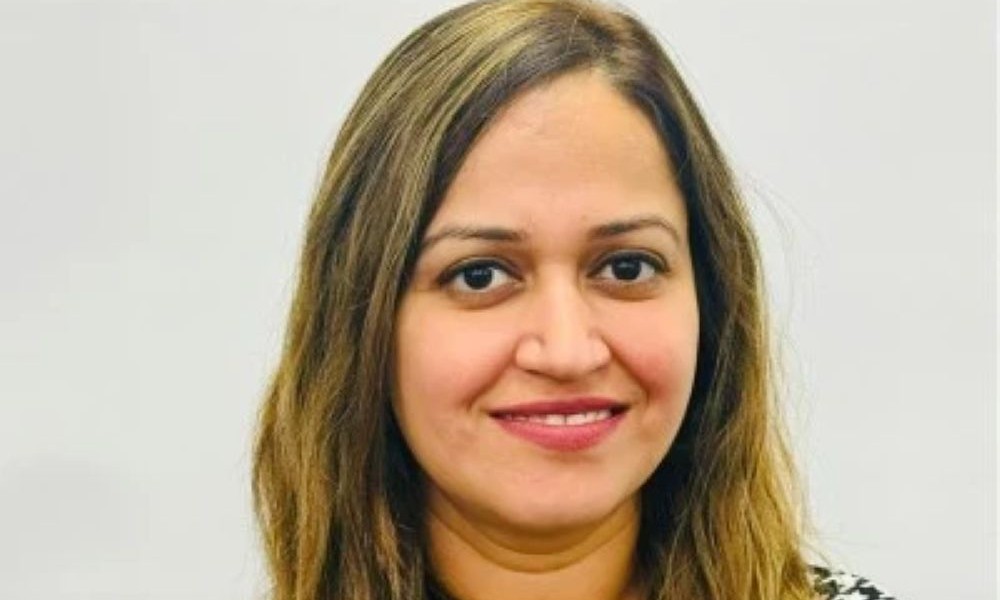
The daily reality for Sania Sanzgiri, HR Director at Toronto-based Neo Performance Materials, is overseeing a people strategy spanning a company that draws raw materials from one part of the world, processes them in a second, and ships finished products to a third. For Sania, the human resources (HR) challenge is not merely global in scale – it’s supply-chain deep.
With a global workforce of more than 1,500 employees, Neo operates at the intersection of some of the most consequential sectors in modern industry – electrification, aerospace, AI infrastructure, and clean energy – producing rare earth magnets, specialized oxides, and advanced materials foundational to electric vehicles, wind turbines, and next-generation technology. Sania leads HR for North America, while driving global initiatives that support teams across Europe and Asia.
The talent pool for this work is, by any measure, small. The science is niche. The supply chain is complex. And the pressure to get people strategy right, in an industry that’s scaling rapidly while remaining structurally opaque to most job seekers, is considerable, says Sania.
Building one HR strategy from many cultures
Neo is a company built through mergers and acquisitions, and that history shaped the HR challenge Sania stepped into. Multiple locations had functioned largely independently, and the work of recent years has been to bring them together under one cohesive people framework, according to Sania.
"Neo has been a product of many mergers and acquisitions, and each one of the locations had their own culture and policies," she says. "Over the past few years we've kind of come together and brought a common HR strategy, and that's what we are working on religiously."
That effort spans global mobility, cross-border hiring, compensation alignment, and time zone management – all while honouring the operational realities of each site, says Sania. The overarching principle is that local policies can differ, but the people strategy governing them must speak with one voice, she says.
This challenge resonates well beyond the rare earth sector. Bridging local and global HR demands at companies with multi-country footprints is one of the defining pressures facing global HR leaders today, and it requires both structural discipline and cultural intelligence to execute.
Managing change through clear HR communication
Neo concluded a comprehensive strategic review in May 2025 – a process initiated in June 2024 to assess opportunities to maximize shareholder value, including potential for an en bloc sale of the company. The board ultimately chose to accelerate Neo's existing strategy, with a focus on rare earth permanent magnets and the buildout of its European magnet facility. For employees, that review period meant months of institutional uncertainty.
Sania – who was an HR manager with Neo during the strategic review before becoming HR Director in April 2026 – is direct about what it demands from HR leadership: communication isn’t a soft capability – it’s the load-bearing structure of any change management effort.
"It involves a lot of internal communication, talent building, skill development in house, and making sure people are thinking the way the company wants to move forward," she says. "Letting go of some of our ways of doing things and getting into new technologies involves a lot of training and a lot of commitment from senior management."
What worked at Neo, according to Sania, was that senior leadership remained visible and accessible throughout the transition. "The leadership team has been very open with all sorts of communication – what's the plan. And if we are making any changes, there's been enough notice or enough communication around that,” she says.
That transparency paid dividends: the company emerged from its review period with clearer strategic direction and renewed organizational confidence, says Sania.
Growing talent from the ground up
In a sector where the right expertise can’t simply be recruited anywhere, Neo has invested in building talent internally. Sania points to university partnerships as a central pillar – a pipeline approach that brings graduates in early and lets industry leaders mentor them into the deep technical knowledge the company needs.
"We have started relying a lot on growing talent in-house, having students and partnering with universities to get the right educational background and then give them the exposure to grow within," she says. "At every global location we've partnered with some universities in either engineering or similar backgrounds where we need our talent."
Succession planning is the next priority – identifying critical roles and mapping transferable skills from adjacent sectors, with a deliberate focus on what the company will need two to three years from now, says Sania. Neo is building learning opportunities to develop the future skill sets the business will need, she adds.
Canada's manufacturing skills gap is a structural challenge measured in years, not quarters as workforce analysts have noted – and it demands precisely the kind of long-horizon investment Sania describes. The learning focus also feeds directly into retention, she says.
"When employees see that learning path in themselves, that’s a big factor that would help in retention,” she says.
AI adoption: slow, deliberate, and intentional
On artificial intelligence (AI), Sania takes a measured position. She says Neo has partnered with an AI consulting firm and begun applying AI tools to its global recruitment pipeline – enabling the company to source candidates across geographies rather than defaulting to local markets. AI is also being piloted to develop internal training content specific to the sector, she says.
But she resists adoption for its own sake. As Canadian organizations assess the gap between AI ambitions and workforce readiness, Sania's deliberate approach offers a model that is, in many ways, more instructive than aggressive early adoption.
"We want to make sure we're going in the right direction – thoughtful and impactful," she says. "We are taking a measured approach focusing on where AI can create the most value and support our long-term growth."
HR as a strategic business enabler
Sania's conception of effective HR leadership in an organization like Neo is grounded and unambiguous. It’s not a support function – it’s a strategic enabler of business performance, she says.
"HR leadership can really be effective when they can enable and support business strategy by ensuring we have the right talent, the right capabilities, and the right culture for great performance," she says.
At Neo, that translates to running a strengths, weaknesses, opportunities, and threats (SWOT) analysis alongside each business unit, identifying each division's distinct growth trajectory and building HR priorities that reflect where each unit is heading, according to Sania. One division may need aggressive recruitment to support expansion; another may need deeper investment in learning and development to consolidate existing capability.
"In one of my business units, recruiting and having the right talent is a key priority because we’re growing," Sania says. "But on the other one, it's more on building and strengthening what we currently have, so it’s about focusing more on learning and development."
It’s a model of HR business partnering that treats people strategy not as a reaction to organizational needs, but as an anticipation of them. In a highly technical manufacturing company navigating geopolitical complexity, supply chain pressures, and a limited talent pool, that distinction makes all the difference.
“Although I'm based in Toronto and work closely with colleagues around the world, every HR process, decision or initiative is viewed through a global lens," says Sania. "We constantly ask ourselves: How will this impact our teams in other regions? That's how we ensure our people strategy delivers global consistency while respecting local needs.”