AI investment is fast becoming a workforce strategy, not just a technology play, and HR leaders are moving to the centre of that shift
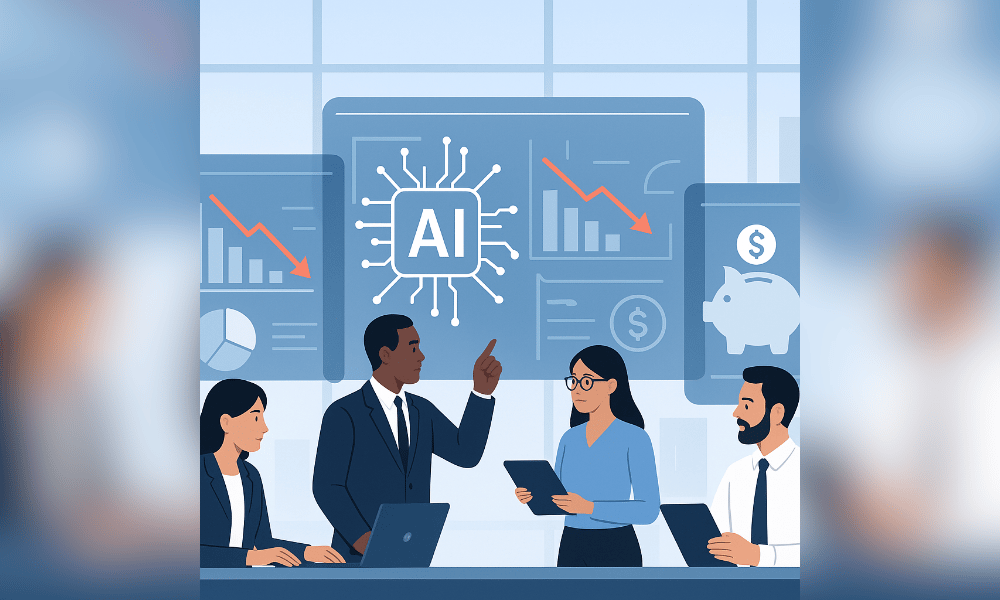
AI investment is rapidly evolving from a narrow focus on efficiency and cost to a broader agenda of workforce resilience and adaptability. For HR leaders, that shift means AI can no longer be treated as a technical initiative owned by IT; it has become a core lever for how work is designed, how skills are developed and how organisations stay competitive.
Alex Cass, human capital client leader at Aon, argues that AI’s real value lies in reshaping work so organisations remain relevant, productive and resilient in a more volatile environment. Rather than centring on headcount reduction, leading employers are using AI to change the nature of roles and tasks.
Routine, repetitive activities are increasingly being handled by intelligent systems, allowing employees to redirect their time towards areas where human strengths make the greatest difference, such as nuanced judgement, creativity, complex problem solving and high-quality customer engagement. In tight labour markets, this reconfiguration of roles helps organisations protect productivity without relying solely on additional hiring.
At the same time, AI-enabled workforce analytics are giving leaders earlier and clearer insight into skills disruption. Employers can see which roles are most exposed to automation, which capabilities are growing in value, and where reskilling or redeployment is feasible. That foresight creates a crucial planning window, allowing organisations to move people thoughtfully, safeguard institutional knowledge and reduce the need for last‑minute restructuring or panic hiring.
Cass notes that this is underpinning a broader shift from static to adaptive workforce models. Instead of fixed job designs and annual headcount debates, organisations are beginning to adopt continuous workforce planning, adjusting roles, skills and capacity as technology evolves. In an environment characterised by rapid change, that adaptability has become a critical form of future‑proofing.
From this perspective, the organisations realising the greatest returns from AI are those where HR sits at the centre of decision-making. HR teams that start with work and people impact, rather than specific tools, are better placed to understand how AI will alter tasks within roles, not just which jobs might shrink or disappear. When HR leads job redesign in partnership with technology teams, AI is more likely to enhance roles, improve day‑to‑day experience and support performance, rather than generate anxiety or resistance.
A central part of this is reskilling. Employees are more willing to engage with AI when they can see how it links to future roles and career paths. HR functions that weave AI literacy and digital skills into everyday learning, rather than handling them as one‑off initiatives, help employees grow alongside technology instead of feeling threatened by it.
Reward and talent strategy is another pressure point. As AI‑related skills attract a premium in the market, organisations are being forced to revisit job value, pay structures and internal equity. Without strong HR leadership, there is a real risk that AI investments inadvertently widen pay gaps or concentrate opportunity in a narrow group of specialist roles, creating both fairness and succession issues.
Cass also emphasises the cultural and governance dimension. Trust, transparency and fairness strongly influence whether employees support or resist AI adoption. Clear principles about how AI is used, open communication about decision processes, and visible human oversight in critical areas all depend heavily on HR expertise and leadership.
The risks of getting this wrong, she warns, are significant. The main danger is not a lack of AI investment, but investment made without a people lens. Organisations that rush in with fragmented or reactive approaches often lose control over sequencing and impact, leading to hurried role changes, confused employees and uneven outcomes between teams. Talent risk escalates as critical skills become scarce and expensive while existing employees disengage or exit due to uncertainty and lack of development pathways. In competitive labour markets, that loss of capability can take years to rebuild.
On the business side, poorly planned AI programmes frequently fall short of expectations. Treating AI purely as a cost‑cutting lever overlooks its potential to support sustainable productivity, quality and workforce health, which can result in underwhelming returns and weak capital allocation. Inadequate oversight, meanwhile, increases exposure to bias, data misuse, regulatory intervention and reputational damage as AI becomes woven into everyday decisions.
For HR leaders, the overarching message is that AI can no longer be separated from workforce strategy. It is fundamentally about how work is organised, how people are developed and how the organisation adapts over time. Those that treat AI as a strategic people investment – with HR at the helm of design, skills, reward and governance – will be better placed to navigate disruption, retain critical talent and build performance that lasts.