New strategies, billions in funding and a national workforce alliance aim to fast‑track mines, secure supply chains and protect Canadian jobs
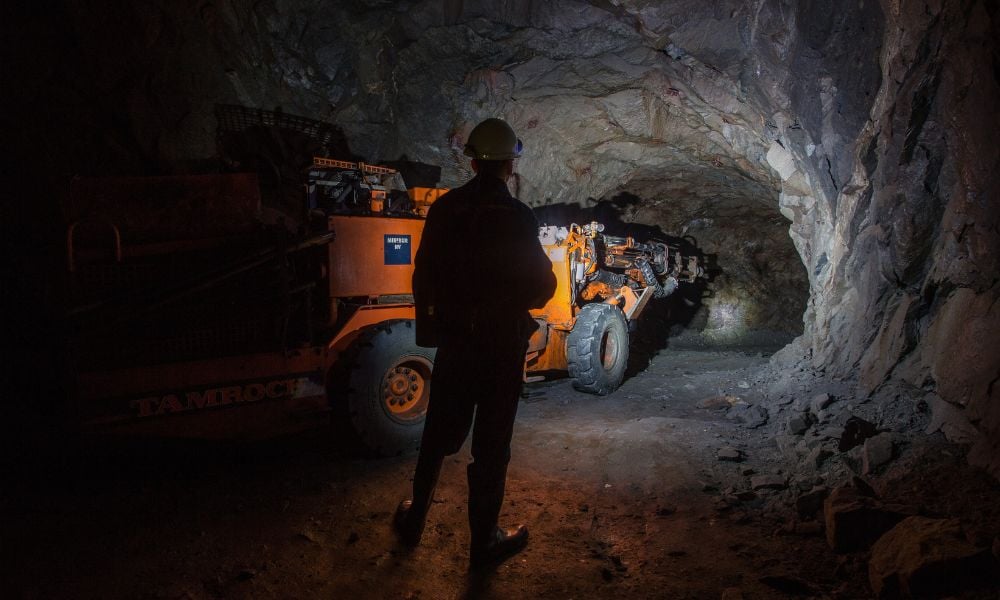
Ontario and the federal government are moving in tandem to secure Canada’s critical minerals future, using this week’s Prospectors & Developers Association of Canada (PDAC) convention in Toronto to spotlight new policy moves.
Ontario is overhauling its Critical Minerals Strategy to speed up project development and expand its minerals list, while Ottawa is launching a national Mining and Minerals Workforce Alliance to tackle labour shortages that threaten major projects.
For HR leaders, these moves signal sustained demand for skilled talent in mining, manufacturing and clean-tech supply chains, plus new funding and partnerships around training, reskilling and Indigenous participation. Expect tighter competition for specialized workers, pressure to modernize workforce planning, and growing opportunities to shape skills programs aligned with both provincial and federal industrial strategies.
Ontario sharpens its Critical Minerals Strategy
Ontario’s government released Fortifying Ontario’s Economy: A Plan to Accelerate Responsible Resource Development, a vision paper to modernize its five‑year Critical Minerals Strategy and invite consultation. The move is framed as a response to “escalating geopolitical tensions, supply chain disruptions, U.S. tariffs and rising trade protectionism” and a bid to bolster Canadian self‑reliance, jobs and supply chains.
“In the fight for Canadian jobs, we transformed one of the slowest mining permitting systems to one of the fastest, emerging in the top two globally for attracting mining investment,” said Stephen Lecce, Minister of Energy and Mines, adding that by adding high‑purity iron and aluminum to the Critical Minerals List, “Ontario’s new strategy will accelerate momentum, unlock opportunity, and attract the job-creating investments that will power growth across the province.”
The revised strategy expands Ontario’s list to 35 critical minerals, with high‑purity iron described as “essential for the transition to ‘green steel’ manufacturing using electric arc furnace technology in Ontario’s steel mills,” and aluminum called “a cornerstone material for the province’s world-class automotive, aerospace, and defence sectors.”
The updated strategy will strengthen Ontario’s reputation as a leader in responsibly sourced minerals that power modern economies,” said George Pirie, Minister of Economic Development and Growth. “By modernizing the strategy, our government will attract new investment, create thousands of good-paying jobs, strengthen communities, and position the North as a global leader in developing the resources the world needs,” he said.
Industry groups cast the update as both an economic and security play. “The Ontario Mining Association welcomes the government’s commitment to updating the Ontario Critical Minerals Strategy to reflect today’s geopolitical realities,” said Priya Tandon, President of the Ontario Mining Association, calling for “sustained and meaningful engagement with industry, Indigenous partners, and stakeholders” and “a whole-of-government approach to advance the mining sector” to “strengthen Ontario’s prosperity, security, and innovation leadership for the benefit of all Ontarians.”
From the battery materials side, “Ontario is sending a clear signal that the Province is serious about building a resilient, end-to-end battery materials ecosystem,” said Mirco Wojnarowicz, CEO of Rock Tech Lithium. “By advancing responsible development and establishing lithium processing capacity in Ontario, we are supporting a sustainable and resilient critical minerals supply chain that is better positioned to navigate global uncertainty while advancing long-term economic growth,” he said.
Ottawa targets labour gaps with national alliance
At the federal level, Ottawa focused on the workforce needed to deliver critical mineral projects. On March 2, 2026, the Honourable Patty Hajdu, Minister of Jobs and Families and Minister responsible for the Federal Economic Development Agency for Northern Ontario, announced that she had convened “key industry leaders, workers, and partners” at PDAC to advance the Mining and Minerals Workforce Alliance.
“Canada’s workforce is strongest when employers and training partners work together,” said Hajdu. “As external pressures continue to affect key sectors, these investments will help empower Canadian workers with the skills they need to adapt. In the mining sector, this means addressing workforce shortages, supporting workers affected by economic shifts and strengthening Canada’s economic security,” she said.
The alliance is designed to “strengthen the workforce and ensure the overall success of Canada’s critical minerals strategy and major projects,” by addressing workforce shortages tied to “exploration, extraction, processing and the development of critical mineral supply chains” and supporting “Canada’s national security and economic growth, while strengthening our country’s role in clean energy, advanced manufacturing and resilient supply chains.”
“Canada’s mining sector has been built for generations by highly skilled Canadian workers,” said the Honourable Tim Hodgson, Minister of Energy and Natural Resources. “From exploration to processing, the success of our government’s critical minerals agenda depends on the people and the communities who make up our industry. We are working directly with workers to ensure Canadian mining continues to be a lynchpin of our economy, security, and climate ambitions,” he said.
Stakeholders see the alliance as key to competitiveness. “Canada is facing an unprecedented opportunity as new mines move from concept to construction across the country,” said Ryan Montpellier, Executive Director of the Mining Industry Human Resources Council. “Meeting current labour market challenges is imperative to developing a safe and highly skilled mining workforce that benefits all Canadians,” he said.
For Pierre Gratton, President and CEO of the Mining Association of Canada, “The creation of a Mining and Minerals Workforce Alliance reinforces the federal government’s commitment to enhancing the competitiveness of Canadian mining and accelerating mineral investment and job creation.” He said the alliance will “help industry and employers attract, train and support the next generation of skilled workers, building on Canada’s strength as a highly educated, skilled, qualified and productive mining jurisdiction.”
New federal investments to unlock Canada’s critical minerals advantage
Ottawa is reinforcing its critical minerals push with major new spending. At PDAC, Energy and Natural Resources Minister Tim Hodgson announced “over $3.6 billion in new programs and investments to unlock Canada’s critical minerals advantage and deliver Canadian minerals from mine to market,” including “up to $165.2 million for 22 Canadian projects that will accelerate planning, development and processing capacity across the country.”
A key pillar is the $1.5‑billion First and Last Mile Fund (FLMF), designed to “get infrastructure built to support new mines and economic growth in mining regions,” from roads and transmission to midstream processing and new routes to market, with dedicated funding to “enable Indigenous leadership, engagement and participation throughout the mining value chain.”
Ottawa is also preparing a $2‑billion Critical Minerals Sovereign Fund to “make strategic federal investments — including equity investments, loan guarantees and supply agreements — in critical mineral value chains,” and has launched a Mine Permit Navigator, an online tool that gives proponents “a roadmap to federal permits and approvals” as Canada moves toward a “One Project, One Review” system.
“Canada has the minerals the world wants, and we are acting with speed, scale and purpose to get them from deposit to market,” Hodgson said. “We are not just extracting rocks — we are purposefully building and onshoring full, domestic value chains that create good jobs, strengthen our economic and national security, and support rural, remote and northern communities.”