Order from AirAsia means 'exciting work' for engineers, electricians, steel welders and IT specialists, says PM
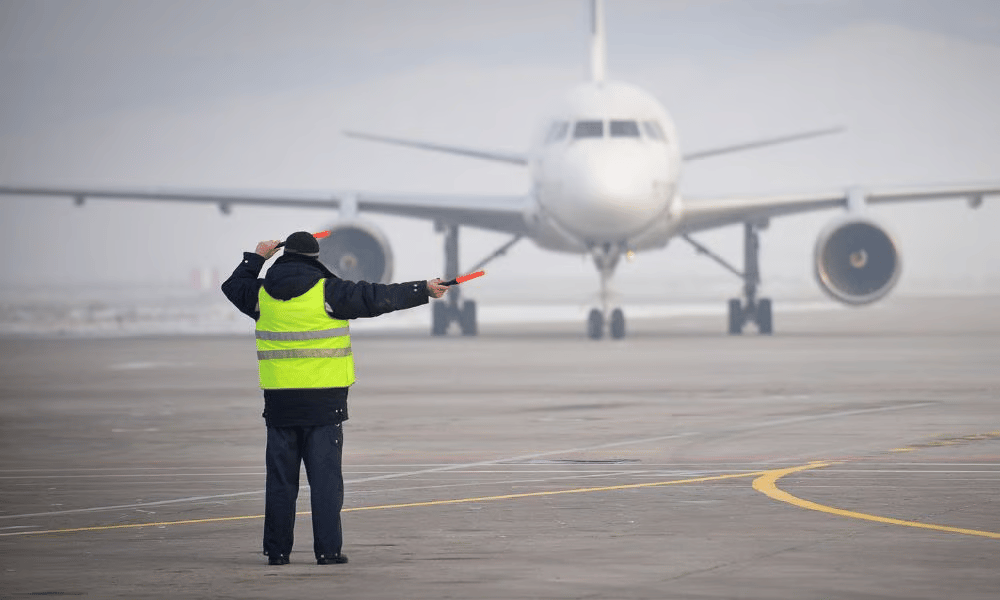
Prime Minister Mark Carney has welcomed the largest order for a Canadian‑designed and produced commercial aircraft in history, after Airbus Canada secured a deal to supply 150 A220‑300 jets to Malaysian low‑cost carrier AirAsia.
The agreement will bring employment to “thousands” of workers, according to Carney.
The aircraft will be assembled at Airbus Canada’s facility in Mirabel, north of Montréal. All 150 planes will be built at the Quebec site rather than at Airbus’s facility in Mobile, Ala., Airbus Canada CEO Guillaume Chevasson said.
Carney said that the contract will mean “high‑paying and exciting work” for “thousands of engineers, electricians, steel welders, and IT specialists” across the aerospace supply chain.
The Prime Minister – speaking at the Mirabel facility alongside Quebec Premier Christine Fréchette – linked the deal to his government’s broader economic and trade strategy. The Prime Minister’s Office said Canada’s new government is pursuing an “ambitious plan to catalyse $1 trillion in total investment in Canada over the next five years,” including nearly $100 billion in foreign investment commitments over the past year.
The Prime Minister also framed the agreement as an example of trade diversification beyond the United States, highlighting deepening ties with Southeast Asia. He recalled meeting AirAsia CEO Tony Fernandes in Kuala Lumpur in 2025, where they discussed “deepening ties between those countries that, in this crisis that we’re still living through, are choosing to build in the face of adversity.”
Production ramp‑up and workforce impact
The Mirabel site is Airbus’s most comprehensive commercial aircraft manufacturing facility outside Europe, bringing together administrative leadership, engineering, research and production in a single operation. Airbus and its subsidiaries employ more than 5,300 people in Canada, with over 4,600 workers assigned to the A220 programme in Mirabel, according to the Prime Minister’s Office.
Chevasson told reporters the programme remains “a few miles away” from profitability and confirmed Airbus aims to increase output to 13 A220s per month by early 2028. The first A220‑300 for AirAsia is expected to roll off the line in the first quarter of 2028, Fernandes said, adding that he intends to operate the world’s largest A220 fleet.
The Mirabel facility now employs nearly 5,000 workers, about 2,500 of whom have been hired in the past four years. Airbus supports more than 27,000 careers across the Canadian aerospace supply chain and works with more than 850 Canadian suppliers, with over $2 billion in contracts to Canadian companies, federal officials said.
The A220‑300, originally developed as Bombardier’s C Series, is described by the Prime Minister’s Office as a “clean‑sheet” design “developed and designed by Canadian workers from scratch.” It offers lower fuel consumption, reduced emissions and a smaller noise footprint, supported by advanced propulsion systems, lightweight materials and aerodynamic design.
Earlier this year, U.S. President Donald Trump’s move to “decertify” Canadian‑made aircraft and threaten steep tariffs on planes sold into the United States cast a shadow over an industry that supports hundreds of thousands of jobs and a network of employers on both sides of the border. In a post on his Truth Social platform, Trump alleged that “Canada has wrongfully, illegally, and steadfastly refused to certify the Gulfstream 500, 600, 700, and 800 Jets.”
Late in 2025, one Bombardier official praised the federal government’s proposal to cut the luxury tax under Budget 2025, saying that will lead to more jobs in the country. The proposal to eliminate the tax on high-priced aircraft would create up to 600 jobs at Bombardier’s Canadian facilities, CEO Éric Martel, according to a report..
Risks, public investment and sector outlook
Airbus has faced production challenges at Mirabel, having struggled in recent years to produce more than seven A220s per month on average, roughly half the rate needed to break even, noted The Canadian Press (CP). The company has cited supplier issues, including shortages of wings and Pratt & Whitney engines.
John Gradek, who teaches aviation management at McGill University, said “the jury’s still out as to whether the Canadian product that Carney’s so gushing about is able to be produced at a rate that is profitable for the manufacturers,” according to the CP report. Chevasson acknowledged the profitability gap but said the targeted production increase is achievable.
Quebec – which owns 25% of Airbus Canada – has already written off its initial US$1‑billion investment in the C Series as valueless and, in October, cut by half the estimated value of a later cash injection to US$300 million. Western University professor Geraint Harvey called the AirAsia order “great news” for governments and workers, describing 150 aircraft as “a massive order” given geopolitical tensions and volatile fuel prices.
“In addition to showcasing us on the international stage, the aerospace industry has the power to bring new money into our economy while providing a livelihood for tens of thousands of workers,” said Éric Rancourt of the International Association of Machinists and Aerospace Workers in Quebec, according to CP.
The Prime Minister’s Office said Canada’s aerospace industry contributed $34.2 billion to GDP and supported 225,000 jobs in 2024, describing the economy as “built on the solid foundation of thriving Canadian workers and strong Canadian industries.”