But few HR teams say current AI solutions meet their expectations, according to survey

Canadian employers are heading into the second quarter of 2026 with solid hiring plans but mounting doubts about the effectiveness of today’s AI tools.
According to the Q2 2026 ManpowerGroup Employment Outlook Survey, employers across Canada reported a seasonally adjusted Net Employment Outlook (NEO) of 24%. ManpowerGroup defines the NEO as “the difference between the percentage of employers planning to increase staff and those planning to reduce staff.”
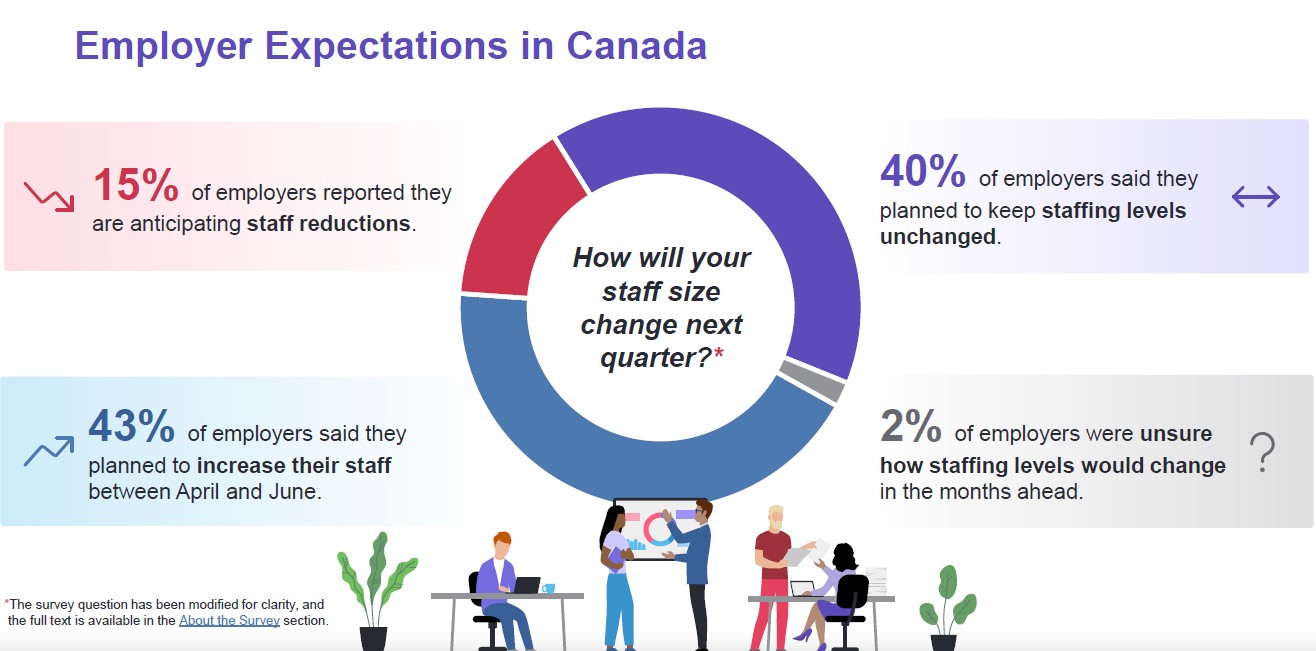
For April to June, 43% of employers plan to increase headcount, 15% expect staff reductions, 40% anticipate no change and 2% are unsure, based on the survey of 41,764 public and private employers across 42 countries, conducted from January to February 2026.
ManpowerGroup notes that the Q2 2026 NEO improved (+3 points) since the previous quarter but decreased (-5 points) year‑over‑year.
“Anticipated hiring increases are driven by company expansion,” while “expected decreases are driven by economic challenges,” according to the report.
Canadian businesses are reporting improved optimism for 2026 even as they continue to face cost and labour challenges, according to a previous report from Statistics Canada (StatCan).
Sectors, regions
The ManpowerGroup survey shows significant differences across industries. Employers across the Finance and Insurance sector reported both the highest and most improved NEO when compared to the previous quarter, posting a 47% outlook and a 29‑point jump:
-
Finance and Insurance - 47%
-
Manufacturing follows - 41%
-
Trade & Logistics and Professional, Scientific & Technical Services - both 31%
-
Construction & Real Estate - 26%
-
Information - 24%
-
Utilities & Natural Resources -19%
-
Hospitality - 12%.
Company size also shapes hiring plans. Organisations with 250–999 employees report the strongest NEO at 35%, while firms with fewer than 10 staff show the biggest year‑over‑year improvement, rising to 21%. The largest employers (5,000+ employees) report only an 11% outlook, down 9 points.
All Canadian regions report positive hiring expectations, but momentum varies. The North leads with a 52% NEO, followed by the Prairie region (37%), Quebec (30%), Atlantic Canada (29%), Ontario (26%) and British Columbia (24%).
Year‑over‑year, The North is up 13 points, Atlantic and Prairie each rise 7 points, and Quebec climbs 5, while B.C. drops 13 points and Ontario falls 8.
AI reality check
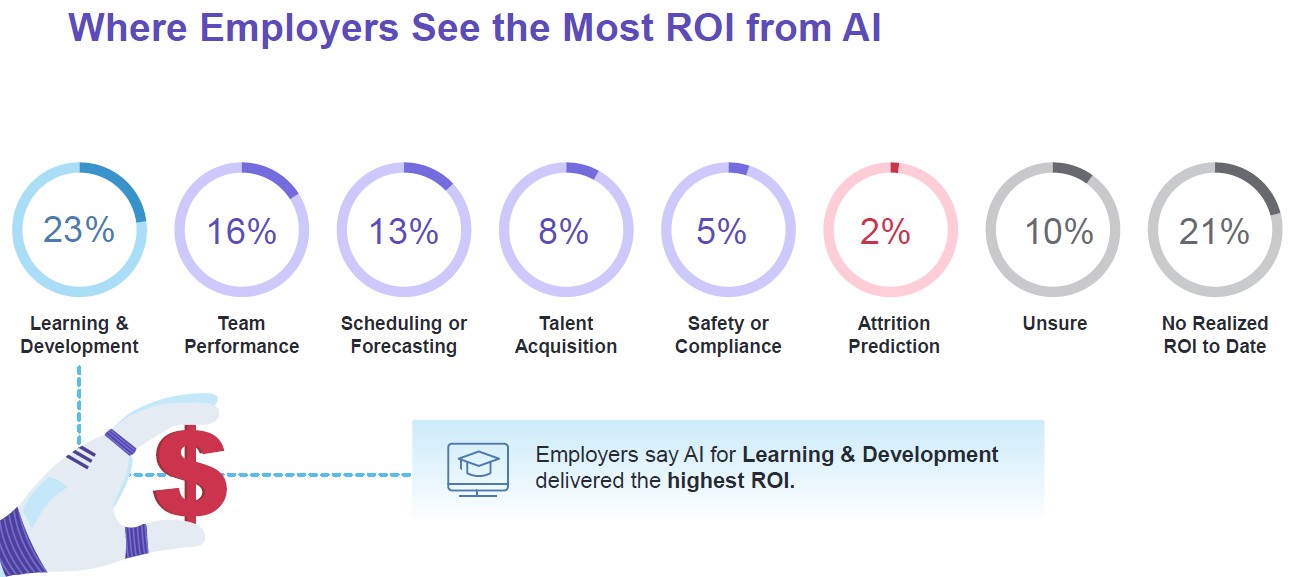
The most urgent ManpowerGroup findings for HR relate to AI. When asked where AI is delivering the greatest return, employers point first to people development.
Employers say AI for Learning & Development delivered the highest ROI, cited by 23% of respondents, ahead of team performance and scheduling or forecasting.
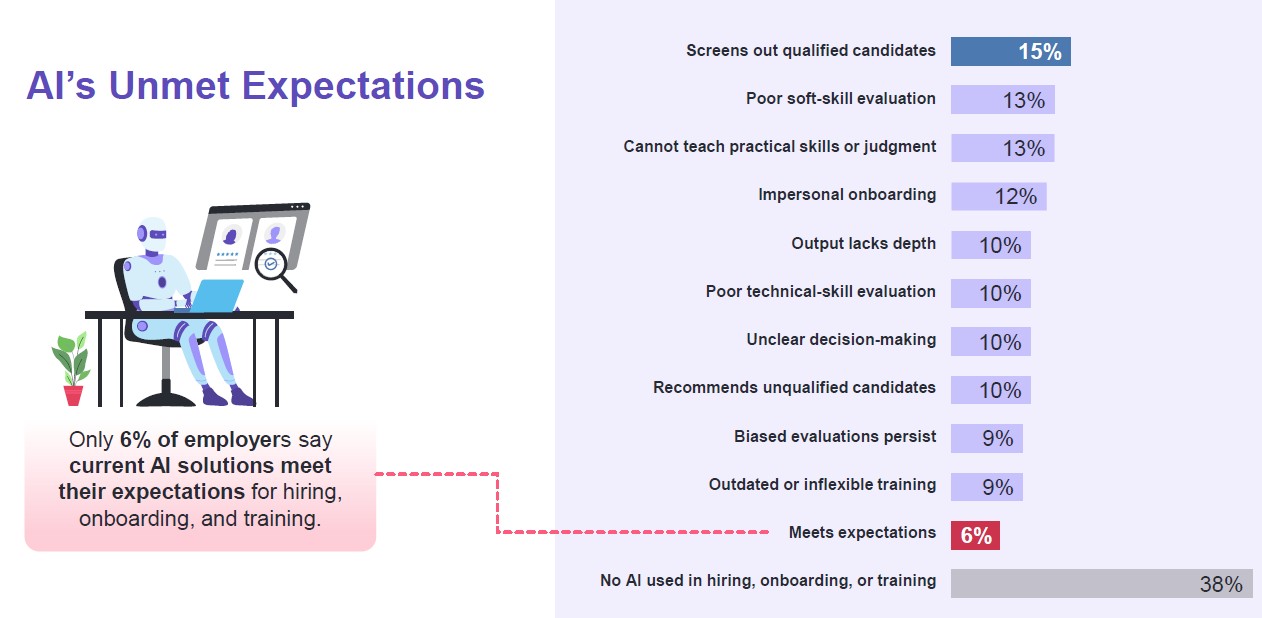
Yet, satisfaction with AI in core HR processes is strikingly low. The survey finds that only 6% of employers say current AI solutions meet their expectations for hiring, onboarding and training.
Common criticisms include screening out qualified candidates, weak soft‑ and technical‑skill evaluation, impersonal onboarding and “outdated or inflexible training.”
On the employee side, 92% of organisations report workforce challenges using AI, driven primarily by privacy and regulatory concerns. Barriers such as unclear AI‑use guidelines, skill gaps and insufficient training show that governance and change management are lagging behind tool deployment.
Looking ahead 12 months, employers expect AI to augment not only technical skills but deeply human ones: ideas and creativity, training, problem solving, customer service and project management all sit above 60%.
AI is slowing down hiring for many Canadian employers and increasing workloads for already stretched HR teams, according to research from talent solutions and business consulting firm Robert Half. Meanwhile, AI skills now top the list of hardest-to-find capabilities for employers worldwide as talent shortages remain historically high, according to another ManpowerGroup study.