Which university made the list?
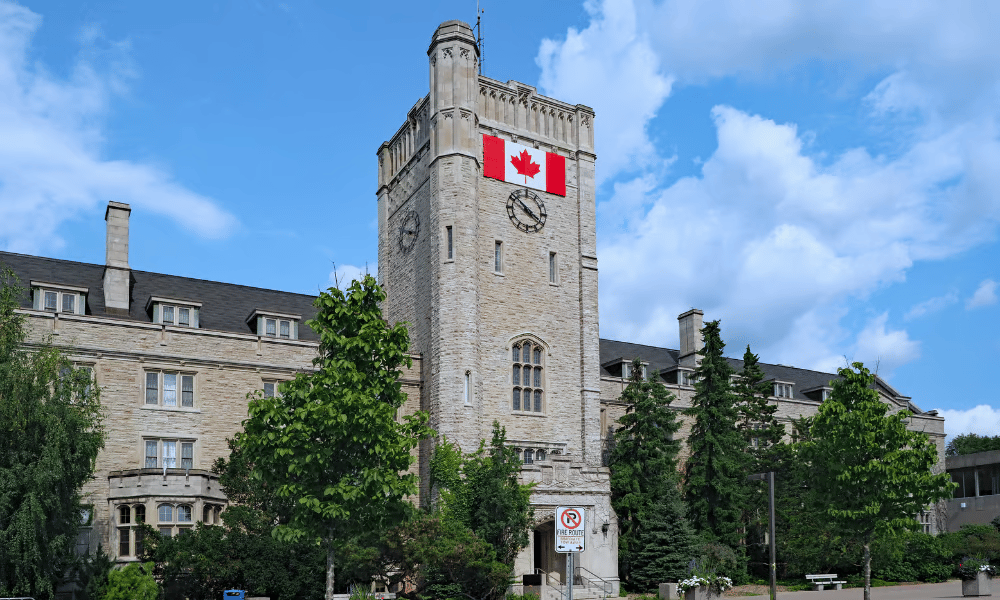
Just one Canadian university has made it to the top 20 learning institutions in the world in 2026, following reports that the country continues to struggle with a productivity crisis and a huge demand for university graduates.
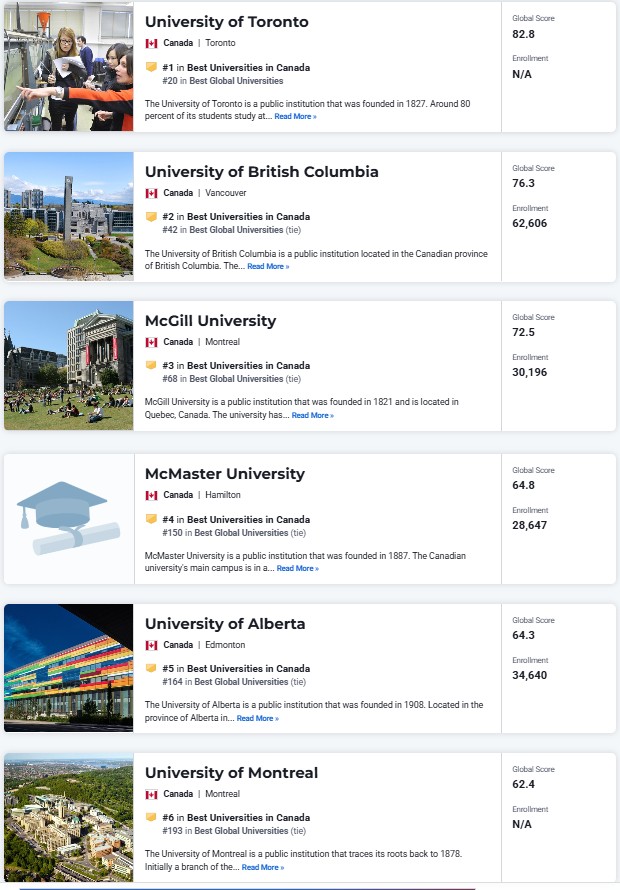
The University of Toronto has been ranked 20th in the world in the 2026–27 U.S. News & World Report Best Global Universities rankings.
The United States’ Harvard University, the Massachusetts Institute of Technology (MIT) and Stanford University ranked first, second, and third respectively, in a list dominated by U.S. and U.K. universities.
Of the top 10 universities, 10 are from the U.S. and three are from the U.K. China’s Tsinghua University, which placed sixth, was the only one from any other country in the top 10.
Three Canadian institutions placed in the global top 100. The University of British Columbia ranked 42nd overall, with its strongest scores in book publication and global and regional research reputation, according to CTV News. McGill University placed 68th globally, third among Canadian universities.
A total of 39 Canadian universities were assessed in the full rankings. McMaster University ranked 150th, the University of Alberta 164th, the Université de Montréal 193rd, and the University of Waterloo 199th — placing four additional Canadian institutions just outside the global top 200 and reinforcing the depth of the country's research university system.
Demand for university graduates
One million – that’s the number of university graduates that Ontario would need by the year 2035 to fill labour shortages in the province, according to a report. The projection, prepared by Stokes Economics for the Council of Ontario Universities, puts net demand at 1,004,864 graduates between 2026 and 2035, equivalent to about 100,488 a year.
“Ontario currently sits last in the nation for total per-domestic student funding, almost $7,000 behind the national average,” says Rob Kristofferson, President, Ontario Confederation of University Faculty Associations, in a statement sent to HRD.
“The government has committed $6.4 billion for the next four years (about $1.6 billion annually), split between colleges and universities, and will fund 70,000 seats. However, OCUFA research shows that this money won’t bring Ontario out of last place, and Ontario’s universities require $3 billion annually to reach the national average. Fewer permanent faculty are being hired, universities are relying more on precarious contract faculty work, and faculty across universities are experiencing higher workloads.
“All of this influences the student experience. So, if Ontario is going to meet this projection, we will need much more investment from the provincial government into our universities.”
The Canadian economy lags behind in terms of productivity due to a lack of investment, concludes a study published by the Montreal Economic Institute in 2023.
“Canada’s productivity gap is worrisome and has a direct impact on our standard of living,” explains Renaud Brossard, senior director of communications at the MEI and one of the authors of the study. “The less value that is created by an hour of work, the less that hour can be remunerated.”
On a positive note, Canadian universities are drawing increased interest from American academics who say they are prepared to accept lower pay in exchange for greater academic freedom and a less politicised environment, according to a previous report.