Talent acquisition lead Stephen Taylor looks to reshape recruitment in rapid-growth environment while keeping human touch
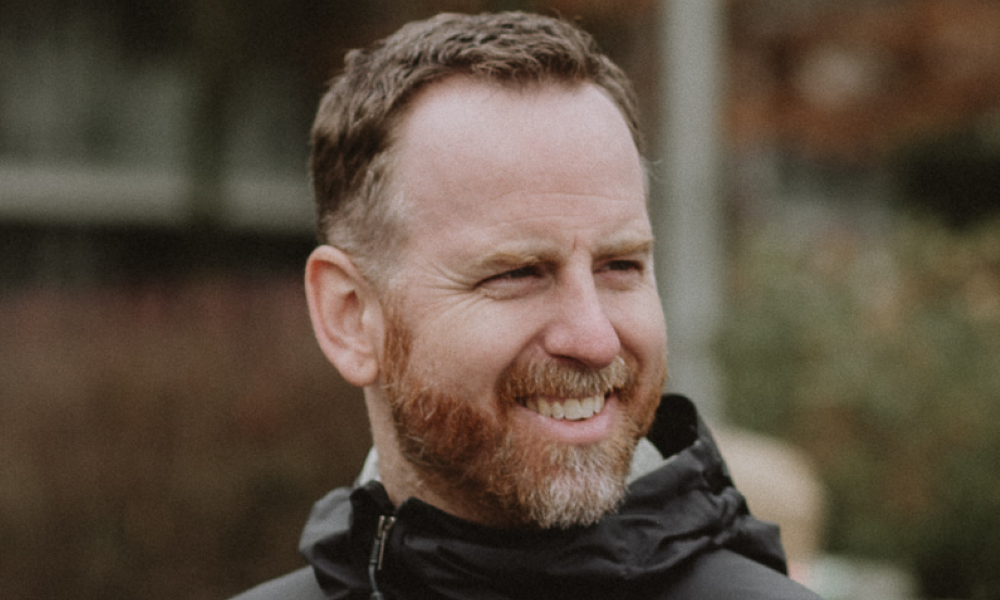
Stephen Taylor has had a front seat to his company’s steady but significant growth over the past decade.
As Global Relay’s lead for talent acquisition, Taylor has seen the company’s workforce surge from roughly 300 staff when he joined in 2015 to about 1,700 today. The growth has been fast, demanding, and exciting, he says — especially for the people tasked with filling roles while the business keeps raising the bar.
He sums up his world by saying that he’s “always tired, never bored."
Taylor didn’t expect to have a role in HR, but he found he often took interest in the people aspect of the various companies for which he worked.
“I was kind of burning out a little bit, and a friend of mine said, ‘All the things that you're dissatisfied about involve how employees are being treated — you need to be in HR,’” he says. “And I was like, ‘I don't want to be in HR, that's a lot of paperwork’ — but then when I thought about it and saw all the commonalities of this, I thought, ‘This is the field for me.’”
It was about having a "healthy discontent" for issues that pushed him into HR: "Seeing people not get the job description for their role, not get paid on time, not get proper onboarding or training, or not get off-boarded or terminated well. Those were things that really drove me nuts,” says Taylor.
“And I thought, ‘I'm usually pretty happy, so if these things really bring me down, maybe that's what I need to be involved in working against.' So, for me, HR is a way to ensure that it’s the details that matter, because because the people for whom those details matter, need to matter to us.”
Two-way communication with management
A few years after joining Global Relay, Taylor took on the talent acquisition function. He now leads a six-person talent acquisition team that has had a deepening partnership with the business as the company has grown.
“We're increasingly pressing in and digging deeper, but I’m mindful to communicate how that needs to be reciprocated by the business — we want to hire better and faster, so here's how we're going to be more efficient and more strategic,” he says. “Because what I've learned is sometimes the managers will say, ‘We really need this and it's urgent’ and we put the horsepower up and we do our part, and then it just sits in their court and you go, ‘What happened there?’”
“And so I think I've gotten better at telling the business, in a general sense, what it is we need in order to go fast and what part they play in that,” adds Taylor. “We're ensuring that the managers we're supporting know what their action needs to look like and what to expect from us."
According to Taylor, as he’s taken a more active role on what the company needs to support its growth, Global Relay has backed that stance with investment. As headcount has climbed, the company has added HR firepower ahead of demand, including a new HR director and senior talent acquisition specialist in the company’s New York office. Previously Taylor had been doing all the talent acquisition work for Global Relay’s global business out of the head office in Vancouver.
“I really appreciate how the company hasn't asked us to stretch ourselves, says Taylor. “We've bent but never broken, and they've always resourced our HR team or the talent acquisition team specifically before moving towards substantial growth — there's been a few times where we've grown really quickly, but they've given me and the team more resources in order to do that.”
Non-ghosting policy, promoting pay clarity
Outside the company, the tone is different, says Taylor. He describes a hiring landscape where more candidates are acting with fear. “I’m seeing a lot of desperation in the market, which is really hard,” he says. “When we get more applications, that means more rejections.”
His answer is to tighten Global Relay’s own behaviour instead of hiding behind volume. The company recently implemented a “non-ghosting policy” in which candidates are told in writing that they will get a response and invited to call the company out if they’re still waiting after a week. “Our policy is to not ghost anybody and if, for whatever reason, you find yourself waiting more than a week, it’s not our intention,” says Taylor.
Taylor applies the same discipline to pay clarity, as he won’t allow the salary in job offers to land as late-stage shocks. “We include [pay expectations], by default, twice into the process, both at the very beginning and the very end,” he says. By the time someone reaches the final interview stage, he wants them to know “within 5k, hopefully, what their offer is going to look like if it’s presented to them,” he explains.
Behind the scenes, he says, the company is also reassessing its overall positioning, especially in pressure markets like New York. “We’re going to be looking at our compensation to ensure that it’s strategic, generous, and competitive,” says Taylor.
Being an ‘AI realist’
Taylor treats AI in hiring with the same hard edge. “We use it very, very cautiously and selectively,” he says of Global Relay’s use of AI. “I don’t know if the term’s out there yet, but I want to be an AI realist in terms of the fact that it brings advantages and disadvantages.”
“I’ve been very careful to not let AI automate our secret sauce,” which Taylor says is human contact with candidates. He says his team still calls candidates on the phone to set up interviews instead of hiding behind email templates, despite pushback from those who would rather not pick up the handset. “I think most people appreciate that, and the warmth that we give to the interview process and the fact that it’s a real human that’s interacting with them,” he says.
He will, however, use AI where it genuinely strips out noise and bias. Global Relay’s system deploys tools to summarise scorecards and remove identifying details from resumés and technical work to ensure a fair and unbiased assessment. “We’ve activated a feature of the AI that will anonymize names and information on a resumé so that you’re not triggered by a name being representative of certain nationality or gender,” says Taylor.
Taylor is equally direct about the threat on the other side of the talent acquisition table. Candidates leaning on AI to complete take-home assignments have already forced changes, he says. “Now you’re going to come in for a longer interview and you’re going to do the assignment here with us,” he says. “We need to make more of those modifications so that we can compare apples to apples.”
Calming presence for an anxious labour market
Taylor also believes that labour market behaviour has changed and the calendar no longer matters. “For years, recruitment always slowed down in December, and it’s not slowing,” he says. “We used to see rises and falls in applications and interviews and hiring [in August] quite predictably, and we don’t anymore,” he says.
Taylor has stopped pretending he can forecast what comes next. “I’ve learned to not predict,” he says. What he’s maintained is his directive that his talent acquisition team be a “calming presence” for anxious candidates, not another voice of doom.
In a market that keeps shifting under their feet, Taylor’s talent acquisition plan for Global Relay is simple: stay aligned with the business trajectory, expose and reinforce weak links, and keep picking up the phone so that, even when the answer is no, people at least hear it from a human being.