BC mining company's recruitment of divisive US political figure puts HR strategy in the spotlight
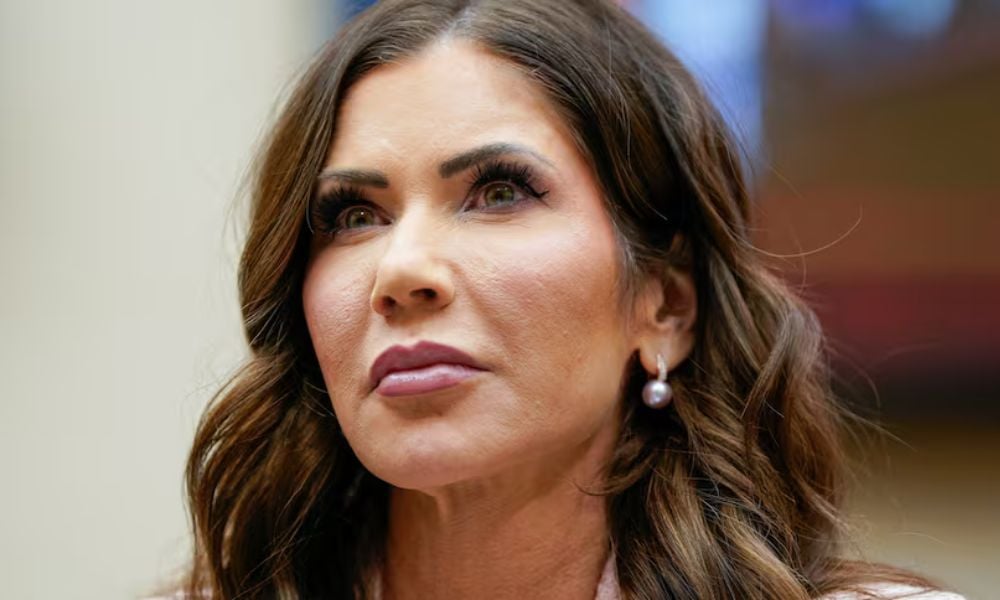
Image from: Elizabeth Frantz/Reuters
When a British Columbia mining company hired a former senior US government official on June 16, 2026, the move stirred up some controversy. NovaRed Mining, a Vancouver-based mineral exploration company, announced that former US Secretary of Homeland Security Kristi Noem had joined the company in a strategic advisory role.
In a press release issued by NovaRed, Brian Goss, Chief Executive Officer of the company, said Noem was bringing “exceptional leadership experience and a deep understanding of the policy, regulatory, and economic factors that influence infrastructure investment, resource development, and long-term economic growth.”
For many Canadians, however, Noem's record was the story. Within hours, public reaction was swift and polarized. Noem’s background in US president Donald Trump’s administration and alleged human rights abuses by the Department of Homeland Security under her leadership. According to Google, messages sent to NovaRed Mining’s email address started bouncing back due to the volume of messages being sent. Charlie Angus, former federal Member of Parliament for Timmins-James Bay, Ont., asked in a video: “Does NovaRed Mining want a person on its board who is being investigated by Amnesty International?”
For human resources (HR) leaders, the episode is less about the merits of any individual hire and more about a fundamental question of people management: when leadership makes a high-profile appointment that triggers backlash — internally and externally — what is human resources actually there to do?
HR's first obligation: look inside the building
In the event of an organization making such a public and controversial hire, the most urgent responsibility for HR leaders lies with the people already inside the organization, according to Samantha Hancock, assistant professor in the Department of Management and Organizational Studies at Western University in London, Ont.
“HR's responsibility is to the internal employees — that's what they're there to do,” says Hancock. “Even though external reactions can be really strong and there can be a lot of backlash, the internal effects can be a lot more important than these outward appearances — it can affect how employees view the leadership, how they view value alignment, and how they view the organization’s priorities.”
Anthony Ariganello, Chief Executive Officer of Chartered Professionals in Human Resources (CPHR) BC & Yukon in Vancouver, believes that the main issue isn’t whether the hire is controversial: “It's whether leadership has anticipated and prepared for the consequences,” he says.
Both Hancock and Ariganello point to the same underlying tension. Employees don't simply evaluate a hire on its business merits — they read it as a signal of what the organization actually values. “Employees often use these appointments as symbolic statements about organizational values and priorities,” says Ariganello, who adds that when those signals feel inconsistent with the culture that leadership has publicly committed to, the consequences can be significant.
For HR leaders managing psychological safety and employee morale during organizational uncertainty, the costs can include eroded trust, reduced engagement, and elevated turnover risk, he says.
Communication isn’t optional — it’s the intervention
When a polarizing hire is made, the organization’s failure to communicate its rationale clearly is often more damaging than the hire itself, says Ariganello.
“You've got to be able to close that loop, because if you don’t, your greatest risk is low morale, a letdown, and a loss of productivity, and people could leave,” he says. “It’s important to be upfront and tie it into the overall strategic goals and objectives of the organization — that's really how I think HR can mitigate that.”
Hancock echoes the point, noting that transparency doesn't require consensus. “People don't necessarily have to agree with the final decision, but if they understand a little more of the thought process behind it — and there's more transparency around why a certain person was considered for a position and why they ultimately were appointed — that can help people understand why that decision was made,” she says.
For HR leaders, that means working alongside leadership, communications, public relations, and marketing to build a coordinated response — not waiting to be handed one, says Ariganello. “It’s really important that HR is leading and supporting the other departments, because that's really, really critical,” he says.
The parallel for HR leaders navigating their influence at the executive table is clear: the function's credibility in a crisis depends in large part on whether it was present before the decision was made, says Ariganello.
Proactive over reactive: the harder lesson
Ariganello believes most important lesson for HR leaders watching this situation unfold from their own organizations is that the time to build the structures that protect culture is before a controversial hire happens.
“HR should be at the table before decisions are made and not after, because after it's about damage control,” he says. “HR brings a unique perspective that understands workforce sentiment, which is critical — the culture, the engagement of staff, and the values an organization has built. That's why we need to be there — to identify potential risks, anticipate employee reactions, and help develop mitigation strategies.”
For Hancock, it’s about being proactive rather than reactive. “If HR doesn't want something like this to happen in the future, there are processes they should have in place beforehand,” she says. “So that you only have people progressing who are meeting the job requirements and having that value alignment, so that you don't end up in a similar situation in the future.”
That means rigorous job analysis and evaluation, clearly defined organizational values that can be applied consistently to hiring decisions, and a seat at the table when senior appointments — particularly advisory or board-level roles — are being considered, says Hancock.
When leadership overrides HR's concerns
The scenario many HR professionals will recognize is perhaps the hardest one: they've flagged the risks, and leadership has proceeded anyway. What then?
“Sometimes, because HR isn’t the final decision-maker, they’re often left dealing with decisions that weren’t necessarily their own,” says Hancock. She says the focus should be on what HR can still control: internal processes, employee communication, and creating the conditions for people to feel heard, even if the outcome can't be changed.
Ariganello agrees that HR must ultimately respect leadership's authority — but he’s clear that deference doesn't mean silence. “All we can do is prepare, advise, and offer strategy and recommendations in the event something goes sideways, but it's identifying it and being at the table when decisions are being made that's critical.”
Protecting culture in advance
His practical recommendation for the moment a contentious hire is confirmed: develop a scenario-based response plan before the announcement lands. “Anticipating potential reactions is what you've got to do,” he says. “If they're seeing that this could be controversial, then develop a tactical scenario in terms of a go-to plan in the event this gets out of hand with the various stakeholders — be it employees, customers, if there's reaction in social media, or with government.”
For HR leaders, the organizations that tend to emerge from a reputational hiring challenge with their culture intact share a common quality, says Ariganello. “If you're preparing for the consequences and you've anticipated them, then you're better prepared to deal with it,” he says. “Whereas if you're ignoring it because it doesn't matter — we're the leaders, we're the decision-makers, who cares what people think — that's the wrong approach.”
Hancock believes that HR should take a proactive stance on many things in which they’re involved — whether that's hiring, compensation, or recruitment — and try to anticipate things before they happen so they’re not reacting to a crisis. “That's not always going to be possible, but this is where I always advocate for coming back to the basics,” she says. “Do your job analysis, do your job evaluation, make sure everything is legally defensible, and then there are fewer things that can spiral and go out of control.”
She also says that HR should ensure the organization doesn’t ignore employee discontent with a controversial hiring decision, as there can be lessons for the future. “Acknowledging people's concerns can be really helpful,” she says. “And if there are going to be some negative downstream effects, then the organization can reflect on that and HR can say, ‘We did this, these were the consequences, how can we change that going forward so that we don't end up in this situation again?”