Workers now have presumptive coverage for 22 types of cancer
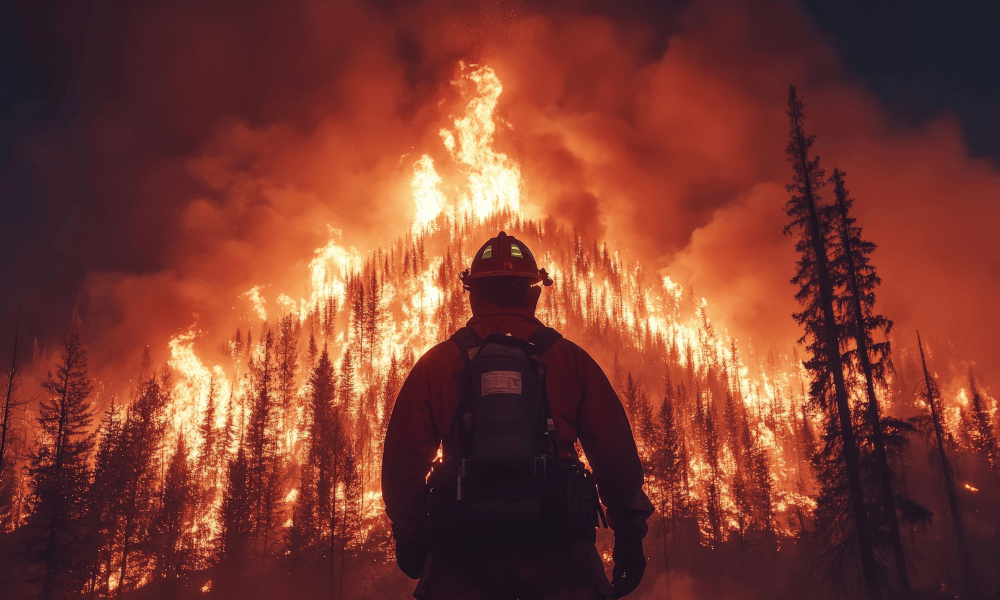
Wildland firefighters in Saskatchewan will now receive presumptive coverage for various types of cancer, as amendments to the rules have taken effect.
As of Aug. 1, changes to The Workers’ Compensation Act, 2013 have come into force.
“We are committed to supporting our wildland firefighters, who have been putting themselves at risk to protect their communities,” Deputy Premier and Minister Responsible for the Workers’ Compensation Board Jim Reiter said. “Saskatchewan is leading the way in Canada with the extension of presumptive cancer coverage for 22 types of cancer.”
Late in 2024, the government proposed the amendments, including the inclusion of wildland firefighters under presumptive coverage for 22 cancers and heart injury. That aligns Saskatchewan with similar provisions in Manitoba, British Columbia, and Ontario.
"In March of 2024, we passed legislation providing coverage for firefighters for 22 types of cancer,” Reiter said at the time. “With the introduction of this Bill, we are extending that same coverage to wildland firefighters who also face risks as they help protect our environment, structures, and communities.”
Types of cancer under coverage
The types of cancer that are under presumptive coverage are:
|
primary site penile cancer |
brain cancer |
colorectal cancer |
|
primary site pancreatic cancer |
bladder cancer |
lung cancer |
|
primary site thyroid cancer |
kidney cancer |
testicular cancer |
|
primary site soft tissue sarcoma |
non-Hodgkin’s lymphoma |
esophageal cancer |
|
primary site mesothelioma |
leukemia |
an injury to the heart that |
|
primary site laryngeal cancer |
ureter cancer |
The amendments also included a number of housekeeping items, such as:
- Ensuring chiropractors, health care professionals, physicians, and psychiatrists licensed in other jurisdictions are covered
- Allowing board members to complete proceedings after their term expires
- Enabling regulations to specify how the Saskatchewan Workers’ Compensation Board publishes appeal tribunal decisions.
This is a welcome development, according to North Battleford Fire Chief Lindsay Holm.
“It just gives you peace of mind that you’re going to be taken care of,” he said in a CBC report. “I think that goes a long way not only for the firefighters themselves, but also their families who would have to deal with those types of occupational injuries after the fact.”
Wildland fire hazards
The Canadian Centre for Occupational Health and Safety (CCOHS) notes that wildland fire smoke contains particles and gases that may be harmful to workers or the community. These include:
- Fine particulate matter
- Carbon monoxide
- Carbon dioxide
- Nitrogen oxides
- Sulfur oxides
- Volatile organic compounds
- Formaldehyde
Here are some measures employers can take to protect workers, according to CCOHS:
- Monitor the Air Quality Health Index and other indicators of smoke levels.
- Ensure ventilation systems and air filters are maintained to remove smoke particulates, which will help provide clean air to work areas.
- Include wildland fires as a factor in the emergency response and business continuity plans if wildland fires are common in the region.
- Implement procedures to monitor and respond to wildland fires and smoke, including the possibility of evacuation.
- Investigate any work-related incidents.
- Provide or call for medical assistance when workers have severe symptoms. Any worker who has difficulty breathing should reduce or stop their activities and notify their supervisor. It may become necessary to temporarily relocate the worker to an area with cleaner air or reschedule the work when the air quality improves.