Businessman found guilty of assaulting former employee with another trial coming — cases with implications for corporate accountability
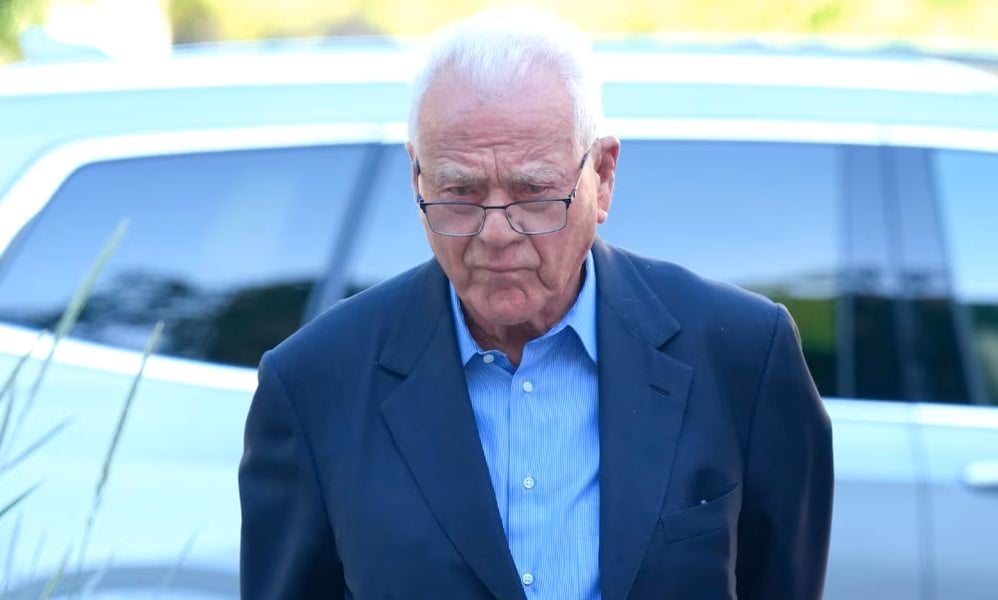
Photo: The Canadian Press/Chris Young
Frank Stronach, the 93-year-old founder of automotive parts giant Magna International, has been found guilty of sexual assault and indecent assault. The verdict, issued by Ontario Superior Court Justice Anne Molloy in Toronto on Friday, marks a significant development in a high-profile case that has drawn attention across Canada's corporate and HR communities.
Stronach had pleaded not guilty to 12 charges involving seven complainants when his Toronto trial opened in February 2026. The charges stemmed from alleged incidents spanning the 1970s, 1980s, and 1990s. As the trial progressed, prosecutors withdrew five charges related to three women, narrowing the case to seven charges related to four complainants, the Canadian Press reported. Justice Molloy then declared she could not convict Stronach on the basis of one complainant's testimony, which she found unreliable – leaving five charges related to three women.
Justice Molloy returned guilty findings on two of those remaining charges, according to The Canadian Press. Stronach was convicted of sexual assault against a former employee at Rooney's — a restaurant and nightlife complex he owned — and indecent assault against a woman who frequented the venue in the 1970s.
Sexual assault of former employee
The former employee testified she had arranged to meet Stronach for dinner after reaching out to him regarding her dismissal from Rooney's. She described him as a "fatherly mentor" during the meal but said she felt uneasy when he invited her to his nearby condominium afterward. The assault she described occurred at that location, CBC News reported.
In the second conviction, Justice Molloy found the conduct amounted to what she described as "gross and disgusting" behaviour. According to evidence accepted by the court, Stronach approached the complainant from behind, pushed her over the arm of a chair, raised her skirt, and made contact over her underwear without her consent. The Crown had previously withdrawn a charge of attempted rape in this matter, but the court accepted that the assault itself was clearly without consent, according to CBC News.
Justice Molloy found there were too many factual uncertainties to convict Stronach in relation to the third remaining complainant, resulting in acquittals on those charges.
A titan of Canadian industry
Stronach is has been a prominent figure in Canadian business history. Born in Austria, he emigrated to Canada and founded Magna International in a rented garage in the 1950s, eventually building it into one of the largest auto parts manufacturers in the world. Magna has appeared on the Fortune Global 500 list annually for more than 20 years and remains headquartered in Aurora, Ont.
He also founded the Stronach Group, a major player in thoroughbred horse racing, and later launched Stronach International in 2018 with a focus on organic food and electric mobility ventures.
Peel Regional Police charged Stronach in 2024 with 18 offences involving 13 complainants. Those charges were divided into two separate proceedings. The Toronto trial addressed 12 charges involving seven women. A second trial in Newmarket, Ont., involving six complainants is scheduled for May 2027.
An executive leveraging power
For HR executives and people leaders across Canada, the Stronach case is a reminder that historical misconduct — even when alleged decades after the fact — can reach the highest levels of accountability, including criminal conviction. The allegations in this case involve conduct that, by the complainants' accounts, took place in settings where power was explicitly leveraged: a former employee seeking information about her termination, and women who encountered Stronach through venues he controlled.
The case also raises questions about how organizations document, report, and respond to complaints involving senior figures — issues that HR leaders in Canada are increasingly addressing through enhanced workplace investigation protocols. As organizations revisit their harassment and misconduct policies, this case underscores that statute of limitations considerations in civil and employment contexts differ from those in criminal proceedings, and that complainants may come forward years or decades after an incident.
The Stronach verdict arrives at a moment when Canadian HR professionals are reassessing the effectiveness of their workplace culture frameworks in the face of ongoing public scrutiny. Leadership accountability — particularly around senior executives and founders — has become a central concern as boards and HR teams confront how power dynamics within organizations can enable or conceal misconduct over time.
A sentencing hearing has been scheduled for September 2026, according to the Canadian Press.