‘Canada will not tolerate the presence of goods produced through forced labour in our markets’
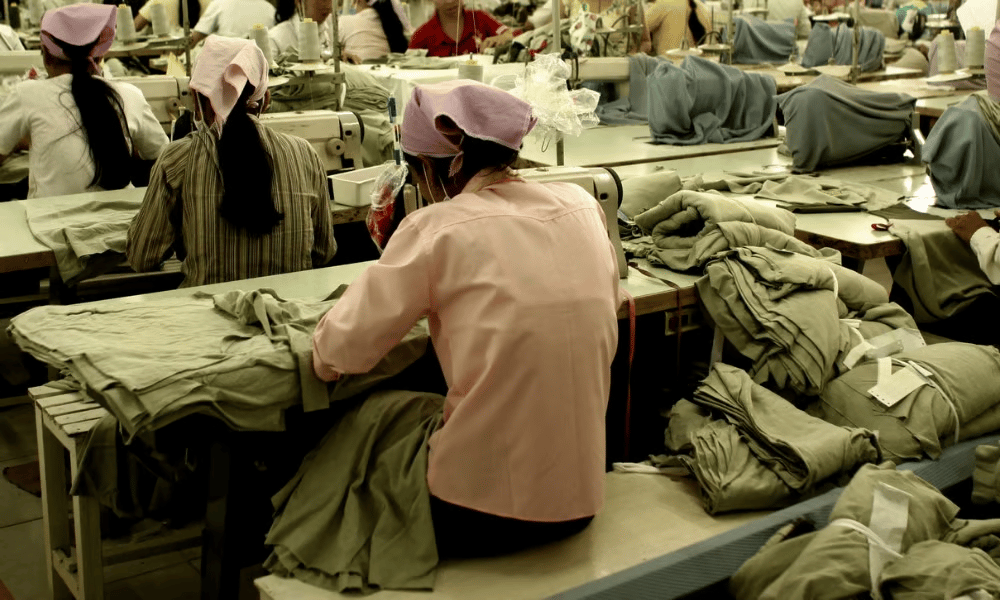
The federal government has tabled legislation to strengthen Canada's ban on imported goods made with forced labour.
Anita Anand, Minister of Foreign Affairs, announced that Ottawa has tabled An Act respecting the prohibition of the importation of goods produced by forced labour. If adopted, the legislation would reinforce the existing framework that prevents goods made with forced labour from entering the Canadian market, Global Affairs Canada said.
"Canada will not tolerate the presence of goods produced through forced labour in our markets," Anand said. "This legislation strengthens our commitment to human rights and fair, transparent trade by giving us stronger tools to stop these goods at the border and protect the integrity of our supply chains."
Key elements of the proposed legislation
The proposed Act would establish a standalone legislative framework, replacing the current import prohibition under the Customs Tariff. It would strengthen Canada’s existing forced labour import ban regime.
The legislation would:
-
Provide the Minister of Foreign Affairs with authority to establish a list of high-risk goods—identified by region, entity, or individual—where there are reasonable grounds to suspect they are produced by forced labour;
-
Establish requirements for importers of certain high-risk goods to provide enhanced supply chain tracing information to customs authorities, in accordance with regulations.
-
Introduce a deeming provision, whereby goods identified as high-risk would be deemed prohibited from importation when these mandatory information requirements are not met.
-
Improve co-ordination and information-sharing among federal organisations to support enforcement;
-
Create a cost-recovery model when importers are found to have imported goods made using forced labour.
Recently, Prime Minister Mark Carney said his government will introduce legislation aimed at addressing forced labour, positioning Canada’s response early as Washington pushes forward with new trade penalties.
“Canada has a very strong legislative regime against forced labor in supply chains,” Carney told reporters in Ottawa, according to a CTV News report. “We don’t want any element of forced labor coming in goods and services, and we want to use our influence to eliminate this practice of forced labor and child labour.”
Enforcement record under scrutiny
The tougher regime follows years of criticism that Canada's existing ban has rarely been enforced. The Canada Border Services Agency has said it intercepted and detained roughly 50 shipments over forced-labour concerns since 2020, but only two were ultimately found to have been produced with forced labour, according to Global News.
Those two cases were a 2024 shipment of textiles and a 2025 shipment of frozen seafood, Global News reported. The agency does not publish official enforcement statistics, leaving the figures as the best available account rather than a confirmed government tally.
The record drew scrutiny from the Office of the United States Trade Representative, which this month recommended a new tariff of up to 10 per cent on goods from dozens of countries, including Canada, over what it characterised as weak enforcement of forced-labour import bans, CBC News reported. The Canadian bill was tabled within days of the U.S. threat.
On June 2, 2026, the U.S. Trade Representative (USTR) determined that Canada has failed to effectively enforce its prohibition on the importation of goods produced using forced labour, and that such failure is “unreasonable” and “burdens or restricts” U.S. commerce.
What it means for employers
The legislation compounds obligations employers already carry under the Fighting Against Forced Labour and Child Labour in Supply Chains Act, which came into force in 2024 and requires many businesses to report annually on the steps they take to identify and reduce forced-labour risk, Global News noted. In larger organisations, HR teams are frequently the ones co-ordinating that reporting and the supplier audits behind it.
Canada first implemented its import ban under the Customs Tariff in July 2020, fulfilling commitments made under the Canada-United States-Mexico Agreement, Global Affairs Canada said. Earlier this month, Prime Minister Mark Carney committed to strengthening that ban through new legislation.
Anand framed the bill as support for vulnerable workers abroad and a signal of the country's commitment to fair, transparent trade.
Canada’s Fighting Against Forced Labour and Child Labour in Supply Chains Act, or the Modern Slavery Act, came into effect on January 1, 2024. Within the act is a requirement to implement and report training around forced and child labour.