
Federal Court orders Global Affairs Canada to review investigation into discrimination complaint
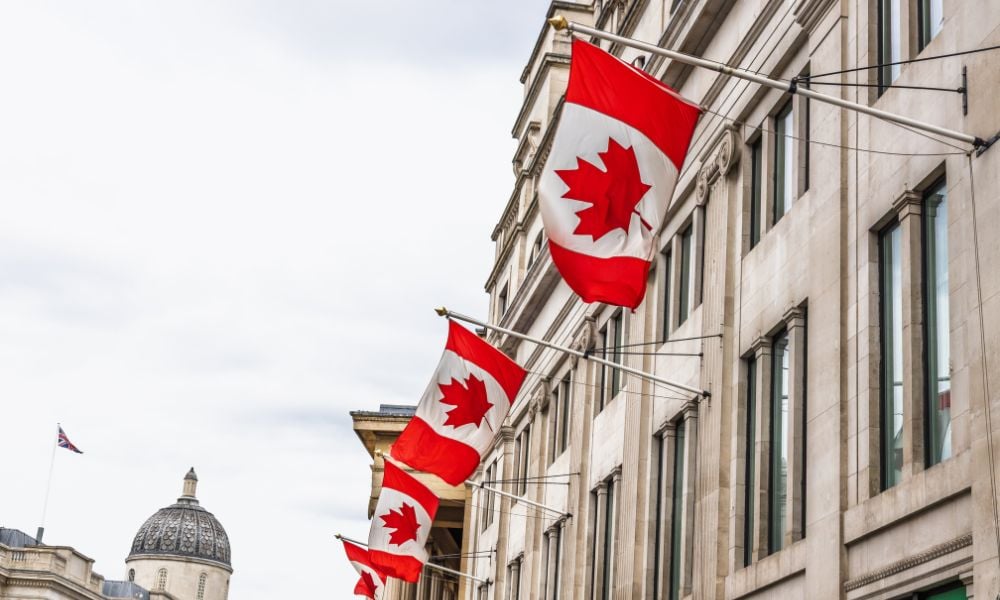
A Federal Court ruling has compelled Global Affairs Canada (GAC) to investigate a discrimination complaint brought forward by a former diplomat who claims to have experienced repeated racial harassment, discrimination, and intimidation at her post.
Madina Iltireh—who is Black and wears a hijab—says she endured all of this during her three-year stint as an assistant to the ambassador at Canada’s embassy in Kuwait, beginning in 2018.
She described feeling ostracized by colleagues, denied access to secure areas without explanation, and subjected to unsafe living conditions at the official residence.
“When I was posted to Kuwait to represent Canada, it was supposed to be an honour,” said Iltireh in a press release. “Instead, I faced isolation, humiliation, and a complete loss of my self-worth.”
In her written complaint to GAC, Iltireh stated she was “the victim of sustained and repeated incidents of racial harassment, discrimination, and intimidation,” according to a CBC report.
CBC obtained a copy of the GAC investigation report, which found that four out of eight allegations against the former ambassador were substantiated. The report concluded that the ambassador “encouraged and tolerated” bullying and discrimination, failing to ensure a healthy work environment for Iltireh.
Despite these findings, the report did not include any specific recommendations for redress.
“Despite the investigation confirming my claims were valid, there has been no accountability, or even an apology,” she said.
“But still I don’t see any apology,” Iltireh told CBC. “I need the department [to] show me change, that these kinds of things improved, that these kinds of things will never happen again.”
Racism remains a significant issue within the British Columbia Public Service, according to a previous report.
Barriers to justice, mental health impact
After returning to Canada, Iltireh tried to file a formal complaint about her experience but encountered significant obstacles. Her initial submission to GAC’s values and ethics department was dismissed. In May 2022, she filed a new complaint, which was also rejected. It was only after she appealed to the Federal Court in September 2024—describing the “mental torture” she endured and the lack of a “full and fair” investigation—that the court ordered GAC to review her case.
Iltireh says the experience has left lasting scars on her mental health and confidence. “I went through hell,” she told CBC. “I have to work hard to gain back what I lost, but I’m still working on it.”
The GAC report also noted that Iltireh’s requests for help and maintenance at the embassy residence were not handled promptly, with some issues left unresolved for years. The ambassador’s decision to deny her access to secure areas was made without justification and was deemed discriminatory by the investigation, according to CBC.
Marginalised groups are still viewed poorly by hiring managers in the food service industry in Canada, according to a previous report.
Calls for reform, stronger protections
Advocates argue that the current system for addressing discrimination and harassment in the federal public service is inadequate.
According to the Coalition Against Workplace Discrimination (CAWD), more than 100 GAC employees have come forward through a peer support group, reporting experiences of racism, discrimination, and workplace violence while stationed both abroad and in Ottawa.
“We have heard from employees across multiple departments within Global Affairs, the vast majority of whom are racialized women,” said Nicholas Marcus Thompson, president and CEO of the Black Class Action Secretariat—one of CAWD’s members. “The pattern is undeniable: discrimination, failure by the Values and Ethics Office, and failure by unions. Instead of being disciplined, abusive leaders are promoted and rewarded.”
Thompson told CBC that “the system is broken on these issues.” He called for the creation of an independent investigative body and the implementation of reforms to the Employment Equity Act, which have yet to be enacted.
He also urged the government to establish a resolutions committee with worker and expert representation, and to ensure that all outstanding cases are reviewed and resolved. “The government of Canada continues to acknowledge it: Yes, it is happening, yes, we're working to address it. But nothing is changing for workers, and they continue to suffer in silence,” he said.
The CAWD is calling for the federal government to take three immediate steps:
-
Establish a Resolutions Committee within Global Affairs Canada to review and resolve outstanding cases of racism, discrimination, and harassment. It must include independent experts and worker representatives, and operate with full transparency.
-
Create an independent investigative body, separate from any department, to handle all complaints of racism, discrimination, and harassment across the federal public service.
-
Implement the Employment Equity Act reforms recommended by the government’s Employment Equity Act Taskforce, finally recognising Black employees as an employment equity group as previously promised, and use disaggregated race-based data to identify and correct inequities.
GAC told CBC that it is required to comply with federal workplace harassment and violence prevention policies and is considering a new, standardised complaint intake process. The department says it is committed to fostering a respectful and inclusive work environment, but Foreign Affairs Minister Anita Anand declined to comment directly on the case.
More than half (51%) of racialised people in Canada aged 15 years old or older have experienced discrimination or unfair treatment in the past few years, according to a previous study from Statistics Canada (StatCan).


