Vice President of People and Culture is reshaping talent strategy at one of Canada's oldest B2B brands
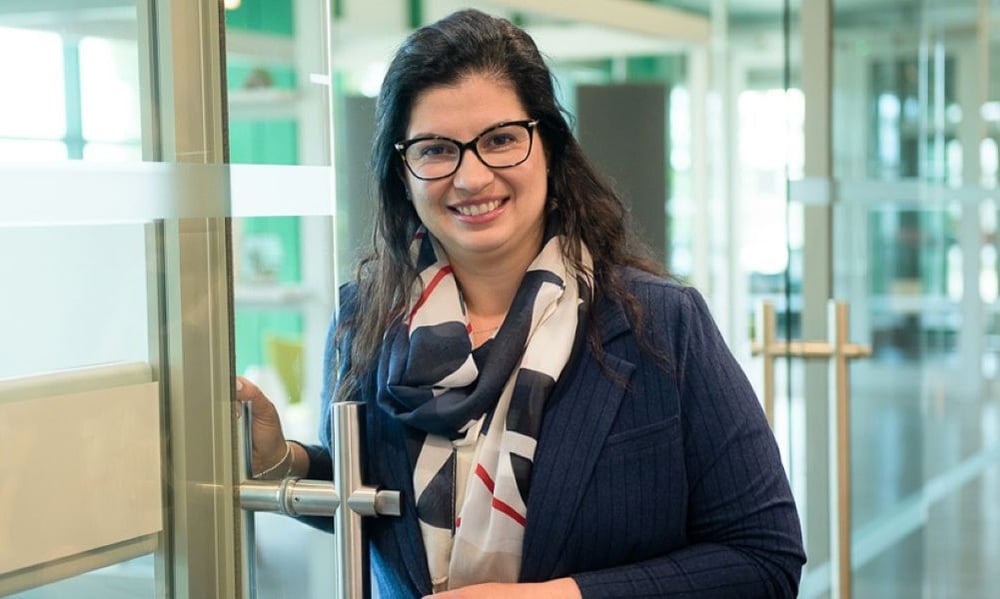
A successful human resources (HR) leader is one who can adapt and stay curious, particularly when it comes to understanding the business of their organization, according to Helen Ashton.
Ashton, the Vice President of People and Culture at Grand and Toy, the Toronto-based workplace solutions company that has served Canadian businesses for over 140 years, has had a career that has moved through automotive, consumer packaged goods, the military, and small business — industries rarely found together on a single HR resumé.
That breadth, she says, has fostered one of her key professional convictions: that transferable skills matter more than sector-specific experience, and curiosity applied consistently beats expertise applied narrowly.
“I want somebody who understands our market or our customers, but you can learn all those things,” she says. “My career has taught me that you focus on the potential of the person, the strategic thinking — some of those bigger skills that are a lot harder to teach.”
Expanding beyond HR’s traditional scope
That conviction connects directly to what Ashton considers her single most important HR lesson: understanding the business deeply, from the inside out.
“Get involved in the projects and take on responsibilities that are outside of HR’s scope,” she says. “Because it puts you in the day-to-day of what the people leaders we’re supporting are going through, and it makes you ask some of the questions that a lot of HR leaders wouldn't be asking otherwise.”
Ashton's title at Grand and Toy goes beyond the conventional: she holds accountability for people and culture as well as customer experience. That combination, she says, isn’t coincidental. It reflects a broader trend she has observed across her career — HR leaders who are increasingly being trusted with scope beyond traditional people functions.
“HR leaders are becoming more and more sophisticated, and they’re becoming business leaders first and functional experts second,” she says. “And that allows a lot of us to expand, because we’re seen as true business partners that understand and can contribute in a lot of other areas.”
Trust starts with two-way communication
The employee-to-customer connection isn’t abstract at Grand and Toy. Employees who feel valued, heard, and supported project that experience outward, says Ashton, and the company's approach to belonging internally mirrors the service model it offers clients externally — understanding needs holistically, meeting people where they are, and taking a long-term view.
At Grand and Toy, Ashton is putting that conviction into practice at an organization where she says the average employee tenure is 18 years — a figure that speaks to a culture she’s actively working to strengthen, not simply protect.
Ashton's approach to effective two-way communication that makes employees feel a part of the business has two key elements: physical presence and genuine follow-through, she says. Town halls and email updates, she argues, aren’t communication — they’re information sharing.
“Most adults don't process information by reading a couple of paragraphs or by sitting through an hour-long town hall and really listening to it,” she says. “It's about being there with your people.”
Being present and accessible
For leaders managing multi-site operations — Grand and Toy operates across multiple locations in Canada — that means clearing calendars, walking floors, and staying available after formal meetings end. It also means resisting the temptation to over-survey, as Ashton is pragmatic about survey fatigue and clear that soliciting feedback carries an obligation.
“There’s something about very strategically and thoughtfully putting the opportunities to solicit the feedback when that matters, but there's nothing worse than you ask somebody for an opinion and then you don't do anything about it,” she says. “It's about that communication that goes, 'Hey, we've asked you this question. This is what we heard from you. Does that resonate? And if it does, here is what we are doing about it.’”
She adds that being transparent about what will not be acted on — and explaining why — is equally important to credibility.
Rebuilding trust in senior leadership
For Ashton, trust is a key part of what she considers a standout people success during her tenure at Grand and Toy. She says that when she joined the company in 2022, a strain ran through the organization: a perception among some employees that senior leadership didn’t fully understand who they were or what they needed, and that cost management was the real priority. That’s where a real effort at two-way communication came in.
“It took a lot of very, very thoughtful steps,” says Ashton. She explains that the team ran a detailed survey on benefits and financial wellbeing, shared the findings with employees, and then delivered a response that balanced cost constraints with what staff had actually said they needed.
“I think that went such a long way in rebuilding the trust, because that's exactly the comments that we heard from our co-workers: 'I feel heard. I'm so glad you did this,’” she says.
The company’s recognition program was overhauled through the same process, according to Ashton. She says her team redesigned the program to ensure that the people leading and contributing to the work, at every level, were acknowledged in ways that were meaningful to them individually.
“It was a lot of steps all around creating that environment of trust and psychological safety, but everybody needs to be heard, seen and understood,” she says. “We need to make sure that while the programs address the needs, they also leave enough room for that individuality so that we can meet people where they are.”
AI transformation as a talent priority
On the question of artificial intelligence (AI), Ashton is measured but unequivocal about HR's responsibility to lead. She frames AI transformation explicitly as a talent priority, not an information technology project — and warns against waiting for others to set the pace. Canadian HR leaders are navigating that tension in real time with employee anxiety about job security rising even as adoption accelerates.
“I don't think AI will replace people completely,” she says. “I think it will elevate the ability for people to do the things that we are actually passionate about.” For Grand and Toy's customer service team, she points to a practical example: a task that once took five minutes — navigating disparate systems to answer a client question — could take 30 seconds with the right tools. That frees people to become genuine problem-solvers rather than information retrieval systems.
“The opportunities are endless, but it's our job to help our co-workers and associates to understand where those opportunities are and give them the skill set and the confidence to use the tools that are out there.”
After 25 years in the profession, Ashton still describes her career trajectory in terms of questions asked and assumptions set aside. The discipline of not pretending to have all the answers, she argues, isn’t a weakness in an HR leader — it’s the quality that makes continuous improvement possible.
“As long as you approach these things with curiosity and intent,” she says, “That's when you get some of the great outcomes.”