Amid huge changes with AI, hybrid work, only 1 in 4 employees think their organization manages change effectively: report

“Change is inevitable — it's in everything that happens within organizations and within life,” says Rita Perepelitsky, CHRO at Masco Canada in St. Thomas, Ont.
Perepelitsky is seeing an increased pace and complexity of change in her organization, and she’s not alone. With the rise of AI, hybrid and remote work models, and constantly-changing economic conditions, organizations are faced with the choice of making significant adjustments to their businesses and workforces or falling behind.
But are they equipping to implement change? Perepelitsky believes they need to prepare early on to understand and manage expectations.
“[Organizations] need to keep all the stakeholders informed of updates along the way, along with an understanding of what their expectations are, because every stakeholder’s expectations are a little bit different.”
Ineffective rollout of change
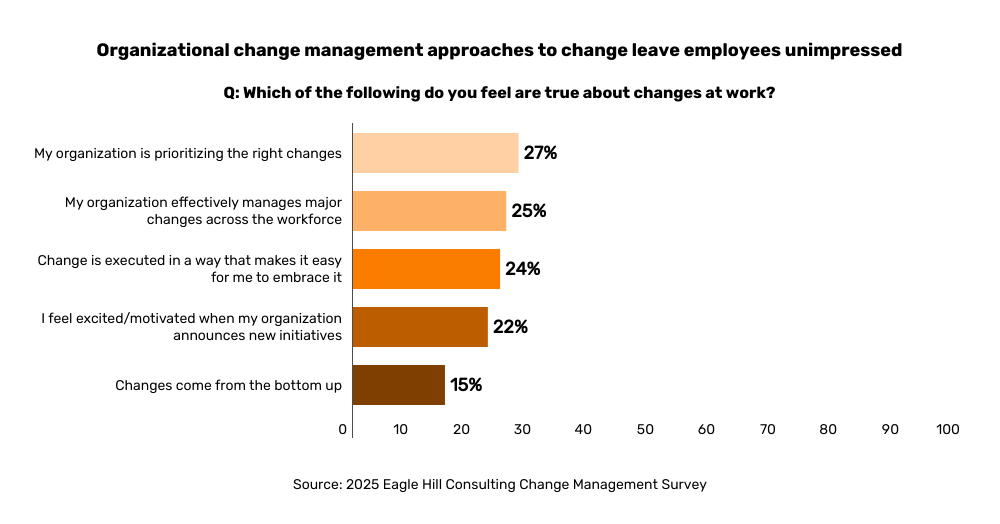
The benefits of change may be there, but what are the costs of rolling it out ineffectively? Nearly half of workers in a US survey said organizational changes have increased efficiency and improved their focus on organization goals.
However, only one in four said their organization effectively manages change and one-third said changes aren’t worth the organizational effort.
A survey of the Canadian federal public service conducted by Statistics Canada last year revealed similar sentiments, with 38 per cent of federal government employees saying change is managed well in their department or agency — an increase from 22 per cent four years earlier.
Elizabeth McSavaney, Head of Human Resources for Zurich Canada in Toronto, cautions against a one-size-fits-all approach to change management.
“The worst thing you can do is go into it with strict tenets and principles of change management — you first need to understand where people are at in their change transformation journey,” she says. “There’s a change curve and there are people at different places in that curve, so you need to understand the culture, the political aspects of your organization, and the organizational structure in order to craft a thoughtful plan around how you're going to navigate change.”
“Where I've seen change management work really well is when you've taken the time upfront to understand the organization, to understand where your people are so that you can meet them where they're at and you can take them along for that journey,” adds McSavaney.
Communication, customization with change management
Understanding the stakeholders and how change will affect them is part of the preparation involved with a thorough and complete change strategy, according to Manuelita Cherizard, CHRO for the Royal Ontario Museum in Toronto.
“Don’t just focus on communication and the business case for the change, but also what's the implementation going to be like and how are people going to be trained?” she says. “What doesn't work is going quickly, with some of the reasons for the change not being given or the words not matching the actions, not bringing everybody along, or not giving everybody an opportunity to be heard and communicated to.”
Perepelitsky believes that getting employees involved is key to understanding the organizational effects of planned change. “As humans, we're looking at ourselves and how is this change affecting me, so we want to know as employees how is it affecting the organization,” she says. “It's really taking that element of the employee and making sure that we engage employees where possible as part of the change management process.”
McSavaney agrees that companies should find opportunities throughout the change management process to include the organization’s people. “They're not going to be able to make all the decisions, but if there are opportunities for them to input and feel like their voice has been heard, they will more readily adapt to the change.”
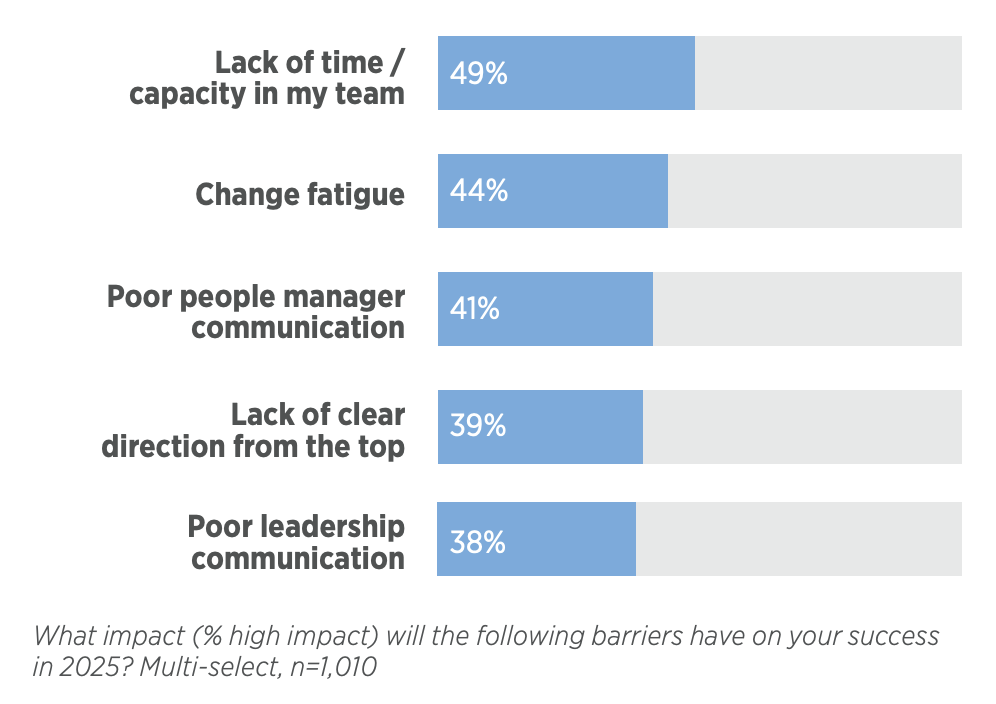
Getting the workforce involved and rolling out change effectively relies a large part on effective communication and involvement at all levels of the organization. A recent Gallagher poll found that more than half of HR leaders considered change management as one of the top critical skills and competencies needed by organizations, but 38 per cent identified poor leadership communication as a barrier.
“There needs to be a thread through the communication and the implementation of the change that helps employees understand the reasons and benefits of the change, to reduce some of the resistance,” says Cherizard. “There needs to be champions, so their colleagues who understand the change or who are more change-agile can help them and support them where they can feel comfortable to talk or ask questions.”
Debriefing to improve the process
One of the dangers of significant organizational change, particularly in a time of rapid technological development and constant organizational change, is change fatigue. In the Gallagher poll, change fatigue was identified as the second-biggest barrier to organizational success, with 44 per cent of HR leaders saying it would have a high impact — and most saying internal change was the cause.
Perepelitsky believes two-way communication at all levels should continue throughout the change process and afterwards. “I think of it as preparedness communication, getting feedback from employees when implementing the change, if possible, and then after the change — another big aspect that some people miss in organizations is the debrief.”
It’s so important to debrief after the organizational change management, adds Perepelitsky, "to sit back with an objective lens and say, ‘What went well? What didn't go well? What were the lessons learned? What can we do differently next time?”
“Engaging the people who were part of the change on how the change management went and if there are any ideas or suggestions.”
An effective change management strategy is not only grounded in data and strong relationships, but also involves leadership being clear, open, and real about the objectives and the effects on the organization, according to McSavaney.
“Telling stories is really key — being able to craft your vision, have leaders talk openly and authentically about how they're feeling about the change and how they're planning on navigating, will go a long way towards building trust as an organization,” she says.