‘A reporting mechanism that people don't trust is worse than not having one at all,’ says expert
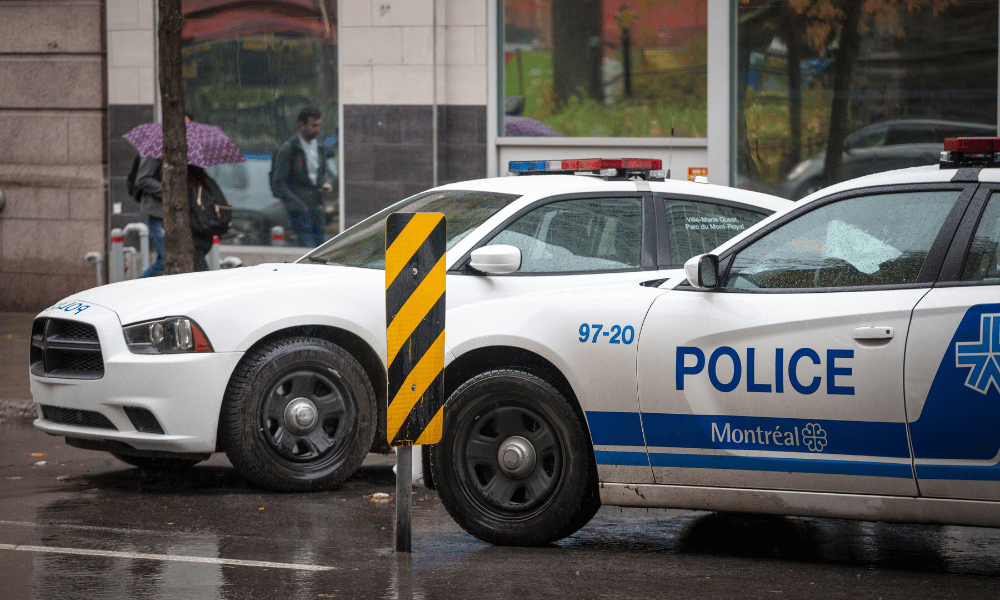
Black employees at the Service de police de la Ville de Montréal (SPVM) say they’re afraid to come to work — not because of the officers under investigation for racism, but because of what might happen to those who spoke up, according to a letter Black employees sent to management last week.
The crisis unfolding at the SPVM began when Police Chief Fady Dagher held a late-night news conference June 12 announcing that 16 officers stationed in the multicultural neighbourhood of Montréal-Nord were under investigation for alleged co-ordinated racist and hateful acts against Black and Arab people — including reports that officers had cut the hair of racialized citizens to keep as trophies. Two officers were suspended and 14 others were reassigned, with the SPVM recommending criminal charges against the two suspended officers.
But within days, a committee of Black employees sent a letter to Deputy Police Director Marc Charbonneau stating that some staff had learned about internal efforts to identify whistleblowers, the Canadian Press reported. The letter, released by civil rights advocacy group Red Coalition, warned that employees were reluctant to come to work as a result. “Silence does not build trust. Protecting those who speak out does,” the employees wrote in the letter.
The SPVM acknowledged in an unsigned statement to the Canadian Press that it was “aware that some employees have concerns of this nature” but provided no details on what concrete action had been taken.
The SPVM’s response illustrated a critical misunderstanding that many Canadian organizations share around workplace safety and misconduct, according to Eddy Ng, Smith Professor of Equity and Inclusion in Business at Queen's University in Kingston, Ont.
“The real test isn't really the verdict, it's what happens to people who spoke up,” Ng told HRD Canada. “The single biggest predictor of whether people report misconduct in the future is what they're seeing right now — or what happened to the last person who whistleblew.”
A hotline is a structure, not a culture
The SPVM set up a whistleblower hotline following the investigation, but Black employees said in their letter it wasn’t enough to restore trust. They called on the force to strengthen reporting mechanisms so they were perceived as safe, independent, and credible.
Having a hotline is a structure, not a culture, says Ng. “A reporting mechanism that people don't trust is worse than not having one at all,” he says. “HR can say, 'We have a process in place — we checked the box.’ That’s great for dealing with what happened, but it’s not how you handle the people who are left behind.”
Montreal Police Chief Dagher told CBC that the 16 officers under investigation went against his vision to eliminate racial profiling and build trust, but for Ng, it’s a red flag for HR leaders. “Either he has no idea what's going on in the organization he leads, he hasn't really talked to people, or he hasn't been out there,” says Ng. “This is not really just dealing with a few bad apples, it's endemic and it has happened before — what really happened here is a systemic culture.”
The crisis at the SPVM doesn’t exist in isolation. Black public servants working elsewhere for the City of Montréal also drafted a letter calling for major reforms to address systemic racism, noting they had been trying to raise concerns for years, according to the Canadian Press. “After years of reports, consultations, training, recommendations and action plans, one fundamental question remains: are the mechanisms currently in place actually producing the expected results?” the municipal employees wrote.
Montreal Mayor Soraya Martinez Ferrada called for a public inquiry into systemic racism in Montreal, and publicly disclosed that her husband, who is Black, had been stopped by police at least five or six times in the past year “for nothing,” Radio-Canada International reported. New data from a team of university researchers shared with CBC News found that Black individuals in Montreal were stopped by police at a rate four times that of white people in 2024, even when adjusting for the relative rate of criminal offences.
Quebec Domestic Security Minister Ian Lafrenière has appointed an independent observer to oversee the SPVM's internal investigation.
What HR leaders must do when trust is broken
For HR leaders in large public sector or institutional organizations — including law enforcement, healthcare, and government agencies — the Montréal case offers a hard lesson in what not to do, and what must happen next, according to Ng. He outlines a sequence of immediate actions that organizations facing similar crises should take.
First, set an unambiguous warning against retaliation before it escalates, he says. “If you go out to witch hunt, there are penalties for it,” he says. "Don’t touch the people who you think may have reported, and have policies to deal with people who engage in all those behaviours.”
Second, immediately and visibly protect employees who have come forward. “This is what we could do for you if you whistleblow, and here are some protections you will receive,” he says. “Having that transparency and reassuring employees is so important because you want underrepresented groups to work for you for so many reasons — and yet these are the very people you're scaring away [without whistleblower protection].”
Third, shift whistleblowing to a third-party reporting system, says Ng. “Police investigating each other, for example, isn’t helpful, so get an independent third party to actually handle the reporting,” he says. “It gives visibility that it's impartial, it's external to the organization.”
Ng says that he used to work in the banking sector, where third-party reporting was standard practice for exactly this reason.
Fourth, institute explicit penalties for retaliation — not just general assurances of protection. “Very few organizations have a policy to protect people and actually lay out penalties for those who try to retaliate against whistleblowers,” says Ng. “Normally you have organizations telling you, ‘You'll be protected,’ but there's nothing against people who actually go on witch hunts. That's really important.”
Interrupting bias in the workplace
Ng describes a practical bias-interruption technique that HR teams can embed in training and performance review processes: “Very simply put, if you observe a behaviour conducted by somebody that you have negative stereotypes of, ask yourself, would you have done something differently if that person were white?,” he says. “Those things are just what we call bias interruptions.”
Ng is critical in his assessment of diversity, equity and inclusion (DEI) training as it is currently practiced in many organizations: “This is a multi-billion-dollar industry, but it has never worked, which is why we’re still training,” he says. “Sending people for sensitivity training feels like punishment and people have a very negative reaction towards it.”
He believes that what actually works is holding leaders accountable with measurable indicators. “Include DEI indicators as part of people's performance evaluations and all this informal feedback on whistleblowing is critical,” he says. “What they really need to do is to actually address this head on, is hold leaders accountable.”
Ng also points to a structural issue that compounds the problem: the critical mass of underrepresented group members within the organization is too small for social norms to shift. “When there's more people who are vulnerable, they feel threatened, but social contact works wonders,” he says. “Repeated positive interactions with somebody that you are fearful of — that's what starts changing things, so the police force needs to hire more Black officers, understand their culture, and understand that not everyone is bad.”
The lesson for HR across Canada
The SPVM situation is not unique to policing. The dynamics it exposes — informal networks of complicity, the silencing effect of watching what happened to the last whistleblower, the gap between structural policy and lived culture — exist across industries, says Ng.
"This moral injury for people who feel conflicted and are not willing to speak up — they fear for their careers and they fear for their lives,” he says. “They’re not willing to speak up, and yet it violates their own moral compass and it creates silence — the fact that employees are concerned says a lot about the organization itself.”