‘Canadians need a more modern system that turns data into direction—so no signal gets missed, and no patient gets left behind’

Despite personal health data generation reaching record levels, far too many Canadians are missing treatable health risks, according to a recent report.
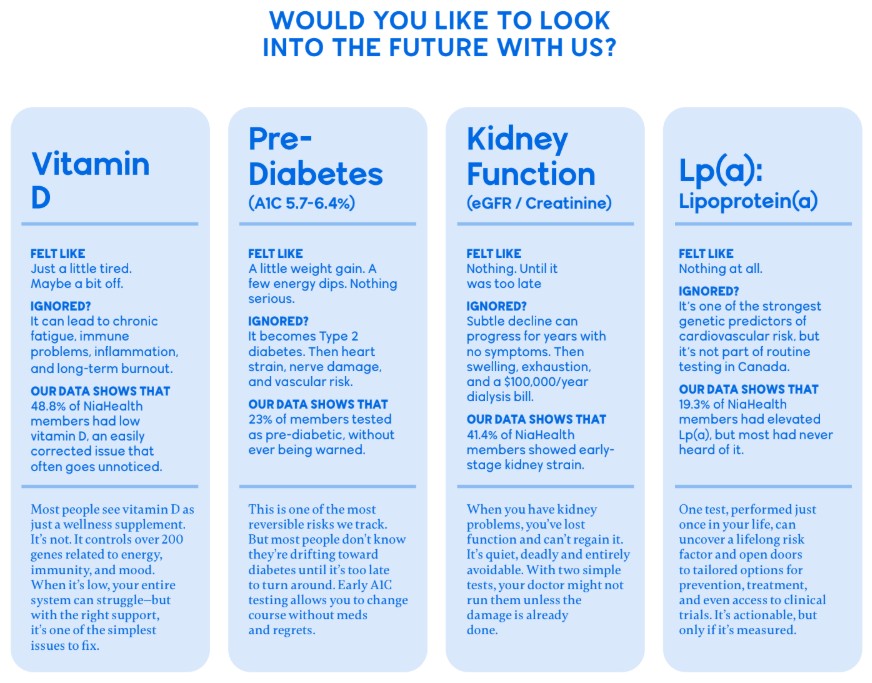
Overall, 88% of Canadians had at least one actionable health issue that had gone undetected, reports NiaHealth, based on a review of clinical and behavioural data from more than 2,000 members.
“We’re entering an era where we have the data. What we’re missing is the interpretation,” says Sameer Dhar, co-founder and CEO of NiaHealth. “It’s not enough to collect more numbers. Canadians need a more modern system that turns data into direction—so no signal gets missed, and no patient gets left behind.”
Workers’ wellbeing is a high priority for employers, according to a previous Gallagher report.
Kidney disease, diabetes, and health misinformation
Despite a majority of Canadians rating their health as “very good” or “excellent,” diagnostic results tell a different story, finds NiaHealth’s study of 100,000 anonymized biomarker test results from a randomized cohort of 2,253 NiaHealth members, collected between January 2024 and June 2025.
Overall, 41.4% showed early signs of kidney strain, 23% had previously unknown diabetes risk, and nearly half had suboptimal vitamin D levels. The report also notes that 62% of Canadians have encountered health misinformation, and 43% say it has caused them stress or delayed care.
“Many of our members come to us feeling overwhelmed—like they’re doing everything right and still missing something,” says Tanya ter Keurs, clinical director and co-founder of NiaHealth. “They’re tracking, testing, Googling—but without guidance, it’s just more noise. What Canadians need isn’t more health data. They need a trusted way to make sense of it, so they can finally move from confusion to clarity.”
When health data is interpreted and paired with clinical guidance, outcomes improve significantly. Among a cohort of NiaHealth members who completed a re-test one year later, more than 70% followed half or more of their care plan. These members saw, on average, a 45% improvement in cardiovascular scores, a 37% improvement in kidney function, and a 27% improvement in metabolic markers.
Data from GreenShield show that three out of four workers want simpler access to health professionals and easier claims processes, according to a previous HRD Canada report. Joe Blomeley, executive vice-president and head of GreenShield Health, said that right now, Canadians are spending 2.5 times more time navigating their health benefits than they are actually receiving care. That friction hurts utilisation.
“Today, support for employees has to go beyond simply offering coverage,” said Blomeley. “It needs to reflect who people are. And increasingly, that means offering care that is inclusive, personalised, and easy to access.”
Workplace leaders, managers, and HR professionals should care about employees’ personal lives, says Robert Sakayo, human resources assistant at UR Home International, via LinkedIn.
“Awareness of an employee’s well-being can help identify when he or she is overwhelmed before it turns into burnout, absenteeism, or turnover.
“The goal of caring about employees’ personal lives should not be to get involved, but to create an environment where employees feel safe and supported if life outside of work affects life inside of work.”
He adds, however, that employers should “respect employees’ privacy, create a space where employees can share but never feel obligated to, and ensure their support is within professional boundaries.”