Nearly half of pharmacists identify AI integration as single most important trend affecting pharmacy: report

Artificial intelligence (AI), automation and direct-to-consumer drug channels are accelerating a structural shift in Canada’s pharmacy sector – and HR professionals could see the impact in how employees access primary care, medications and support for chronic conditions.
TELUS Health’s 2026 Pharmacy Trends Report, released on April 14, finds that almost half of Canadian pharmacists see AI integration as the most significant driver of change in their industry, but adoption is still limited. This gap between potential and practice will shape how quickly pharmacies can reduce administrative bottlenecks and free up staff for higher-value clinical work that directly affects employee health outcomes.
The report – based on a survey of 152 retail pharmacists across Canada conducted from Jan. 12 to 16, 2026 – also highlights central fill automation, data interoperability and new digital care models as key forces that will influence how workers experience the pharmacy channel their benefit plans rely on.
AI and central fill
According to TELUS Health, 47% of pharmacists identify AI integration as the single most important trend affecting pharmacy, yet only three per cent say they use AI tools most of the time in daily operations.
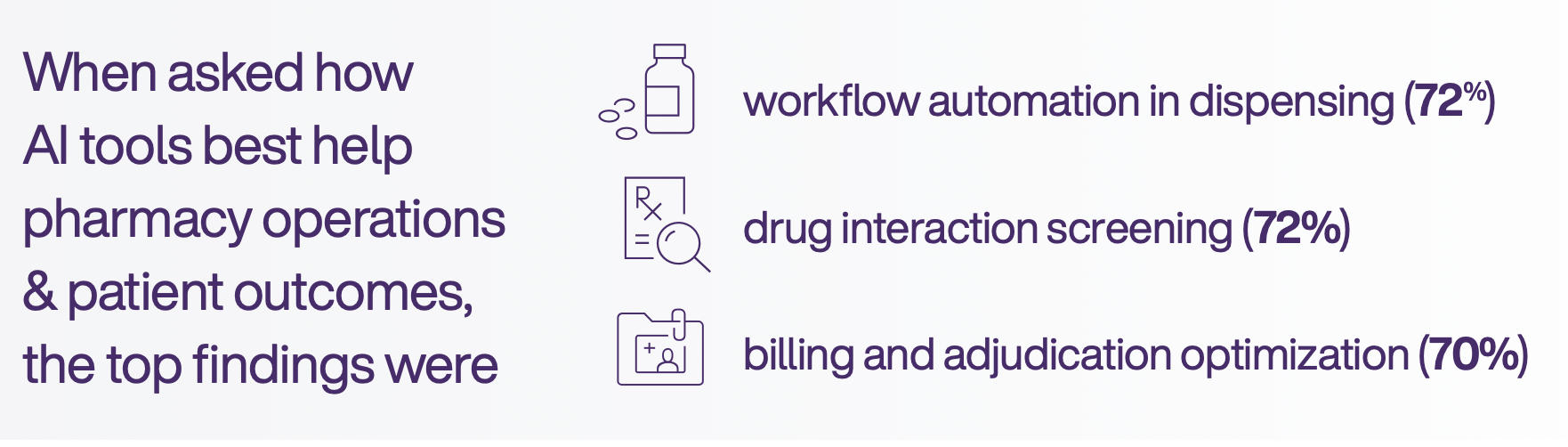
Pharmacists report that unreliable outputs (62%) and system integration problems (45%) are holding back wider use. Still, they see clear value in targeted applications: 72% point to workflow automation in dispensing, 72% to drug interaction screening, and 70% to billing and adjudication optimisation as areas where AI could materially improve performance.
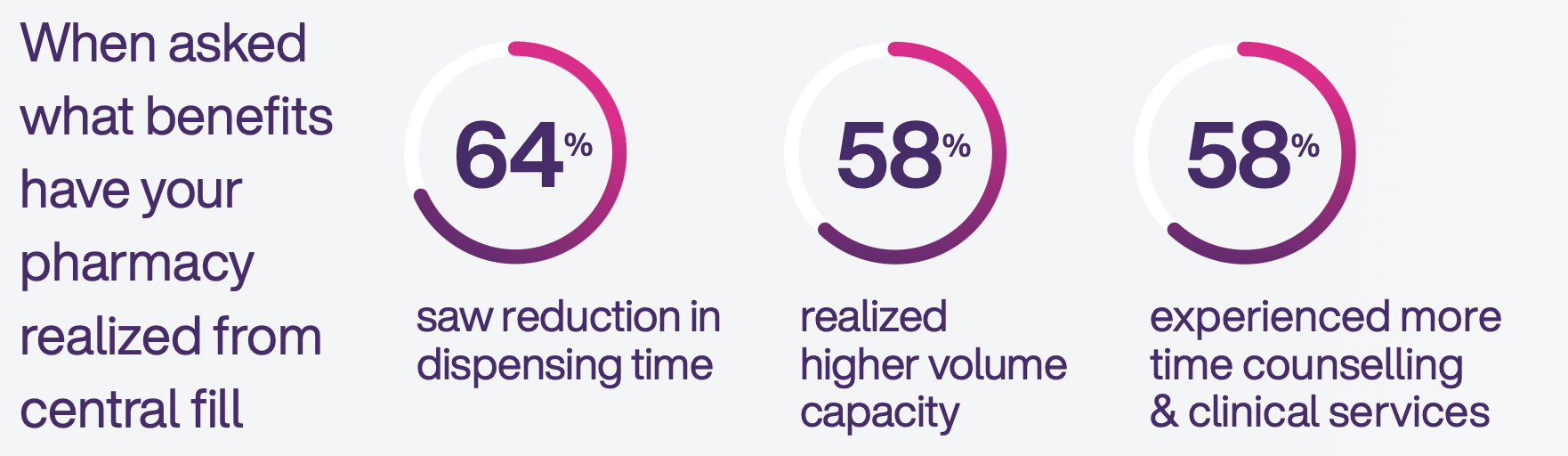
Central fill is emerging as a complementary pillar of automation. TELUS Health says 22% of surveyed pharmacists view central fill — centralised facilities that prepare prescriptions for multiple locations — as a high-impact trend over the next two years. Among users, 64% report reduced dispensing time, 58% higher volume capacity and 58% more time for counselling and clinical services.
 Data gaps and new digital channels
The report warns that data fragmentation is undermining the benefits of automation. Nearly 4 in 10 (39%) pharmacists say they never use business intelligence tools, and only 5% use them daily, despite strong interest in better insight into staffing, efficiency and billing. TELUS Health notes that seven in 10 pharmacists would like tools that improve operational visibility and claims optimisation, which would ultimately support more predictable service for plan members.
E-prescribing is seen as a key step towards interoperability, with 27% of respondents naming it a top trend for the next two to three years. Integrated electronic prescribing, already common in countries such as the United Kingdom and United States, could streamline communication between prescribers, pharmacies and insurers, improving safety and reducing administrative friction for employees filling prescriptions.
At the same time, the mainstreaming of GLP‑1 and other metabolic and lifestyle therapies is fuelling digital and direct-to-consumer (DTC) pharmacy models. TELUS Health reports that nearly 1 in 4 pharmacists is watching virtual and telepharmacy services closely, while 1 in 5 is monitoring DTC prescription offerings as manufacturers and online platforms build proprietary channels that combine virtual assessment, prescribing and home delivery.
In January, the Court of Appeal of Alberta overturned a finding that a Calgary pharmacist committed sexual abuse of a patient, quashing the Alberta College of Pharmacy’s disciplinary decision and sending the matter back to the College’s council for reconsideration.
Pharmacies expand clinical role amid workforce pressure
Behind these technology shifts is a broader evolution in pharmacy practice. TELUS Health estimates that about six million people in Canada lack access to primary care, pushing more patients toward pharmacies as first-line providers. Nearly 9 in 10 (85%) of surveyed pharmacists say expanded scope of practice — including prescribing for minor ailments and managing chronic disease — will be the most significant factor shaping their work in the next two to three years.
However, 51% of pharmacists cite workforce and retention pressures as a major concern, raising questions about how far pharmacies can stretch without further support from automation and AI.
In 2024, the Ontario government announced plans to expand pharmacists’ role in healthcare by broadening their knowledge and further honing their skills to provide healthcare.