Report shows top 5 areas where employers can provide support for employees considering retirement

When it comes to workforce planning, HR leaders will want to be aware of a growing trend for Canada: More people are postponing retirement.
In 2025, 35% of respondents expect to retire later than planned, up from 34% in 2021 and 26% in 2020, according to a report.
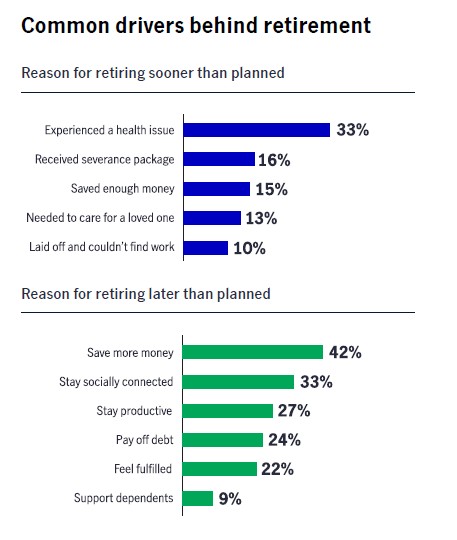
However, there's a stark difference between those who retire on their own terms and those forced to exit the workforce early, finds Manulife:
Early retirees, who typically left work at age 56, often did so due to:
- health issues (33%)
- severance (16%)
- the need to care for a loved one (13%).
In contrast, those who retired later, at an average age of 62, cited the need to save more money (42%) and a desire to stay socially connected (33%) as key drivers.
Falling behind on retirement savings
A growing number of workers are falling behind on their retirement savings and are increasingly worried about their ability to afford healthcare and basic expenses after leaving the workforce, notes Manulife.
Only 48% of Canadians are on track with their retirement savings in 2025, down from 49% in 2022, but up from 35% in 2021.
More than two in five (42%) are also worried about paying for basic expenses in retirement, down from 43% in 2022 but up from 28% in 2020.
Financial stress is taking a toll on job performance. Employees now spend an average of 5.5 hours each month managing personal finances at work, and those impacted by financial stress missed an average of one day in the past six months, finds Manulife.
Notably, 41% of employees say they would be more productive without their current financial worries.
Financial stress is still the top worry for workers aged 40 to 60, according to a previous report from the Healthcare of Ontario Pension Plan (HOOPP).
Workers want employer support
According to the Manulife report, 57% of Canadian employees believe their employer influences their financial decision-making, and are looking for support:
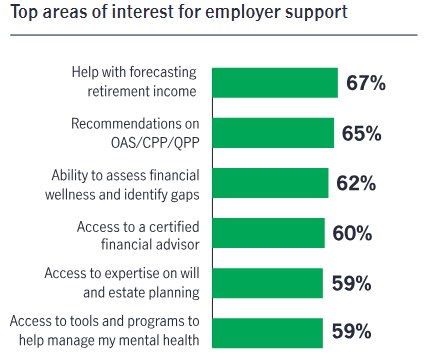
To support workers, Manulife suggests HR professionals consider interactive activities, video testimonials, guest speakers, and age-specific education sessions.
For example, “Making retirement planning a game can help [younger employees] visualise the outcome and the impact their choices can have on their finances,” the report notes.
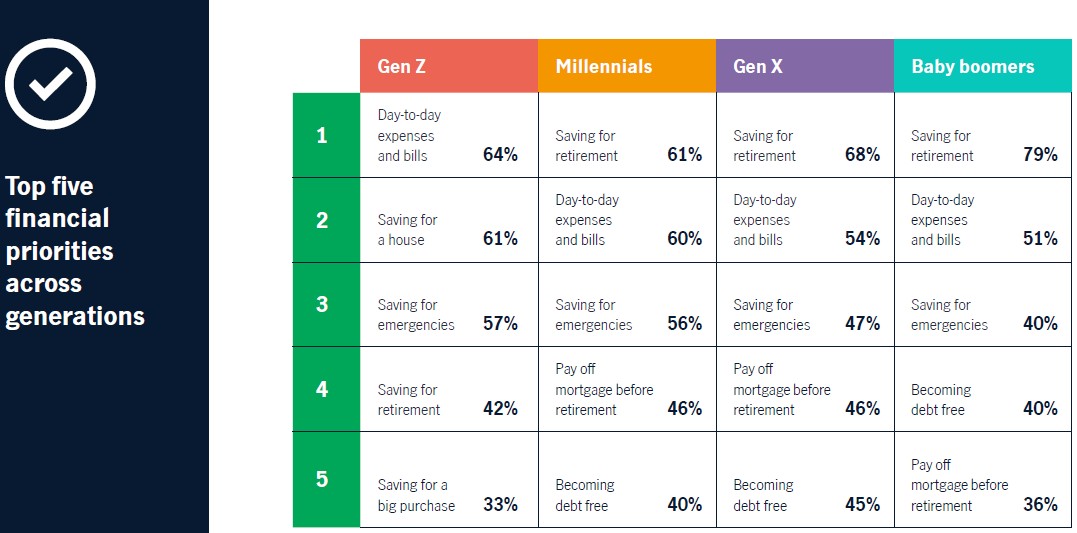
Tailoring financial education to different generations can foster greater engagement and help employees take actionable steps toward a secure retirement, according to Manulife.
More than 22 million Canadians have a base for their retirement plan through the Canada Pension Plan (CPP), according to a previous report from CPP Investments.