Women’s cancer claims in Canada account for significantly greater proportion of overall disability claims compared with men

Women are facing a unique and growing set of health challenges in the workplace, and employer supports for them should evolve to meet their needs, according to a report.
Cancer has a major impact on employers’ medical costs, and it has surged over the past three decades, notes the report.
Specifically, over the past 30 years, the incidence of breast cancer in women aged 20 to 29 has increased by 45.5%. Additionally, women under 50 have almost twice the incidence of cancer compared to men in this age group.
This also has an impact on long-term disability claims, notes the Sun Life report.
“Women’s cancer claims account for a significantly greater proportion of overall disability claims compared with men.”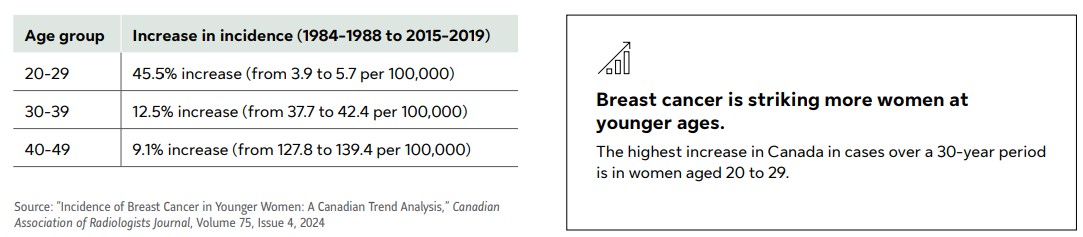
With a cancer diagnosis, the long-term impact can be difficult for many working-age Canadians. This can include heightened concerns about long-term savings and job prospects, according to a report from the Canadian Cancer Society (CCS).
Migraine, mental health, menopause
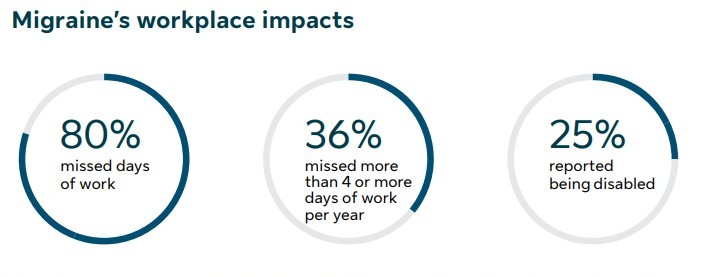
Migraines are another area where women are disproportionately affected. According to Sun Life, “women are three times more likely to experience migraines than men,” largely due to hormonal fluctuations. The impact on the workplace is significant: 80% of people with migraines miss workdays, and 25% report being disabled by their symptoms.
“Supporting employees with migraine” is not just about compassion—it’s about reducing absenteeism and maintaining productivity, according to Sun Life.
Mental health disorders also continue to place a heavier burden on women. Sun Life’s data show that “45% of women’s disability claims are for mental disorders compared with about 33% for men.” Women also face more barriers to accessing care, including cost, transportation, and childcare. The report recommends that employers offer virtual care options and Employee Assistance Programs (EAPs) to help bridge these gaps.
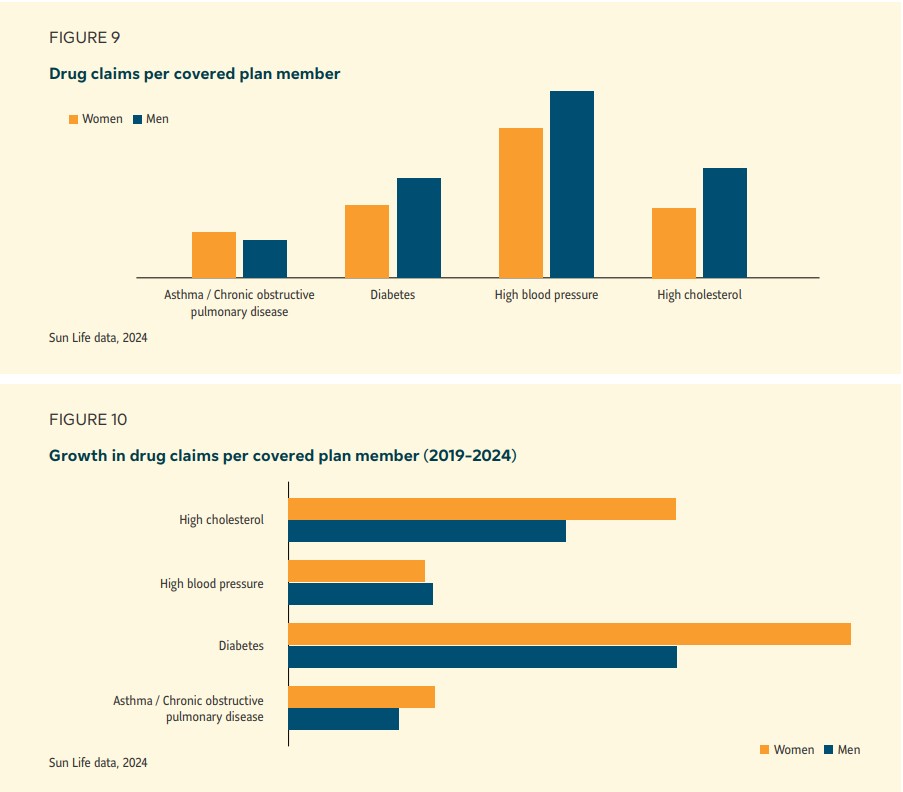
Chronic diseases such as diabetes and heart disease are growing faster among women, especially those under 30. Sun Life reports that “women’s claims for diabetes drugs are growing 40% faster than men’s.” Menopause, often a taboo topic, also has significant workplace implications. Three-quarters of women say menopause symptoms interfere with daily life, and one in ten may leave the workforce due to unmanaged symptoms.
On top of their health challenges, Sun Life notes that women continue to shoulder the majority of unpaid caregiving, which takes a toll on their health and career progression. In fact, women are “about twice as likely to say their caregiving role makes taking care of their own health very challenging,” it says.
"These findings remind us that behind every statistic are real women navigating demanding lives and complex health needs," says Marie-Chantal Côté, Senior Vice-President, Sun Life Health. "By raising awareness and making small but meaningful changes, workplaces can be powerful allies and make a real difference – helping women thrive through every stage of their health journey."
How can employers support women's health in the workplace?
Jennifer Schmidt, partner and innovation leader with Mercer, and Alison Byrne, workplace health consulting team leader, UK, Mercer Marsh Benefits, share—in a post on their website—the following key steps to addressing gaps in women’s health coverage:
-
Understand how your current program is seen by women in your organisation – Does what you’re offering meet their needs? Where are the gaps? Get to know your employees and what is important to them.
-
Care for the caregivers within your workforce – Do this by reviewing caregiving-specific benefits, including subsidies for child/adult care, navigation to caregiving resources, digital health solutions for children, and benefits eligibility for extended family members, such as parents.
-
Tailor benefits packages to cater for women’s health needs at all life stages – Consider the following universal health issues: cancer, maternal health, violence against women, sexual and reproductive health, and non-communicable diseases.
-
Place a particular focus on mental well-being and psychological safety – Work to create a “culture of caring,” where leaders practise and promote openness and are willing to listen.
Meanwhile, Elaine-Marie Cannella, Senior Director at Willis Towers Watson (WTW), along with her colleagues, suggests that employers also provide caregiving support to women.
“Women spend more time on caregiving and household tasks than their male counterparts, even accounting for income.”
They note—in a post on their website—that employers can support women through parent “on/off” tracks for appropriate roles.
“Paid time off that can be flexed for both child and eldercare may be especially attractive for female employees,” Cannella et al. say. “Women often gravitate toward roles with increased flexibility, like those that became available during the pandemic. Maintaining that flexibility, as appropriate, would support attraction and retention. Lastly, employee assistance programmes that give targeted support for eldercare needs are of growing interest.”
Employer spending on wellbeing benefits has dropped significantly, falling by 13% since 2022, according to a report by Ben, a company specializing in benefits spending, according to a report released earlier this year.