Full-time positions take hit as labour force figures fall short of forecasts

Canada’s labour market stumbled in February, adding pressure on employers already dealing with higher costs, cautious budgets, and unresolved skills gaps.
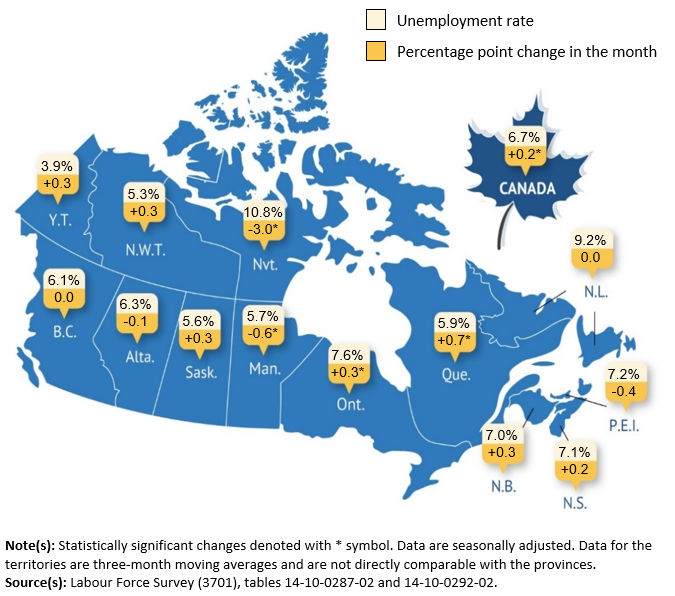
Statistics Canada’s latest Labour Force Survey, released Friday, shows employment fell by 84,000 positions, or 0.4 per cent, lifting the national unemployment rate to 6.7 per cent — the latter up 0.2 percentage points from January.
The job losses were largely from full-time employment, with a decrease of more than 100,000 positions, while part-time employment saw small gains. The survey also reports that the employment rate slipped to 60.6 per cent, its second straight monthly decline and only slightly above the low reached in August 2025.
Job losses unexpected
The drop was a surprise for many, as a Reuters poll of economists expected about 10,000 jobs to be added in February with a slower rise in the unemployment rate, reported the Canadian Press and CBC News.
Who is being affected matters for workforce planning. February’s losses were concentrated among youth and core‑age men — aged 25 to 55 — while employment for core‑age women and workers 55 and over was broadly unchanged, according to StatsCan. That pattern points to cooling demand in roles that skew younger and more male, particularly in retail, hospitality, construction, and manufacturing.
Job losses were spread across both services‑producing and goods‑producing industries. The report highlights declines in wholesale and retail trade — which has seen a steady decline since October 2025 — “other services,” construction, and manufacturing, while public‑sector employment and self‑employment were little changed.
Quebec's first significant drop in 2 years
Regional trends reinforce the broader economic story. Quebec, British Columbia, Saskatchewan, and Manitoba all saw employment fall in February, with Quebec recording its first significant decline in more than two years — 57,000 jobs. Ontario employment was essentially flat after a steep drop in January, but the province’s unemployment rate still climbed to 7.6 per cent as more people entered the labour force.
For HR leaders, a higher unemployment rate brings mixed implications. The easing in labour‑market tightness should widen applicant pools and temper some wage pressure, particularly in interchangeable roles and in sectors tied to interest‑sensitive activity. At the same time, a softer outlook may force leaders to revisit headcount plans, tighten approval processes for new roles and place greater emphasis on redeploying existing staff rather than hiring externally.
StatsCan reports that average hourly wages in February were 3.9 per cent higher than a year earlier.
The survey also highlights groups at greater risk of being left behind as the economy slows. Nearly one-quarter of job seekers had been unemployed for 27 weeks or more, and youth unemployment reached 14.1 per cent — a jump of 1.3 percentage points from January —with higher rates among Black, Chinese and South Asian youth. The proportion of Canadians aged 15 and older who were employed or looking for work remained mostly flat at 64.9 per cent — 0.1 percentage points below January’s figure — but was down 0.4 percentage points from February 2025.