Only 29 per cent of global consumers trust companies to use AI responsibly, and employees are catching up fast
Companies racing to deploy artificial intelligence tools across their workforces are making a fundamental mistake – they are treating AI as a technology problem when it is, at its core, a trust problem.
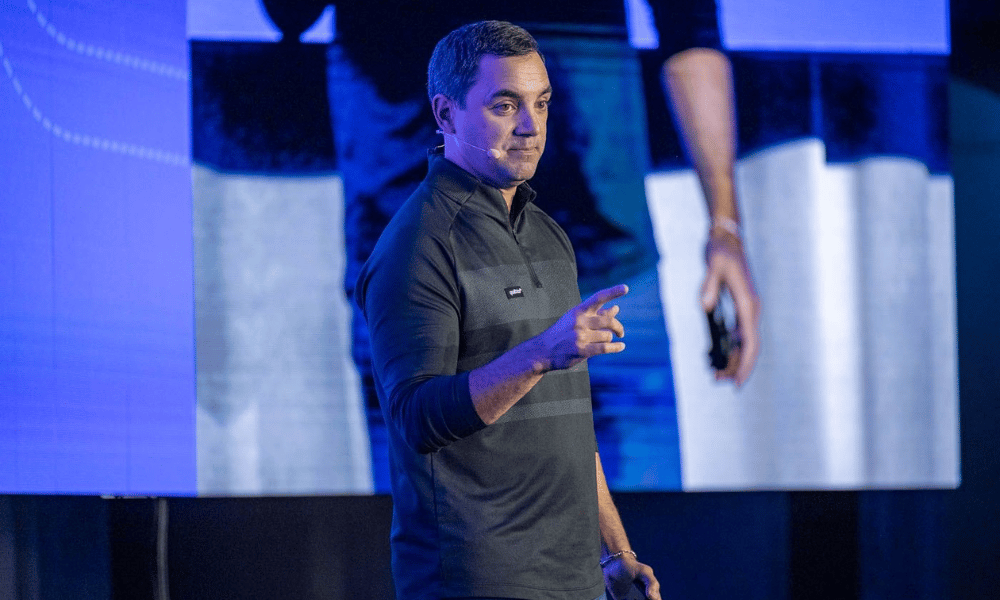
That is the view of Dr Benjamin Granger, chief workplace psychologist at Qualtrics, who says data from the experience management platform reveals a widening gap between AI adoption rates and genuine employee confidence in how those tools are being used.
"From all the data that I'm looking at, I think one of the answers is that this is a trust problem," Granger told HRD. "People are not seeing the 'what's in it for me' in this tool. And that is a key driver of whether people are going to trust it."
The numbers are striking. According to Qualtrics' 2026 research, only 29 per cent of global consumers trust companies to use AI responsibly – a sharp drop from the gradual gains recorded in 2023 and 2024.
Employee sentiment, while still trending upward in terms of usage frequency, is showing similar warning signs as mass deployments accelerate.
Treating AI as transformation, not a tool
Granger's central argument is one that HR leaders may find confronting: most organisations are not failing at AI because of the technology itself, but because of how they are managing the human side of the change.
"A lot of companies are treating AI like a new tool that's being introduced into the workplace, whereas they really should be thinking about it as a strategic transformation," explained Granger.
"All the things that go along with a strategic transformation – a lot of communication, a lot of conversation, asking people questions about what you find helpful and what you're not finding helpful."
Qualtrics research comparing successful and unsuccessful AI implementations found a consistent pattern. Organisations achieving genuine productivity gains and consumer buy-in were those that approached deployment with the discipline of large-scale organisational change – communicating frequently, explaining the rationale clearly, and building in feedback loops.
Those struggling were, by contrast, dropping tools into their organisations with minimal guidance and expecting results.
For HR leaders looking to build a culture of trust and transparency during AI rollouts, Granger's findings offer a clear framework: communication first, technology second.
The guardrails paradox
One of the most counterintuitive insights from Granger's research concerns employee freedom. Many leaders assume that giving staff open access to a broad suite of AI tools, and encouraging experimentation, is the path to innovation. The data suggests otherwise.
To illustrate the point, Granger invoked a thought experiment attributed to the British writer G.K. Chesterton: imagine children playing on an island surrounded by cliffs. Give them a ball and a wall around the cliff edge, and they will quickly invent creative games. Remove the wall, exposing the dangerous drop, and they become paralysed – too anxious to play freely at all.
"It's precisely when you put the rules and the boundaries around it that the creativity comes out," Granger said. "Some companies are dropping tools in with very little guidance and guardrails and saying, 'go experiment.' Those are not the conditions with which humans are going to be experimental, because the risks could be so high and there's so much uncertainty."
The consequences of getting this wrong are measurable. Qualtrics' 2026 workforce data found that employees who reported being under significant pressure were far more likely to use unauthorised AI tools outside their organisation's approved systems – what Granger calls "shadow AI usage." It is a risk most organisations have not yet fully accounted for.
HR teams focused on managing the risks of shadow IT and unsanctioned AI tools will recognise the pattern: the more anxious employees feel about expectations and the less clear the guidance, the more likely they are to find their own solutions.
Grounded optimism as a leadership skill
On the question of how leaders can acknowledge the genuine disruption that AI brings, including legitimate fears about job security, without demoralising their teams, Granger offered a concept he calls "grounded optimism."
The approach draws directly from Qualtrics' own data on what went wrong when large technology companies began significant restructuring over the past two years. Employees were not losing trust because of the changes themselves, Granger said, but because of how those changes were being communicated.
"A lot of the communications were about what's in the best interest for the company, which there's nothing wrong with. But when people are going through a lot of change and disruption and uncertainty, people tend to go into self-protection mode."
Grounded optimism, as Granger describes it, means leaders actively acknowledging what employees are experiencing – fear, confusion, lack of direction – before pivoting to the opportunity. "We hear you, we know that this is tough, but here's what we're doing to support you" is, in his view, far more effective than leading with business rationale alone.
"That sort of message is going to resonate with employees much more than, 'hey, we had to do this because it's the right thing for the company, end of discussion.'"
The HR function at a turning point
Granger's perspective extends beyond AI tactics into the broader evolution of the human resources function itself. A major Qualtrics study currently in progress, provisionally titled Future of Experience Management 2030, surveyed more than a thousand business leaders across multiple countries and conducted dozens of qualitative interviews with HR and customer experience executives.
The finding that came up most consistently, Granger said, was that HR leaders could no longer afford to remain in functional silos. "HR leaders, customer experience leaders and the like have to become true business partners," he said. "The silos themselves are going to start disappearing very soon, if they aren't already."
For HR professionals thinking about how the people management function is evolving in the age of AI, Granger's message is both a challenge and an invitation. The organisations finding success with AI are not necessarily those with the most sophisticated tools – they are the ones that have treated the human question as seriously as the technical one.
"Companies are made up of people who are trying to work together to meet the needs of other people," Granger said. "That has always been true, it's true today, and it's probably always going to be true."