Most North American workers say feeling safe boosts performance and loyalty, but rising risks still strain workplaces
A majority of North American workers now see safety as directly tied to how well they can do their jobs, according to EcoOnline’s 2026 North America Workplace Safety Report, which surveyed 1,200 workers across the United States and Canada.
Safety as a strategic lever for productivity and retention
The study found 92 per cent of respondents said a safer workplace makes them more productive, while 77 per cent said safety would affect their choice of employer and 78 per cent would consider leaving a job over unsafe conditions. Nearly half (47 per cent) reported they or someone close to them has experienced a workplace incident or illness, underscoring the gap between rising safety awareness and day-to-day realities on the job.
Jim Somers, chief marketing officer at EcoOnline, says the report was designed to capture the “voice of the end user” rather than just the perspective of safety managers and executives. “We really want to make sure we got the voice of the end user, not just the people that manage it in the companies and oversee it,” he says.
Somers argues frontline adoption is the true test of any safety program. “If it’s not being used and adopted, ultimately these solutions are not going to be successful,” he adds.
Workers link safety to confidence, focus and “lowering the temperature”
While employers have long framed safety as a way to reduce downtime from incidents, Somers says workers themselves describe a more immediate, personal benefit: confidence.
“What we found this time is that workers feel more productive when they feel safer because they feel more confident and much more focused in their role,” he explains. “They know that they’re being supported, they have the technology that ensures that they’re feeling safe and protected.”
The report highlights how newer sources of risk are reshaping that confidence. Workers pointed to broader operational pressures – from stress and lone working to climate-related events and cyber threats – rather than just traditional physical hazards. Stress was linked to 56 per cent of workplace accidents and illnesses in the survey, while severe and extreme weather events were cited as a top crisis threat by 26 per cent of respondents.
Somers notes both physical and psychological pressures are converging. “It’s lowering the temperature on stress, right, by feeling safer,” he says. “People have a lot on their minds right now… it’s really hard to point to any one thing.”
Lone workers, new technologies and crisis readiness
The report found confidence among lone workers in their employer’s responsibility fell from 69 to 62 per cent year over year, with one-third reporting an accident while working alone in 2025.
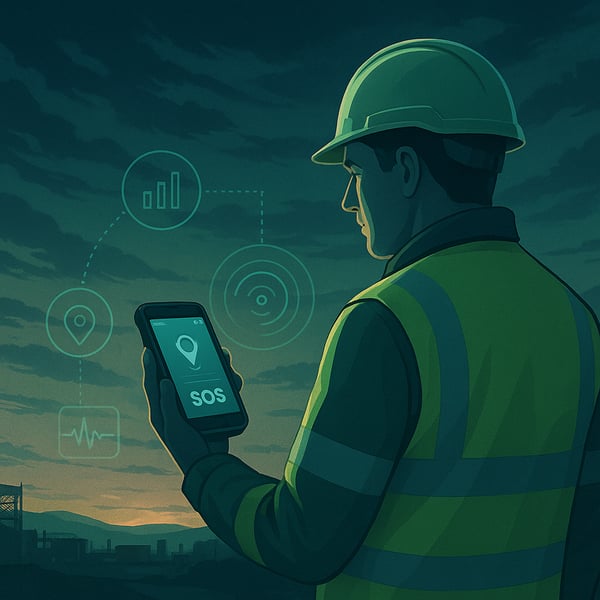
Somers says lone workers in high‑risk sectors such as construction, manufacturing and emergency response are looking for tools that keep them connected “at the point of safety.” “The lone workers now feel safer and more productive out in the field when there’s obviously more and more risks that are emerging,” he says, citing both climate risks and psychological stress.
The survey also points to cyberattacks as a top operational risk, named by 26 per cent of workers, alongside chemical exposure, which 53 per cent said they face in daily work. Somers stresses that EcoOnline is not a cybersecurity provider but says organizations should be prepared to manage cascading impacts on operations and safety.
He points to EcoOnline’s acquisition of crisis‑management provider D4H and the role of incident planning. “Whenever these cyber attacks occur, it’s good to have a plan, not just for cyber attacks, but for any type of situation,” Somers says. Combined with lone-worker solutions, he argues, crisis readiness “will make a remote employee feel more safe and protected.”
Human expertise still central as digital tools expand
Digital EHS tools and AI‑enabled systems are increasingly seen as part of the solution: 73 per cent of North American workers in the survey said digital tools could improve workplace safety, and nearly half believed AI could play a positive role, though trust must still be earned.
Somers cautions against “outsourcing safety to the bots” and says connected data should support, not replace, people. “When you have more connected data… people are more prepared and being more proactive,” he says.