New report reveals recruitment is going off the clock

One in 10 employers have admitted that they recruited an employee from a dating app, according to a new report, as hiring managers leave traditional recruitment channels that have become too saturated with applications.
Findings from Zety's latest report revealed that 52% of employers have recruited candidates outside formal work environments.
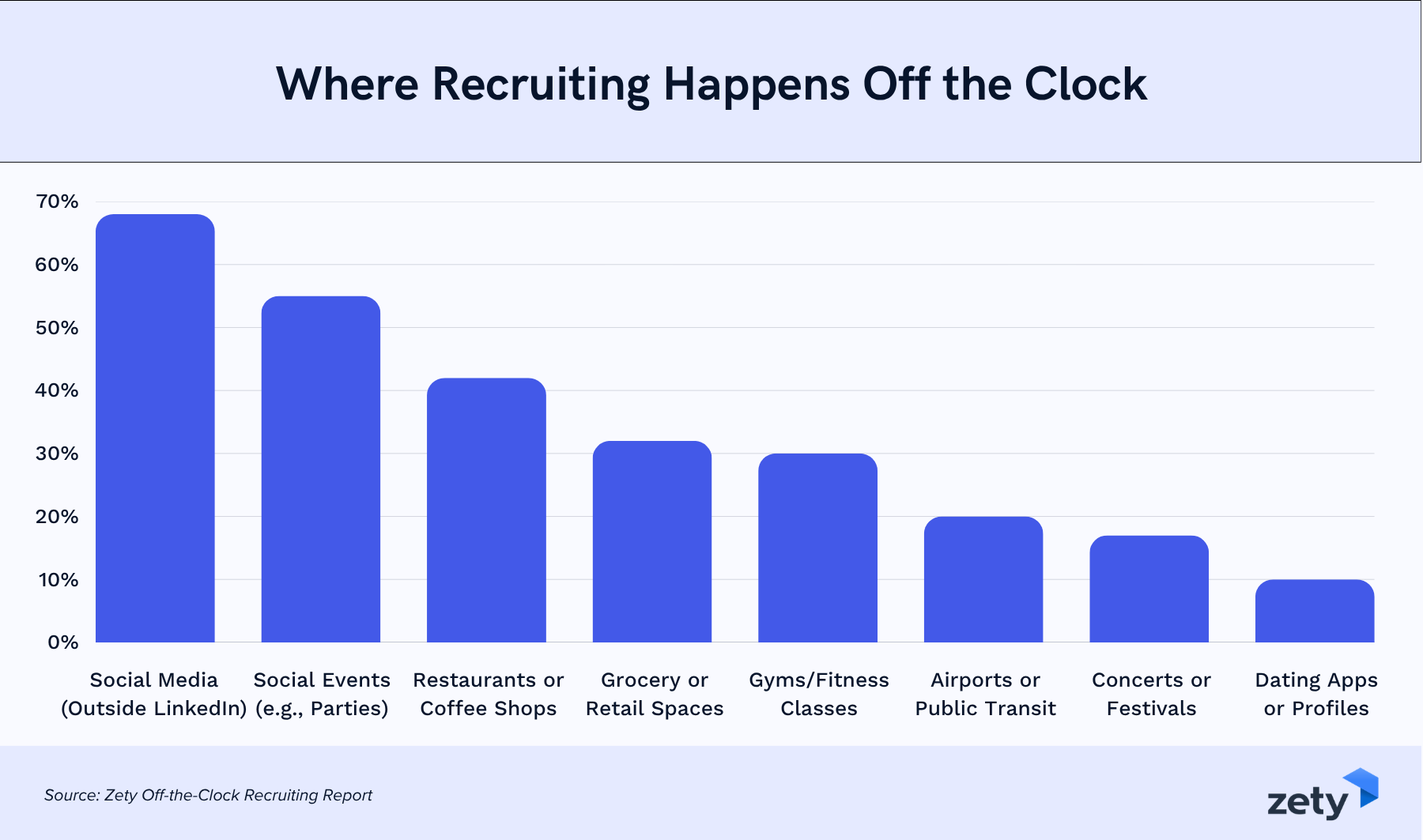
Among them, 10% said they have recruited an employee from a dating app or profile. Similarly, 68% said they recruited talent on social media outside of LinkedIn.
Other places where employers find talent include social events, such as parties, weddings, meetups, and concerts, and even in casual environments, such as grocery stores or retail spaces, gyms, airports, or public transport.
Jasmine Escalera, career expert at Zety, said the trend comes as informal moments allow individuals to be who they are without attempting to sell themselves to an employer.
"In a formal setting, you're constantly filtering your personality to fit a job description, but a spontaneous conversation at a gym or a wedding reveals the traits that actually matter: curiosity, empathy, and genuine communication," Escalera said in a statement. "These informal moments allow a hiring manager to see your potential through your actions rather than just your claims."
Informal recruitment also comes in the wake of AI-generated applications flooding the traditional hiring channels.
A Remote Recruiting Report revealed last year that a quarter of employers are receiving more applicants than they can handle, with the average time spent on sorting through irrelevant applications per role reaching 9.24 days.
The same report further showed that 73% of employers are getting AI-generated résumés with false information and 65% are seeing a surge in underqualified job candidates.
Does informal recruitment work?
According to the report, more than half of employers said unconventional and off-the-clock recruitment often (31%) and occasionally yields good candidates.
More than three in four (77%) employers said they are on the lookout for how potential candidates communicate or present themselves when trying to assess an individual in a non-work setting.
More than half of employers also said they look at personality, attitude, or interpersonal skills (65%), as well as their problem-solving or leadership behaviour (52%).
"Without a résumé in hand, a candidate's behaviour and conversational skills become their strongest assets," the report read. "These encounters prioritise emotional intelligence in action, allowing leaders to vet a person's character and composure in real-time before they ever see a bulleted list of achievements."
But even employers said they are aware of the risks - with 14% acknowledging that professional boundaries can easily be crossed.
The majority, however, said potential pitfalls exist but can be managed (41%), and that occasional issues may arise, but risk is generally low (30%).
"Even with the potential pitfalls, everyday interactions are becoming a prime space for identifying talent," the report read. "Observing how people behave and communicate in real-world situations reveals strengths that formal processes might miss."