Increasing fuel costs, inflation bring business pressures requiring workforce planning to be more dynamic, says HR exec

A renewed burst of inflation, driven largely by energy and fuel costs, could complicate workforce planning just as many employers were hoping for stability.
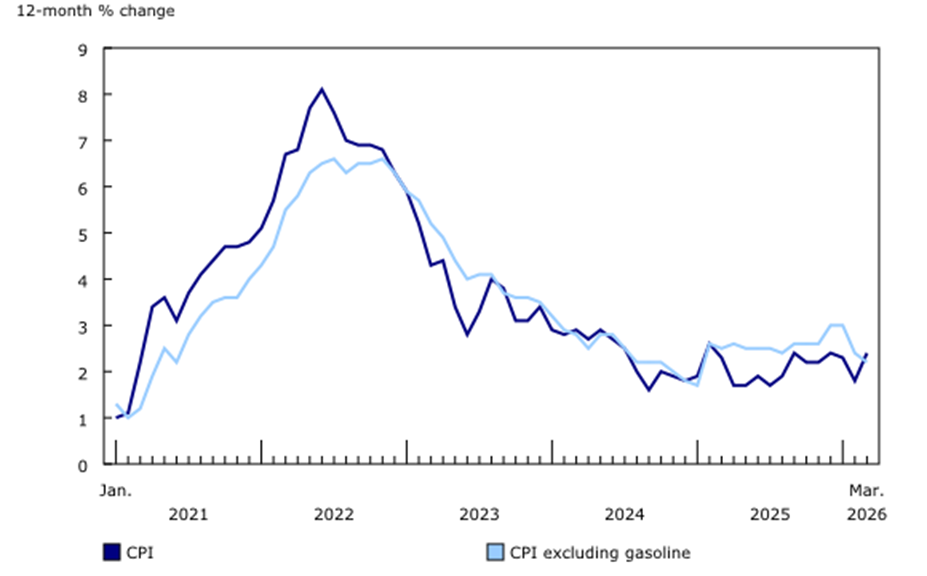
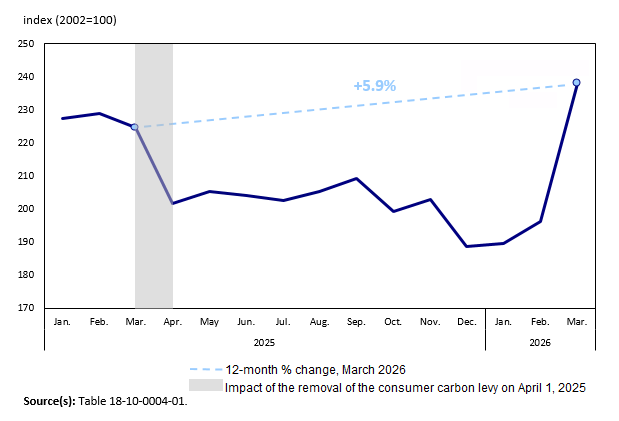
New data from Statistics Canada show that the Consumer Price Index (CPI) rose 2.4 per cent in March 2026 compared with a year earlier, up from 1.8 per cent in February. Energy prices climbed 3.9 per cent over the same period, with gasoline up 5.9 per cent year over year and 21.2 per cent in a single month, as the conflict in the Middle East squeezes global oil supply.
Fuel oil and other fuels rose more than 25 per cent year over year, further adding to transportation and heating costs for households and businesses. While overall inflation remains close to the Bank of Canada’s target range, the sharp swing in energy costs is reviving cost-of-living pressures for workers who had started to see price growth slow.
For HR leaders, that combination – modest headline inflation but fast-rising fuel costs – is likely to show up quickly in wage discussions, expense claims and commuting patterns.
Reshaping people strategies
Michelle Dulmadge, Executive Vice-president of HR at pipeline and infrastructure construction firm Surerus Murphy, says the volatility is already reshaping how fuel-intensive employers think about their people strategies. “Our fuel costs are going to remain highly volatile for a while.” Says Dulmadge. “That definitely has an outsized impact on industries like mine, as we’re a construction-based organization.”
Dulmadge notes that in her sector, work simply can’t wait for calmer economic waters. “We don’t have the option to delay workforce deployment, as projects are time-sensitive,” she says.
In practice, that means employees may need to travel long distances across Canada and the US to get to job sites, often at short notice, even as fuel prices spike, says Dulmadge. “When our fuel prices spike, it creates immediate cost pressure that we have to absorb and manage in real time,” she says.
Rising fuel costs hit pay expectations
Gasoline and fuel costs are among the most visible prices to workers. Employees who drive to work, travel for sales or service roles, or rely on air travel for client meetings are seeing their out-of-pocket costs climb again. In some regions, higher fuel prices are arriving on top of already elevated food inflation, which rose 4.4 per cent in March for groceries bought in stores, according to Statistics Canada.
Those pressures can translate into higher wage expectations, even when unemployment isn’t spiking. HR teams may find that annual salary budgets, set when inflation appeared to be easing, are no longer sufficient to keep key talent whole in real terms. Employers that froze or reduced cost-of-living adjustments in recent years may face renewed pressure to revisit those decisions.
Travel-heavy roles are especially exposed. Sales representatives, field technicians and managers with multi-site responsibilities may look for fuel stipends, richer mileage rates or higher base pay to offset rising transportation costs. Without proactive communication, those expectations can surface late in the budgeting cycle, making it harder for HR to respond strategically.
Aviation and fuel shocks ripple through workforce plans
The impact of fuel prices is especially stark in aviation. Air Canada has announced it will suspend flights between Toronto, Montreal and New York’s John F. Kennedy International Airport for several months starting June 1, citing jet fuel prices, CTV News reported. Those measures may help protect airline margins, but they also create knock-on effects for employers whose staff depend on cross-border travel.
Beyond aviation, higher fuel costs can push up freight and logistics expenses across sectors such as manufacturing, retail and construction. Employers facing higher input costs may look to control labour expenses more tightly, delaying new hires or slowing wage growth.
For fuel-intensive industries, Dulmadge says HR must be tightly integrated with business and financial planning. “Workforce planning has to be more dynamic — it has to be tied to, for us, project and financial planning,” she says, noting that rather than simply approving or denying travel, HR executives will increasingly be expected to weigh in on when travel is essential, when virtual alternatives are appropriate and how to support employees who have little choice but to be on the road.
Gasoline prices
What HR should watch in the months ahead
If energy prices remain volatile, HR leaders in Canada may need to build more flexibility into compensation and workforce plans. That could include revisiting travel policies and mileage rates more frequently to keep pace with fuel prices, considering targeted allowances or temporary stipends for roles that are unusually exposed to transportation costs, and using remote and hybrid work options to reduce commuting burdens where operationally feasible.
Dulmadge urges HR executives to use volatility as a catalyst to revisit core workforce strategies. “It’s about supporting your workforce and managing the business,” she says. “The world of work requires very intentional planning around the people, because generally your people are driving the business.”
Above all, says Dulmadge, HR leaders need to keep a strong voice at the leadership table as organizations navigate inflation-driven uncertainty. “You have to be aligned at that leadership table with operations, with the senior leadership, and with finance, to help make those decisions about how to support the workforce and how to support the work,” she says. “All of those different factors have to come into play with how you’re keeping the business, delivering what it needs to, but also supporting your employees — and some of it is looking at resourcing, workforce planning, sitting down with the leaders to talk about projecting where the business is going and how the workforce is going to do that.