Ottawa’s spring economic statement reports billions in higher revenues, a lower-than-expected deficit, and a package of new affordability and training measures.
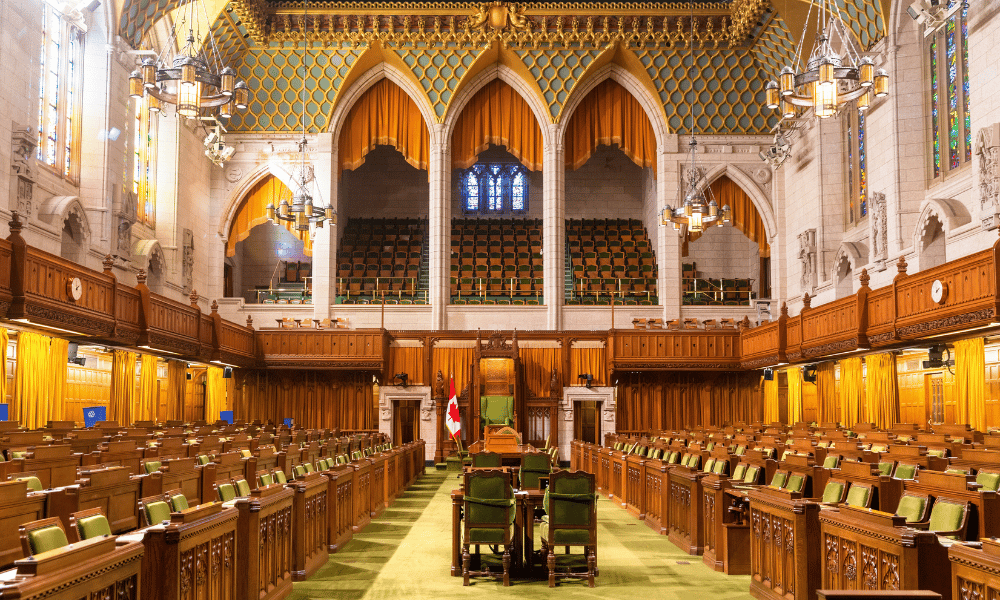
Prime Minister Mark Carney’s government is highlighting a faster-than-anticipated improvement in the federal books in its spring economic update Canada Strong For All. Tabled in the House of Commons by Finance Minister François Philippe Champagne, the document says improved revenues and reduced expenses have significantly altered the short-term fiscal picture compared with earlier forecasts.
The update says that last year’s federal deficit is now estimated at $66.9 billion. That figure is described in the document as more than $11 billion lower than the $78.3-billion shortfall projected in Budget 2025. According to the government, the smaller deficit reflects better-than-expected economic performance, revenue from higher oil prices and lapses in some planned spending.
Read more: Can Canada’s new sovereign wealth fund be part of employee savings plans?
Looking ahead, the spring statement says annual deficits are still expected, but projects that they will decline only gradually. According to the update, the deficit is expected to fall to $53.2 billion by the 2030 to 2031 fiscal year. The document also makes clear that there is no plan at this stage to return to a balanced budget over the current planning horizon.
In the same statement, the government says it’s maintaining its existing fiscal anchors. The update commits to a declining deficit to GDP ratio and to achieving a balanced operating budget within three years. The document adds that the federal debt-to-GDP ratio is projected to rise modestly but remain broadly stable over the forecast period.
The government also reports that its net debt-to-GDP ratio stands at 10.2%. The update compares this figure with an average of 101.8% for G7 countries and describes Canada’s position as considerably lower than that peer group.
New spending focuses on affordability and housing
The spring statement lists $54.5 billion in new costs and spending commitments since Budget 2025. After accounting for improved revenues and lower expenses in other areas, the government calculates the net cost of new measures at $37.5 billion over six years.
According to the fiscal tables in the update, 45% of this $37.5-billion total is tied to measures intended to address cost of living pressures and the housing shortage. The government states in the document that these initiatives are designed to help households manage higher prices while supporting broader economic objectives.
One of the central affordability steps is a temporary enhancement of the federal GST credit. The update says this benefit will be renamed the Canada Groceries and Essentials Benefit. The measure is costed in the document at $11.8 billion over five years. The government notes that eligible payments are scheduled to rise by 50% beginning on June 5.
The spring economic statement also confirms a roughly four-month pause on the federal fuel excise tax. This gas tax holiday, which the government announced earlier in April, is described in the update as one of the top line affordability measures being added to Ottawa’s books.
In addition, the document reports that federal revenues are now forecast to be $7.2 billion higher per year on average compared with earlier projections. The level of nominal GDP over the 2025 to 2029 period is presented as $31 billion higher per year than assumed in Budget 2025.
Skilled trades initiative and investment fund detailed
Beyond short term affordability policies, the spring update outlines new spending intended to expand the labour force in key sectors. The government says it will invest $6 billion over five years in a strategy called Team Canada Strong.
According to the document, this program is designed to recruit and train between 80,000 and 100,000 additional workers in the skilled trades by the 2030 to 2031 fiscal year. The update states that these workers are needed to help boost housing construction, infrastructure projects and activity in resource development and construction.
To support that recruitment, the update sets out a series of incentives. The government is promising an apprenticeship grant that will provide a $400 per week income top-up to apprentices while they complete in-class training. There will also be a one-time bonus of $5,000 for apprentices who complete their Red Seal certification.
For employers, the document proposes a first-year wage subsidy of up to $10,000 for those who hire apprentices. Additional funding is also being allocated to modernize training programs, including the introduction of online exams and digital logbooks.
The fiscal plan further notes that Ottawa intends to provide $25 billion dollars in seed money to launch a new vehicle called the Canada Strong Fund. The government describes this amount as capital to kick start the fund. The spring statement does not specify in detail within the publicly released summary where the $25 billion dollars will be sourced from.
CPP contribution cut and tax credit changes
The update also confirms a change to Canada Pension Plan contribution rates for workers and employers. The government says it will introduce legislation to lower the combined CPP rate from 9.9% to 9.5% of an employee’s paycheque, starting next year.
Tuesday’s economic update cites the most recent actuarial report on the CPP, which the government says indicates there is room to reduce the contribution rate while keeping the plan solvent. The document adds that provincial finance ministers have agreed to the change. According to the estimates in the update, the rate reduction will translate into annual savings of about $133 for an employee earning $70,000 a year.
Read more: Federal government to host foreign investment summit with global investors, business leaders
The document also promises to streamline the process for certain individuals applying to the federal disability tax credit. The government says the new process is intended to cut paperwork for people who have a formal diagnosis of one of more than 40 long-term conditions listed in the update, including mental impairments such as Alzheimer’s disease, dementia and Down syndrome, as well as several physical conditions.
According to the statement, the government will also change the criteria so that podiatrists can certify eligibility for some conditions, and will expand what physiotherapists, speech pathologists and occupational therapists are allowed to certify.
Sports funding and consumer protection measures
In the area of sport and recreation, the government is announcing new funding for facilities and programs across the country. According to the economic update, $755 million is being allocated over the next five years, with roughly $188 million promised on an annual basis afterward.
A large portion of that funding, $660 million, is being directed to sports organizations to boost youth participation. An additional $50 million is being set aside to upgrade facilities so they can host “world-class sporting events,” with the aim of ensuring those facilities can continue to be used after those events. Another $45 million is being earmarked for high-performance athletes, with this tranche of funding meant in part to respond to findings in the Future of Sport in Canada Commission’s final report.
The government is also detailing new consumer protection steps. The update says Ottawa plans to outsource the resolution process for air passenger complaints to what it describes as a neutral, third-party dispute resolution organisation. At present, the Canadian Transportation Agency is solely responsible for settling disputes between airlines and customers. The government says in the document that bringing in a third-party adjudicator is intended to help address a large backlog of complaints, and points to systems in the U.K. and the European Union as models.
The spring statement further outlines plans to ban cryptocurrency ATMs. The government links this move to its broader effort to combat fraud and financial crime. Crypto ATMs look like traditional cash machines but allow customers to deposit cash and convert it into cryptocurrency that can be sent to a virtual wallet anywhere in the world. The update notes concerns that these machines have been used in scams and cites figures from the Canadian Anti-Fraud Centre that victims reported the loss of $14.2 million to fraud involving crypto ATMs in 2024.
The document also highlights the government’s parliamentary situation. It points out that, due to its current majority in the House of Commons, the Liberal government does not require votes from opposition parties to pass the spring economic statement and its associated legislation.
Taken together, the update presents a picture of an improved bottom line compared with the last budget, a modestly lower deficit track and a wide range of new commitments tied to affordability, housing, skills, consumer protection and sport, as set out in the government’s own projections.