Three experts reveal why executive sponsorship, governance, and human-centred change are the keys to effective AI adoption
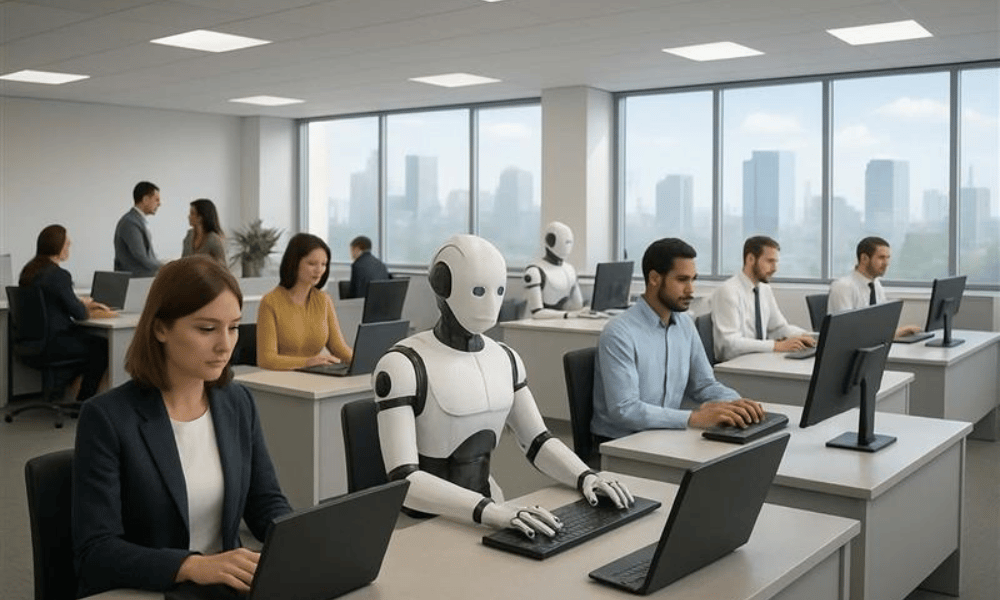
Artificial intelligence is transforming how leaders operate, and the organisations that get it right are the ones putting people before platforms.
That is the consensus emerging from global HR and change management practitioners, who say the defining leadership challenge of 2026 is not the technology itself, but the human architecture required to make it work.
The three barriers standing in the way
Darren Lonsdale, managing director at Prosci ANZ in Australia – a global change management company – says the same three obstacles appear in every organisation he works with, regardless of size or sector.
"The three things that we find are the biggest hurdles to effective AI adoption is executive sponsorship, number one," Lonsdale said. "If there's weak executive sponsorship or no executive sponsorship, then the program's destined to fail before you start."
The second barrier is fear. Lonsdale says employees are grappling not just with unfamiliarity but with uncertainty about what artificial intelligence (AI) means for their roles. The third is the skills gap – staff who don't know how to use the tools being handed to them.
The scale of the challenge is significant. According to a March 2026 HRD Australia survey of 1,033 HR decision-makers, 56 per cent of organisations report faster onboarding through AI – but realising those gains depends entirely on whether employees have been properly prepared to use the tools.
Leadership is shifting from direction to design
Brigid Archibald, vice president of Japan and APAC at Miro – the online visual collaboration platform – frames the shift in leadership more broadly. In her view, the role of a leader in an AI-enabled workplace is no longer simply to direct work; it is to design the systems in which people and AI can collaborate.
"Leadership is shifting from directing work to designing systems where people and AI can collaborate effectively," Archibald said. "We like to say 'human in the loop and AI in the group'."
That reorientation places new demands on leaders who may not have technical backgrounds. Archibald argues that leaders do not need to be AI experts, but they do need enough curiosity and literacy to identify where the technology genuinely supports their teams, rather than complicating their work.
Empathy, she says, is becoming a core leadership competency. As AI takes on more routine and data-intensive tasks, the distinctly human skills – creativity, critical thinking, and relationship-building – become more valuable, not less. Leaders have a responsibility to cultivate those capabilities while creating psychological safety around experimentation.
Transparency, too, is non-negotiable. "Employees want to understand how decisions are being made, especially when AI is involved," Archibald said. "Leaders play a critical role in setting clear guardrails, communicating ethical considerations, and ensuring accountability remains people-led."
HR executives looking to understand why AI adoption is moving faster than organisational governance will find this tension playing out in organisations across the world.
Governance is not optional
While the human dimensions of AI adoption are receiving growing attention, Lauren McKee, practice leader at commercial law firm LegalVision in Australia, warns that governance frameworks are lagging dangerously behind implementation pace.
"Leaders are having to fundamentally rethink how they govern the use of AI in the workplace, moving towards clearer rules, stronger oversight, and more consistent education," McKee said.
The legal risks are specific and significant. McKee identifies the most common exposure as employees inadvertently inputting confidential or personal information into external AI platforms – pasting client contracts, internal reports, or employee data to generate summaries or draft emails. That data may be stored, processed offshore, or used to train third-party models, triggering potential breaches of the Privacy Act 1988 and contractual confidentiality obligations.
"The issue is rarely deliberate misuse, but a lack of awareness about how these tools handle and retain sensitive data," McKee said.
At a minimum, McKee says every organisation needs a structured AI usage policy that defines which tools employees are permitted to use and for what purposes, restricts the input of sensitive information into external platforms, and sets clear expectations around verifying AI-generated outputs before they are acted upon commercially.
"Without an AI usage policy, inconsistent practices develop across teams, making it harder to demonstrate that the business took reasonable steps to manage risk if something goes wrong," McKee said.
For HR leaders building compliant AI governance frameworks that address Privacy Act obligations, policy and training must accompany every deployment, not follow it.
The long play
All three practitioners agree on one underlying truth: AI adoption is not a switch that can be flipped. It requires sustained investment in communication, training, and cultural readiness – and the organisations that approach it as a long-term transformation, rather than a short-term technology rollout, will be the ones that come out ahead.
"This is the long play," Lonsdale said. "We need to make sure that people are brought along for the journey as it's growing and developing."