Jump to winners | Jump to methodology
Employees say it takes fair pay and flexibility to be considered one of Canada’s best places to work.
Rising prices have hit workers on every front, and they’re paying attention to whether their workplace respects their time and bottom line.
“We’re seeing people more focused on compensation than ever before, given the economic pressures and the cost of living being what it is,” says Robert Half Canada managing director, Deborah Bottineau.
“But I’d pair that with flexibility. There’s still a consistent desire for flexibility, whether through a structured flexible work model or a mindset supporting flexible working.”
Robert Half’s 2025 Canada Salary Trends research shows:
44 percent of workers prefer a hybrid model, working two to three days per week in the office
34 percent say they’re not seeking a new job because they don’t want to give up their current level of flexibility
37 percent of employers are offering flexible work arrangements to attract skilled candidates
Furthermore, Randstad’s Workmonitor 2025 survey found that 88 percent of Canadian employees think work-life balance is just as important as salary, which followed closely at 87 percent.
Notably, just over a quarter of Canada’s workers said they had quit jobs that didn’t provide enough flexibility.
To identify the Best Places to Work for 2025, over 100 local and national organizations from multiple sectors submitted detailed information to HRD about their workplace policies and programs, including:
employee engagement
turnover rates and average staff tenure
compensation and benefits
health and wellness programs
diversity initiatives
professional development
flexible work options
reward and recognition programs
Then, eligible companies circulated an anonymous employee survey measuring satisfaction across those core drivers. Only those that reached a minimum number of responses and achieved an overall satisfaction score of 75 percent or higher earned recognition.
This year’s data reveals a workforce that knows its worth. Across every generation, satisfaction is highest when companies take care of the basics that shape satisfaction, such as competitive compensation, flexible schedules, and personalized career growth.
The leading workplaces go further, tailoring policies to where employees are in their lives and careers. That’s a trend that Bottineau says more employers are starting to understand.
“People are focused on their health and well-being. So, any benefit options that support and encourage a healthy lifestyle are important,” she reflects.
“Regardless of experience level, we see consistent interest in retirement plans, health and dental benefits, and wellness programs. People want to ensure they’re with a company that has programs in place to support a healthy life overall.”
As Bottineau notes, many companies offer perks such as free snacks or paid volunteer time, but those aren’t always the difference makers.
“What is important to people are benefits that support their real lives, such as flexibility, work-life balance, and programs that help them care for their kids or aging parents,” she adds. “Those are the things that make a difference day-to-day.”
Building talent from within: Top employers invest in employee growth through structured career pathing, leadership programs, coaching, cross-functional exposure, and internal promotions.
 Why it matters: Career growth must be personal and part of daily work. Randstad reports that 64 percent of Canadians feel supported in building future-proof skills, but 37 percent would leave if that stopped. Development drives engagement, retention, and leadership momentum.
Flexibility that respects real life: Now a baseline expectation. The best workplaces offer fully remote or hybrid models with no micromanagement, flexible schedules and self-managed time, and trust-first cultures that reward results over face time.
 Why it matters: Flexibility has become a cornerstone of workplace satisfaction. A 2024 Spark* Insights survey found that 81 percent of employed Canadians believe flexible work arrangements boost productivity. Meanwhile, IWG’s 2025 Canadian workplace report found that 79 percent of hybrid workers say their overall well-being has significantly improved due to greater flexibility, including better sleep, lower stress, and more time for exercise. Employers who give people control over when and how they work are more successful at retaining talent and reducing burnout.
Comprehensive well-being support: Award-winning workplaces understand wellness is physical, mental, and financial. They offer generous health spending accounts and therapy coverage, built-in recharge policies such as extra time off and personal days, and financial safety nets, from tuition support to emergency loans.
 Why it matters: Burnout is real. Environics Research and Dialogue 2024 State of Workplace Health and Wellness in Canada report found 98 percent of employees consider mental health essential, followed by 97 percent for physical health and 96 percent for financial health. Yet nearly a third say their well-being in these areas has worsened over the past year. Top employers treat wellness like infrastructure – deliberate, holistic, and built to last.
Inclusion in action: Best Places to Work winners walk the talk on DEI. Many have staff-led committees, employee resource groups, and inclusive hiring practices. Others have led Indigenous programs and Truth and Reconciliation initiatives. They embed accessibility and belonging in how they work and lead.
 Why it matters: Equity and representation are workplace essentials. Benefits Canada’s 2024 Future of Work Survey found that 65 percent of Canadian employers already have or are actively developing DEI policies, and 44 percent of those employers say they are doing so specifically to attract and retain talent. Moreover, 72 percent of employees say it’s personally important that their workplace supports DEI initiatives.
Purpose and recognition that reflect culture: There’s a shared emphasis on recognition among this year’s winning workplaces that’s authentic, tied to company values and employee impact, and backed by peer-to-peer programs and leadership visibility.
 Why it matters: Recognition keeps people connected and engaged, but only if it means something. In a 2024 Achievers and Benefits Canada survey, 45 percent of Canadian employees said they’re recognized at least once a month. Just 17 percent felt that the recognition was meaningful.
The Best Places to Work in Canada are nailing the essentials. However, the greater opportunity is tapping into different generations.
The top employers meet expectations while tuning in to what matters most to each group.
Across age groups, satisfaction levels regarding compensation, health benefits, performance reviews, and recognition are high. This suggests leading companies are delivering where it counts. People feel seen, fairly treated, and rewarded for their work.
Health coverage, flexibility, recognition, and performance incentives remain priorities for everyone. However, younger workers are more likely to seek mental health support, inclusive cultures, and purpose in their work. Older employees tend to focus on long-term financial stability and job security. The generational gaps stand out when you examine what drives satisfaction for each group.
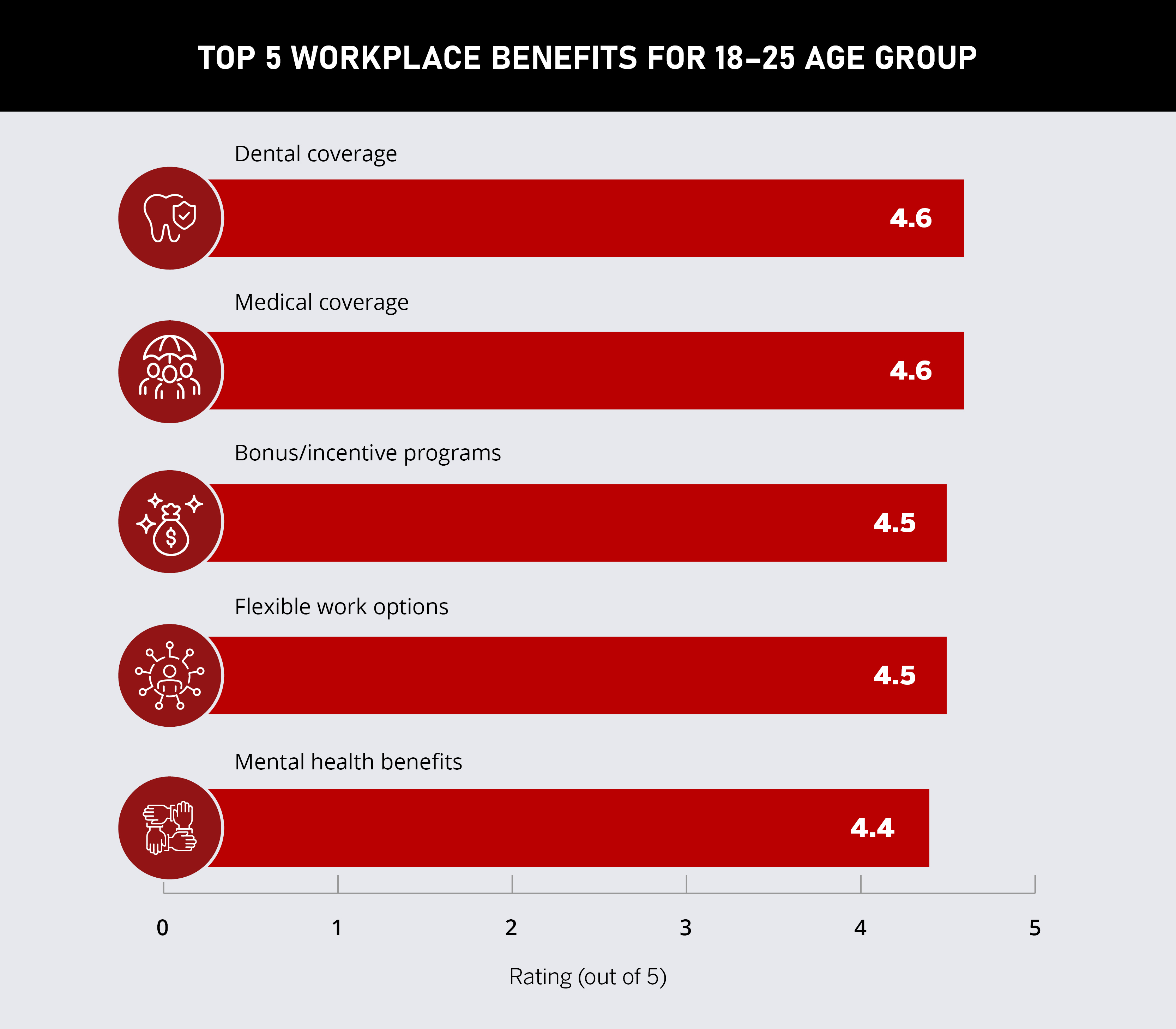
This group is entering the workforce with strong preferences and little patience for outdated systems. They want comprehensive healthcare, but they also expect mental health support and flexible work arrangements. For this cohort, wellness is holistic; employers must meet that bar to earn loyalty.
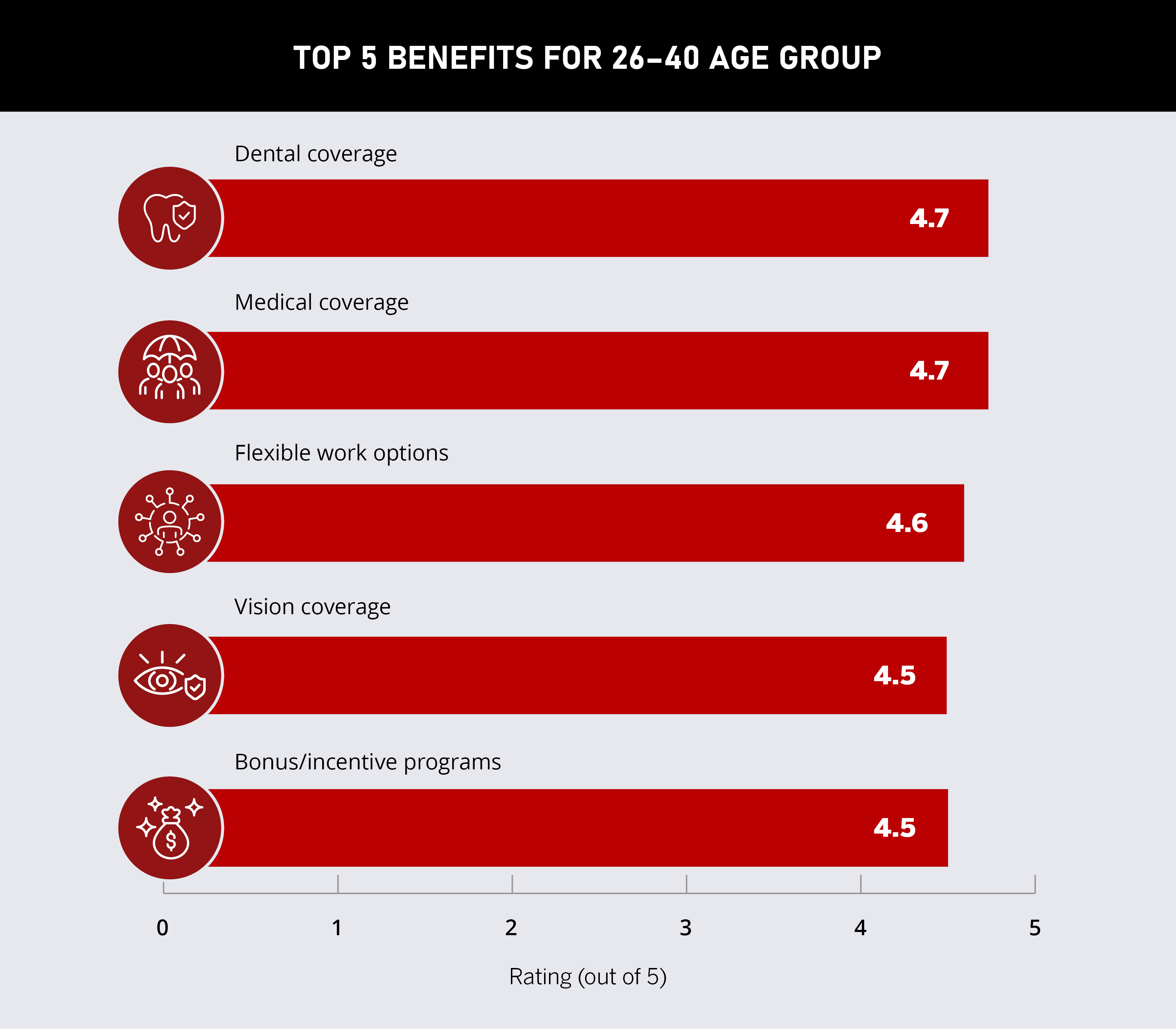
This group is career-focused but often time-strapped, trying to grow professionally while managing complex personal responsibilities. Flexibility and bonuses matter but so does access to the tools that help them perform. Tech-forward workplaces with modern perks will resonate most.
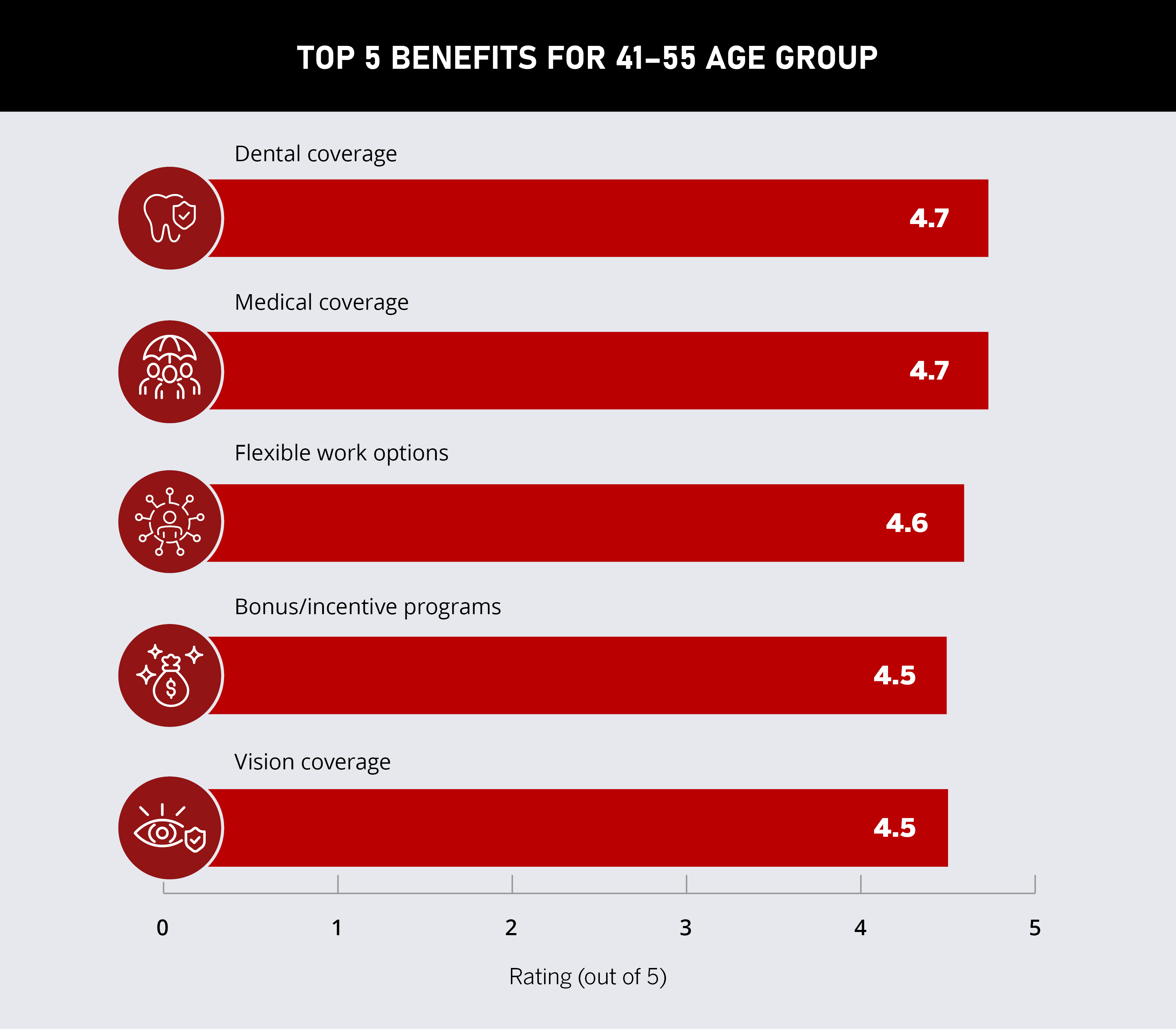
Security climbs the ranks for this group, with disability and long-term benefits taking on more weight. They still want flexibility and recognition, but they’re looking further down the road to safeguard what they’ve built, not chasing the next raise.
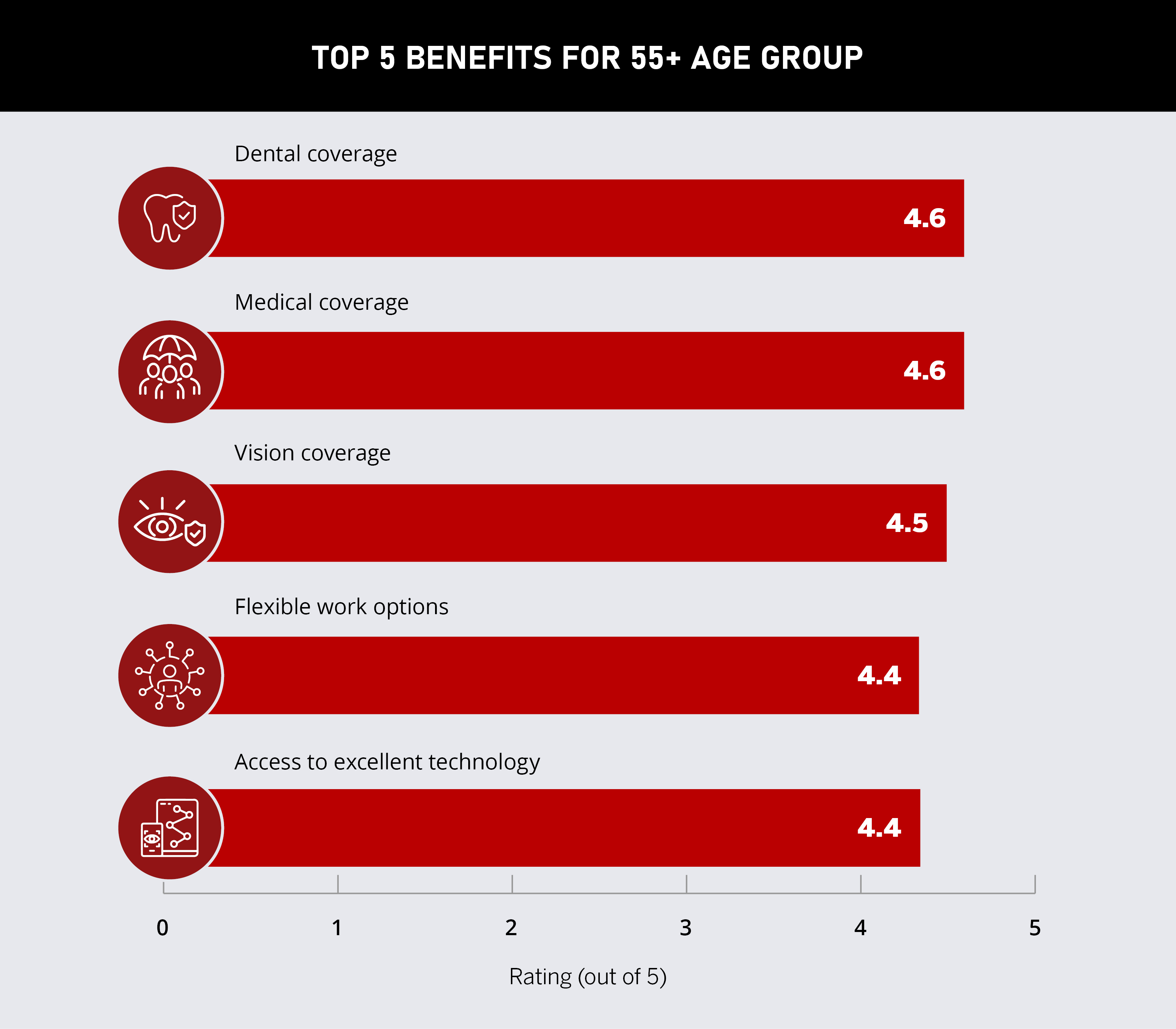
Later-career professionals remain engaged and focused, but their needs are different. Insurance coverage and access to tools that help them stay productive are top of mind. And while some may be thinking about succession, many still want to contribute meaningfully.
While age-based data highlights values shaped by life stage, tenure tells a story about trust, expectations, and how that relationship deepens or frays over time.
It’s not just who the employees are. It’s where they are in their journey with their employers.
Across tenure groups, the most valued benefits – medical and dental coverage, flexibility, and performance incentives – closely mirror generational trends.
However, satisfaction levels suggest that newer employees are scanning for proof, while long-tenured workers show signs of trust, stability, and loyalty. Satisfaction climbs after five years, especially around key engagement drivers such as compensation and rewards, advancement opportunities, and work-life balance.
HRD’s data underlines how specific supports, including mental health care and family-friendly policies, strengthen workplace connection.
New employees come in informed and intentional. They prioritize healthcare, flexibility, and bonus opportunities, scoring these benefits highly. But satisfaction levels don’t match that optimism.
Compensation, healthcare, communication, and recognition all trend lower for this group than for others. They’re watching, and if what they experience doesn’t live up to what was promised, they won’t stick around.
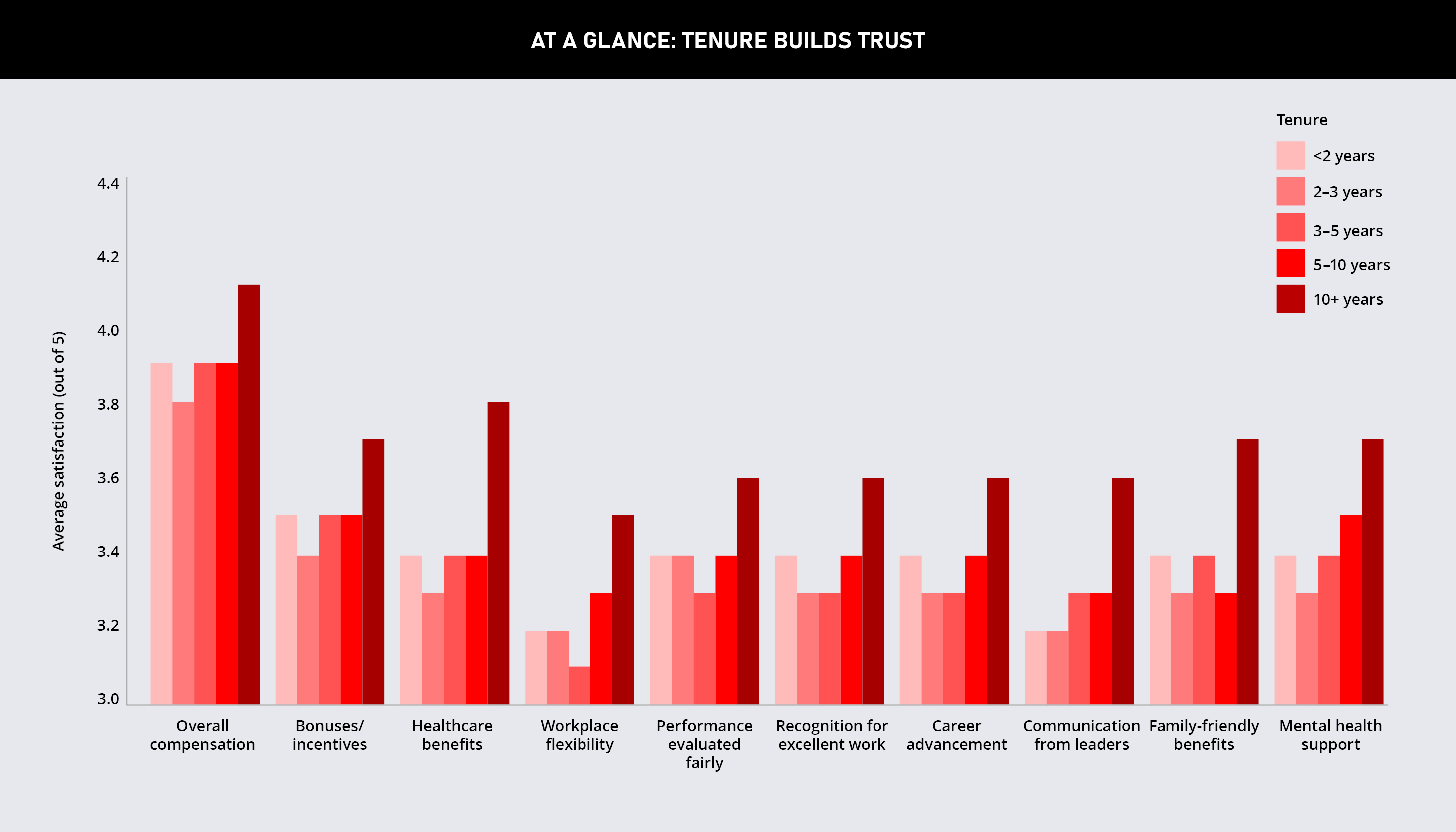
Employees in this bracket are experienced, efficient, and often entrenched in day-to-day operations. Their benefit preferences mirror earlier tenure stages, especially healthcare, flexibility, and bonuses, but satisfaction doesn’t rise much with time.
This group reports middling scores across nearly every category, from advancement to communication. These professionals have seen enough to spot the gaps between policy and practice, and they’re evaluating how well their company culture holds up.
Veteran employees report the highest satisfaction levels across every engagement driver, from compensation to communication. They give stronger ratings for advancement, recognition, and support programs, suggesting a deeper connection to their employers. Their loyalty stems from tenure-based benefits, cultural fit, and a sense that their contributions are acknowledged and valued.
Employers may not be surprised that hybrid work has taken hold. With 45 percent of respondents preferring hybrid arrangements, it’s the default setting for modern employment.
The nuance lies beneath the diverging preferences across age and tenure. Even with hybrid as the preferred model, employers feel pressure to bring more people back on-site.
“We’ve already seen a dramatic shift back to in-office work in Canada, and that momentum is likely to continue,” Robert Half Canada’s Bottineau says.
She notes the challenge is striking the right balance between business needs and employee preferences, a line that forward-thinking employers are learning to walk.
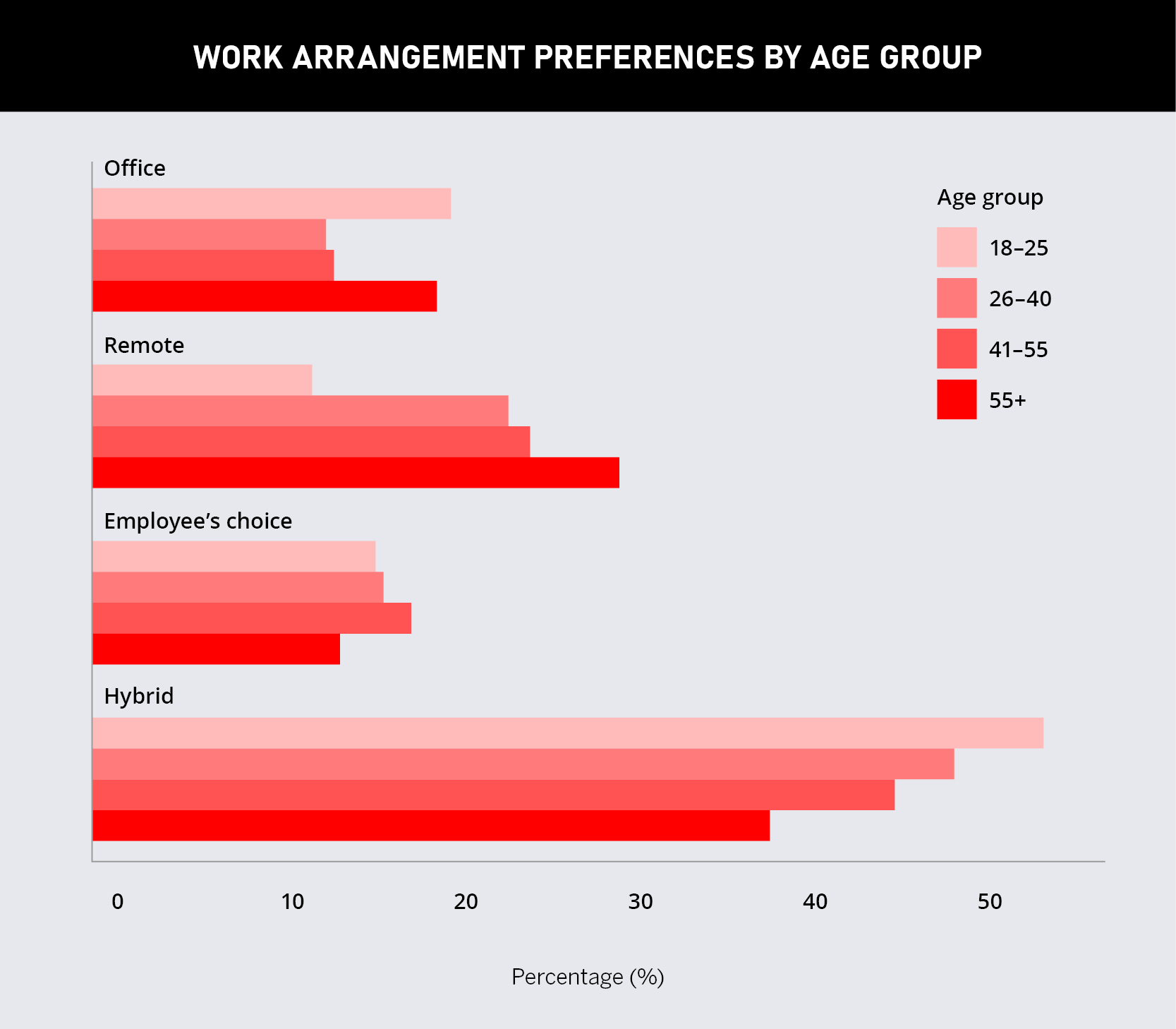
Young workers (18–25) are the strongest proponents of hybrid setups (52.5 percent), but they also show the highest appetite for in-office work (19.9 percent). This reflects a generation that craves structure, mentorship, and community, but also wants autonomy to unplug when needed.
Mid-career workers (26–55) increasingly lean toward remote or hybrid models. They’re optimizing for balance with caregiving responsibilities, household logistics, and well-established workflows.
Older professionals (55+) lead in preference for 100 percent remote work (29.1 percent), a shift from pre-pandemic assumptions. For late-career employees, flexibility means staying engaged while protecting energy, health, and lifestyle.
Employees with less than two years of tenure still lean strongly toward hybrid (50.4 percent), suggesting a need for structured onboarding, collaboration, and visibility. Those with 3–5 years of tenure show the strongest preference for fully remote work (31.4 percent), arguably the point where trust, efficiency, and confidence in role autonomy peak.
Across all tenure groups, employee choice, while not dominant, remains a meaningful preference (hovering around 16–20 percent). Offering choice may not be the top preference, but it signals respect, which can drive loyalty.
Canada’s Best Places to Work stand out by tailoring work models to where employees are in their careers, not just offering hybrid, but making it make sense.
HRD’s data offers insights for companies competing in today’s job market. Size matters less than strategy when it comes to benefits.
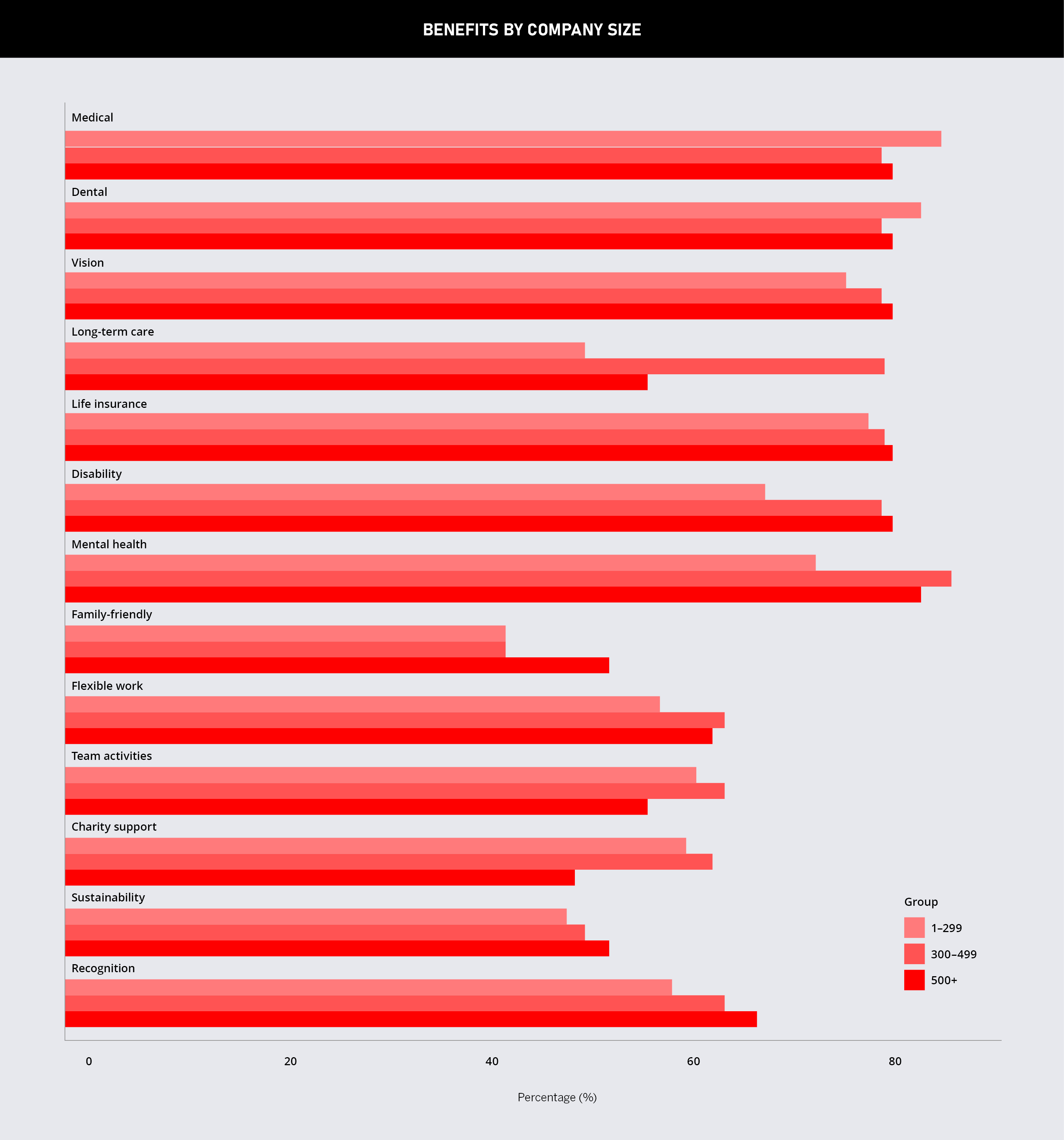
Across small, mid-sized, and large employers, the essentials, such as medical, dental, vision, and life insurance, are largely consistent.
However, the differentiator is how those offerings reflect evolving employee expectations.
This year’s Best Places to Work are proving that meaningful benefits don’t require big budgets. They must match what employees want and employers’ willingness to prioritize.
Employees with less than two years of tenure still lean strongly toward hybrid (50.4 percent), suggesting a need for structured onboarding, collaboration, and visibility. Those with 3–5 years of tenure show the strongest preference for fully remote work (31.4 percent), arguably the point where trust, efficiency, and confidence in role autonomy peak.
1. Mental health support is a new baseline, especially for mid-sized employers
At 86 percent, mid-sized companies (300–499 employees) lead the way regarding mental health benefits. That’s well above their peers and signals that well-being is baked into total rewards.
2. Flexibility and family benefits remain inconsistent
Flexible work is nearly universal in narrative but not in execution. Just 58 percent of small firms and 64 percent of mid- and large-sized employers offer it formally. It’s a similar story for family benefits. Fewer than half of small or mid-sized companies provide them. That’s a blind spot, especially for millennial and Gen Z talent juggling caregiving and work.
3. Recognition and purpose are growth areas
Recognition programs and community support hover below 70 percent adoption, even though these are low-cost, high-impact strategies for driving retention, especially in hybrid or remote environments. Top employers are already tying purpose and praise into the employee experience.
4. Sustainability is an emerging value marker
Just over half of large employers promote sustainable practices, compared to fewer than 50 percent of small companies. For younger employees and ESG-conscious talent, this could tip the scales. Sustainability is becoming a retention lever.
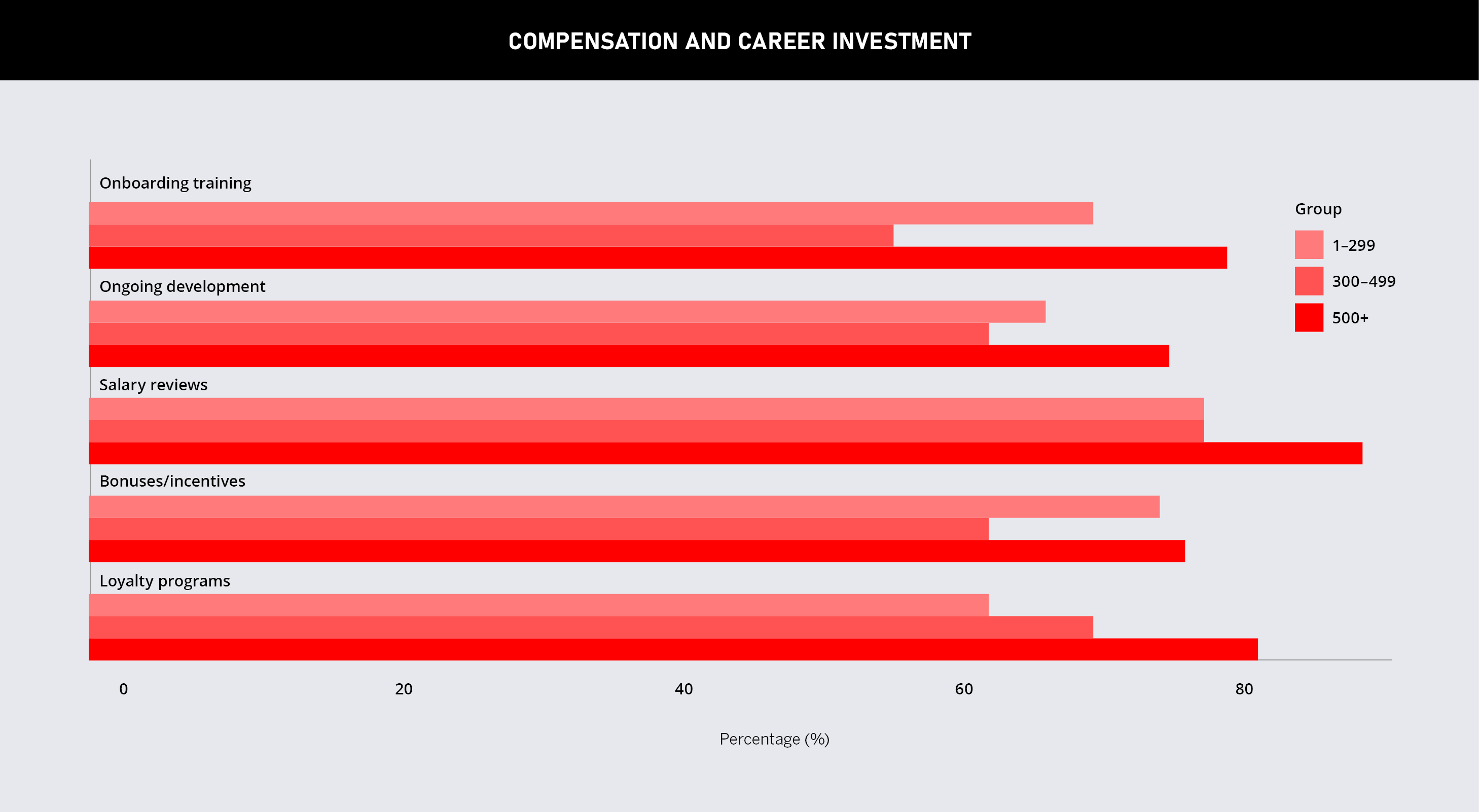
The data shows that Canada’s best workplaces don’t stop at salary. They back it up with training, career development, loyalty incentives, and regular pay reviews – all contributing to long-term retention.
While bonuses and salary reviews are widely expected, what sets the top employers apart is how they invest in career longevity. Training, leadership development, and loyalty programs are becoming standard at larger firms, though mid-sized companies still have room to grow.
Succession planning is another pressure point. According to Robert Half’s trends report, 42 percent of managers say they’re struggling to fill key roles due to a lack of internal candidates.
Another 39 percent point to limited skill-building programs. Employers prioritizing development are future proofing their organizations and showing loyalty in ways employees recognize.
That’s especially critical as new technology reshapes how people work. Bottineau predicts that the most competitive employers will lean harder into learning and development as they adopt AI and automation.
“Some employees are excited and eager to stay ahead of the curve with new technology. But others, especially those who’ve been in their roles a long time, can find it overwhelming,” she says.
Supporting a multigenerational workforce means offering different ways to build confidence and competence.
“We need to think about different ways to meet people where they’re at,” Bottineau adds, pointing to in-person sessions, mentorship, and tailored support.
Competing for talent takes more than salary. The best workplaces offer structured growth, strong onboarding, and long-term rewards that earn loyalty.
Employees with less than two years of tenure still lean strongly toward hybrid (50.4 percent), suggesting a need for structured onboarding, collaboration, and visibility.
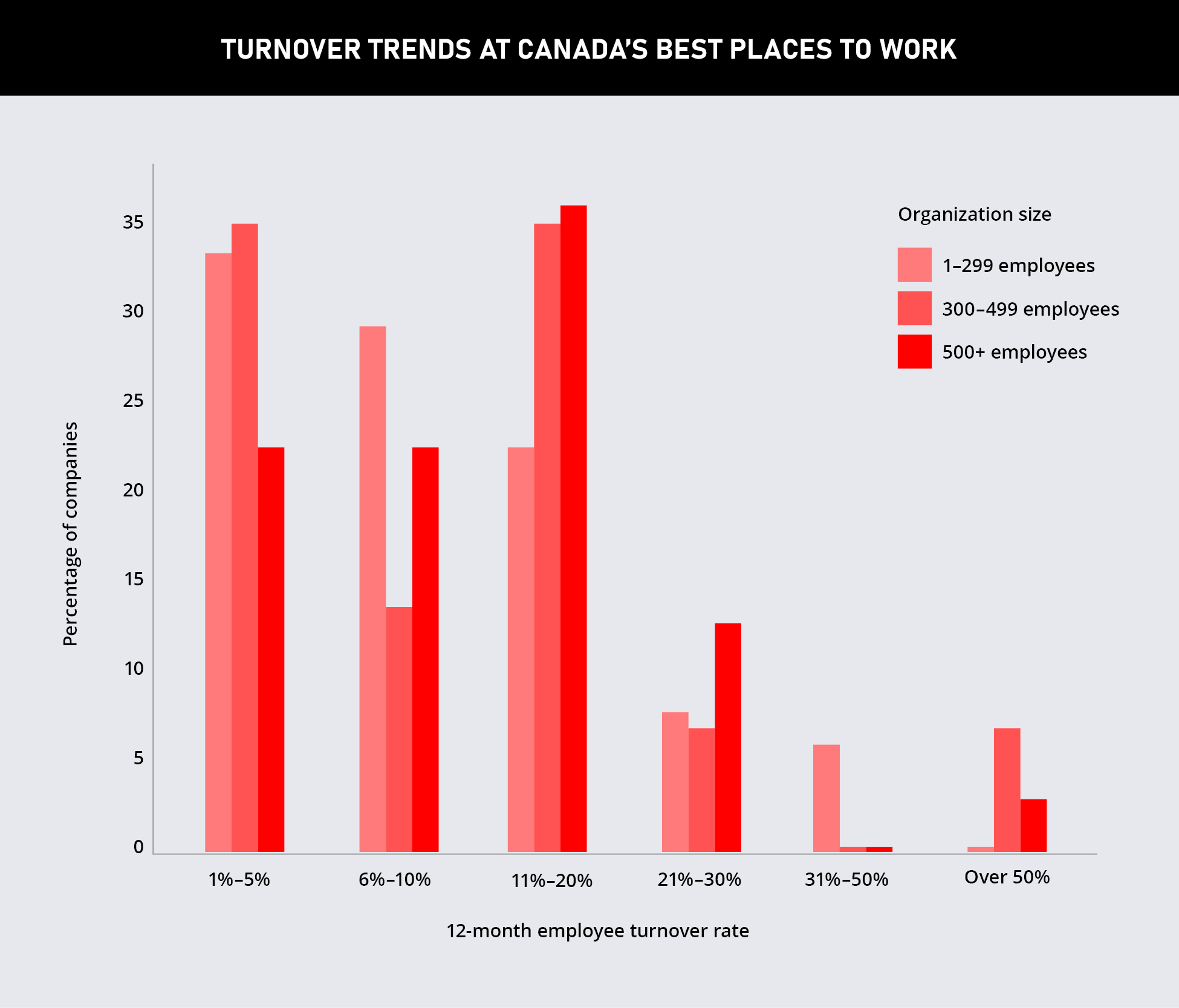
Turnover is where good intentions meet outcomes. And when it comes to the leading workplaces, the majority are keeping attrition well below the national voluntary employee turnover rate of 11.9 percent.
Among small to mid-sized organizations (under 500 employees), approximately two-thirds report turnover under 10 percent, a sign that their investment in benefits, flexibility, and development translates into staying power.
That drops off slightly in larger companies (500+), where 37 percent of respondents report turnover rates between 11 percent and 20 percent. While still within acceptable bounds for large-scale operations, it underscores the challenge of maintaining a personal connection and a sense of belonging at scale.
Industry expert Bottineau says purpose and belonging can’t just be aspirational.
“It has to be woven into the organization’s fabric and reflected in the day-to-day values people experience. And most importantly, it should include employees,” he says.
Turnover below 10 percent reflects strong leadership. Top employers offer fair pay, flexible policies, and loyalty-focused programs. That combination keeps people around.
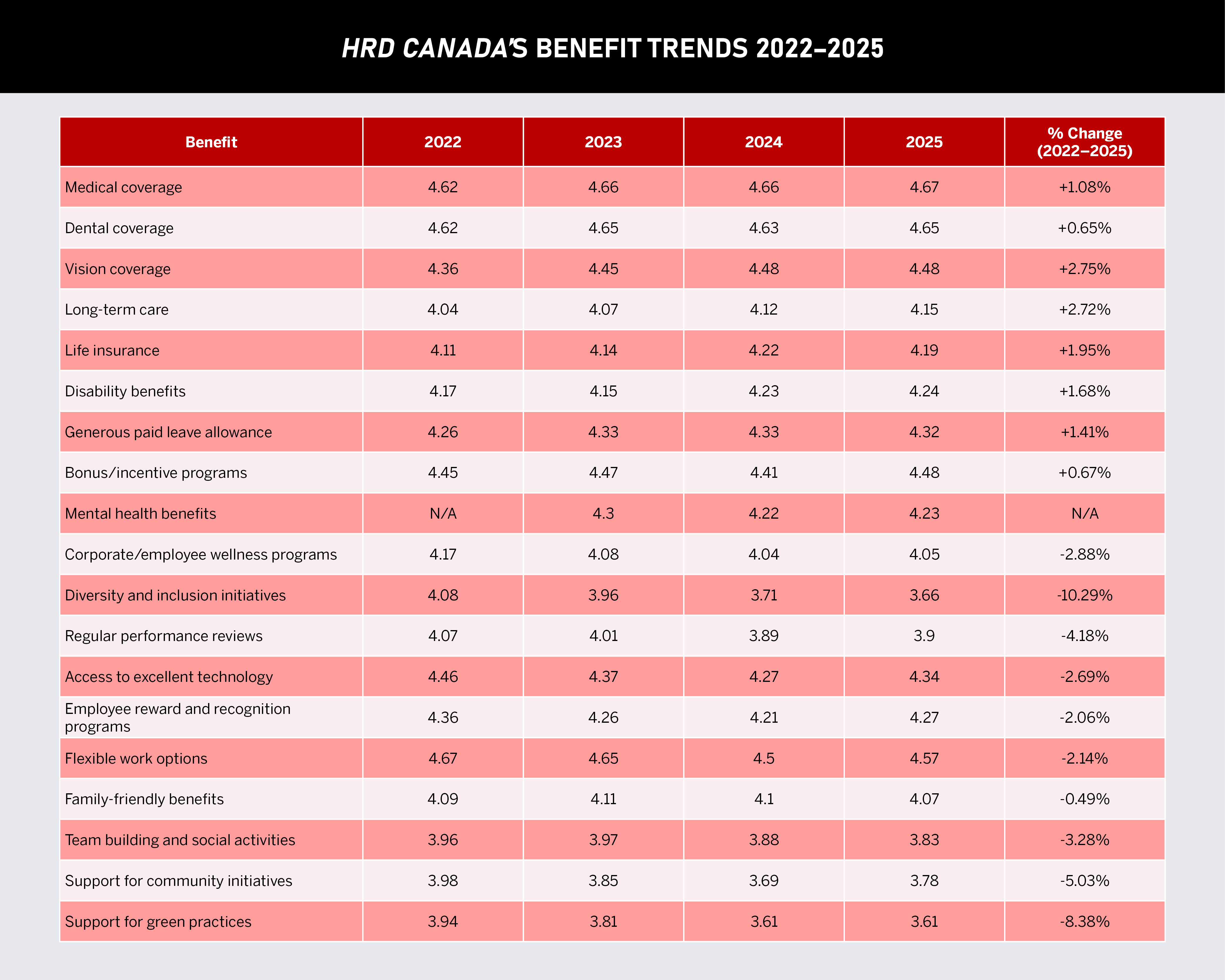
Over the past four years, the benefits that matter most to employees have stayed remarkably consistent. Medical, dental, and vision coverage continue to dominate the top tier with average ratings near or above 4.6 out of 5, now table stakes for competitive employers.
Flexible work options remain highly rated, despite a gradual dip from their 2022 peak. The demand is still strong, but expectations are rising, especially around consistency and autonomy.
Mental health benefits also dipped slightly since 2023. That drop likely signals growing scrutiny. Employees want more than wellness branding; they’re looking for benefits that are stigma-free, accessible, and built into how work gets done.
A few key shifts are worth watching:
Disability benefits and employee recognition programs inched upward, pointing to a renewed focus on fairness, inclusion, and morale.
Access to excellent technology declined, but remains highly valued, reinforcing the importance of seamless tools in a hybrid-first world.
Diversity programs, performance reviews, and team-building scored consistently lower, suggesting gaps between policy and experience.
Even as some scores fluctuate, employees are paying attention to what’s offered and how it’s delivered.
While trends and data paint the big picture, these standout organizations bring it to life. Across industries, HRD’s Best Places to Work are building cultures that prioritize flexibility, purpose, equity, and long-term development.
Below, 11 winning employers from various sectors share what makes their workplace experience different and what they do to deliver more for their people.
Fidelity Canada is a leading financial services provider committed to its employees and clients, with a mission of building a better financial future for Canadians. Recognized as an award-winning employer with leading benefits and strong employee engagement, it is setting the bar in the financial services sector.
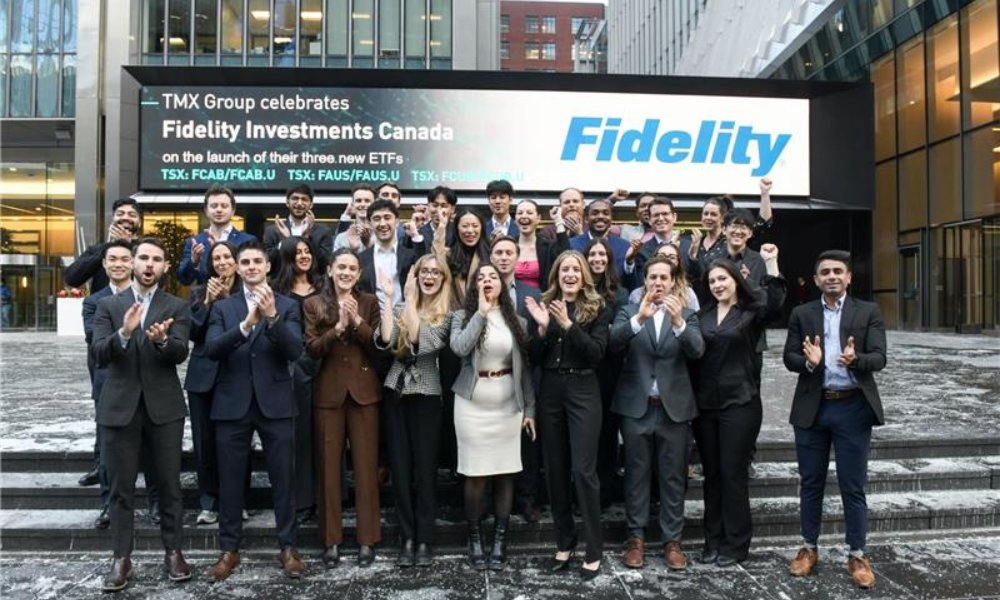
“Fidelity Canada is one of the Best Places to Work because of our people and our focus on our clients,” says Diana Godfrey, senior vice president of HR and corporate affairs. “For 38 years in Canada, we’ve been guided by our core values of trust and integrity, and this has created a winning workplace culture in which our people empower each other and are engaged to do the right thing and put the client first.”
“I recently joined the company, and I was impressed with the package offered, including generous leave and retirement savings plan, among other things. I have had to take some time to look after my two-year-old, and I find the company understands such things.”
4Growth, Fidelity Canada's talent mapping model, provides employees and managers with a platform to have honest and transparent conversations
Becoming a Leader is a three-year program designed to help employees develop skills to become leaders
Home office support program ($650), computer purchase subsidies (up to $2,000), and RRSP contributions up to 15 percent of employee’s eligible earnings without matching required
Birthday leave for employees or their loved ones, which can be taken at any time
Fidelity Family Plan with discounts on investment products for eligible family members
A subsidized, full-service, on-site café with lunch as low as $4
Unlimited free barista service serving Propeller Coffee and Pluck Tea
Full-time employees are encouraged to use two paid days per year to volunteer with a registered charity of their choice
Recognition from Great Place to Work, HRD Canada, Canadian HR Awards, and more, including Best Workplaces in Canada, The Queen’s University IRC Award for best learning and development strategy, Best Workplaces in financial services and insurance, and many more
Named one of Canada’s Top 100 Employers, Top Employers for Young People, and Top Family-Friendly Employers
Ranked No. 1 for five consecutive years for overall digital services, according to the 2025 Environics Advisor Digital Experience study
Trusted by over two million investors in Canada, the financial services community, and institutional clients to build better financial futures
Another employee shared, “It’s an amazing employer that has invested in me and my development and given me opportunities to progress my career I wouldn’t otherwise have gotten.”
Overall satisfaction rating: 86 percent
At Propel Holdings, meritocracy is the engine behind the company’s growth. As a digital financial services provider with a low carbon footprint and a fully remote call centre, it is building a culture where advancement is supported.
“Propel has created a culture where people can start entry-level jobs and build their careers here. There is a team approach with no egos and everyone eager to get the job done. The C-suite are passionate about the business and truly connected to employees.”
“Employees are here easily eight to nine years or more. There are a lot of opportunities for growth, to take on new challenges, and work in different areas. The culture is about treating people with respect and honesty.”
68 percent of roles are filled internally, including many managers and directors who began in the call centre
Performance is recognized and rewarded early
Continuous learning through seminars, skill-building sessions, and personal development opportunities
Career pathing and succession planning to support long-term employee growth
Regular all-hands meetings with live Q&A sessions
Culture of trust that encourages feedback and idea sharing
As a 100 percent online business, Propel maintains a low carbon footprint while staying connected
Overall satisfaction rating: 87 percent
The employee experience is built on trust, transparency, and long-term development. With strong executive support and thoughtful benefits, the company is delivering a work environment that’s flexible, respectful, and people-first.
“What truly distinguishes Mancal is its deep-rooted commitment to principled, people-first leadership grounded in over a century of business legacy,” vice president of administration Lisa Bartko says. “As a privately owned company with a strong Western Canadian heritage, we blend financial strength with a culture of transparency, engagement, and community responsibility.”
“I feel valued here, and we are one big team. Everyone seems to work for the betterment of the company. Knowledge is shared, and questions are answered promptly. I am a part-time employee, but I am greatly satisfied with my job and my team.”
12 flex days annually
Flexible hours and remote work one day per week
Monthly birthday celebrations, quarterly happy hours, and annual family-friendly events
Annual bonuses based on benchmark data
Long-service awards and recognition programs
Annual performance reviews and 360-degree feedback
Company-paid training for current and future roles
Professional memberships and skill upgrades covered
Internal Leader Learning Series and executive coaching
Quarterly development programming
Annual Respect in the Workplace training
Anti-harassment and bullying policies
Code of Business Conduct and Ethics with a strong employee relations focus
Engagement surveys, company-wide emails, and Teams/Intranet updates
Transparent leadership and clear communication from the CEO down
Another employee shares, “Recently joined Mancal and have been treated extremely well since day one. Opportunities to take courses to improve workplace safety and positive interactions with all team members.”
Bartko adds, “Employees benefit from a workplace that values sustainability and leadership that emphasizes pragmatic governance, long-term growth, and respect in the workplace.”
Care and connections are at the heart of the business. From coast to coast, the company fosters a culture defined by support, flexibility, and meaningful investment in people, no matter their role or location.
“What truly sets us apart is our culture, driven by innovation, collaboration, and a passion for growth,” says HR director Gloria Lam.
“What I appreciate about Peak is the leadership, especially my boss. They’re incredibly supportive and positive and always encourage us to keep progressing. The responsiveness to feedback and openness to improvement ideas make it a motivating and rewarding workplace.”
Hybrid work model with flexible hours
Paid leave for birthdays, bereavement, moving, citizenship, and family milestones
Regular social events, including BBQs, holiday lunches, and festive celebrations
Annual bonus based on individual and company performance
Gift cards for award wins and milestone service awards at 5, 10, and 15+ years
Peer recognition via Team Member Recognition program
Education reimbursement, professional and industry conferences, and on-the-job learning
Structured onboarding, probation reviews, annual reviews, and regular career conversations
Wellness training and yoga sessions and flu shots offered during company hours
Celebrations for Chinese New Year, International Women’s Day, Valentine’s Day, Halloween, Canada Day, and Christmas
Potluck featuring dishes from different cultures
No discrimination tracking; inclusion is embedded into everyday actions
Longstanding support for The Home Depot Canada Foundation
Charitable partnerships across British Columbia, Alberta, and Ontario
Sustainable packaging and pallet recycling initiatives
Another employee shares, “This is my second time working for Peak, and I have chosen to come back because it is the best place to work.”
Lam adds, “Determination and genuine enjoyment of the work fuel the team. Lifelong learning is valued, and people thrive in a competitive yet friendly and inclusive environment.”
The municipality is building a resilient, inclusive, and future-ready workplace. With strategies that span sustainability, belonging, and workforce planning, Vaughan is creating a municipal culture rooted in impact and innovation.
“The City of Vaughan is made up of innovators and forward thinkers who are building a world-class city for future generations,” mayor Steven Del Duca says. “Our shared commitment is to put citizens first through service excellence to ensure our residents and businesses thrive.”
“Very kind people, positive, and supportive work environment. Good pay, benefits, and a sense of community are offered through various events and wellness initiatives. Holiday closure. Comprehensive learning and training offerings offered.”
Commitment to energy efficiency and responsible operations at every level
Programming that promotes cultural understanding, unity, and belonging
Emerging Leaders Program supports internal succession and talent growth
Comprehensive Learning Catalogue with six development streams to support personal growth and professional development
Flexible work arrangements
Parental leave top-up and on-site childcare at City Hall
Personal leave allowances and sick dependent care
City Manager’s Awards and peer recognition across portfolios
Staff BBQs, long-service recognition, and a variety of awards supporting employee recognition
Attraction and retention plan outlines 37 recommendations to address evolving workplace needs
A mix of in-progress initiatives, enhanced best practices, and new ideas under active exploration
Another employee shares, “The onboarding process was smooth and simple. The office is well maintained and organized. The management is kind, understanding and welcoming. Staff and fellow employees are also supportive, patient, and understanding.”
City manager Zoran Postic adds, “Our dedicated staff take pride in working together as one team to serve one city. We foster a culture of collaboration, open communication and innovation, encouraging one another to share new ideas that help us deliver exceptional services to our residents.”
At Taproot (formerly WJS Canada), the organization's goal is to nourish the strength in people. As an employee-owned B Corp, it has built a workplace where equity, flexibility, and purpose are foundational.
Support is person-centred, adaptable, and grounded in relationships, focusing on helping people thrive in their communities.
“We have succeeded in emphasizing the importance of our frontline teams and the work they do to strengthen individuals and families in the communities we serve,” CEO Mike Fotheringham says.
“We have great benefits, wellness, and flexible vacations, which we value. We have support if we get overwhelmed. Our team leads will listen to us anytime we need it. It’s a high-stress job, and if I felt overwhelmed and could not perform effectively, I could call my team lead for relief.”
Wellness reimbursements and performance-based bonuses
Formal coaching programs and leadership development tied to individual growth
Employees are invested in and supported
Indigenous-led programs, cultural awareness training and competency, and diversity and inclusion working group
Truth and Reconciliation Working Group and Indigenous cultural liaison
Extensive onboarding, third-party training, and ongoing development
Mental health and caregiver leave included in annual wellness days
Milestone recognition through public appreciation, service awards, and education funds
Flexible hours, hybrid, and remote options that fit employees’ lives
Accredited by CARF, CET, and CAC for program quality and safety
Certified B Corp meeting high environmental and social standards
Support model grounded in the CARE principles and research from Cornell University
Community involvement is grounded in local relationships and driven by staff across Taproot’s regions, including Alberta, British Columbia, and Ontario, from youth mentorship to participation in local initiatives and community leadership
Another employee shares, “They even have a First Nations advisor and offer training to all staff on First Nations and their history. This is the first agency I have worked for that has offered this training or had an advisor. To me, this is huge, and I believe all companies should follow their lead.”
Fotheringham adds, “Employees are empowered to bring their unique gifts to the work we do, while being given a platform to share feedback and take ownership of tasks, big and small. We truly believe we are stronger together by respecting all voices.”
This Calgary-based nonprofit proves that compassion can scale in service, culture, and people. The organization supports vulnerable families with housing and services while creating a purpose-driven workplace anchored in wellness, learning, and equity.
“What truly makes people want to stay is how we actively live out our mission and values each day,” says HR senior manager Ime Omoz. “We create a safe, empowering space where employees see real purpose and impact in their work.”
“My organization does well in recognizing staff and ensuring jobs done right do not go unnoticed. From my probationary period to becoming full-time staff, my organization always recognized efforts being put into my work and ensured I knew it was appreciated.”
On-site health initiatives and walking groups
Mental health days, free snacks and meals
Mandatory DEI education, including 4 Seasons of Reconciliation, gender and sexual diversity, and workplace sensitivity training
Regular team workshops on empathy, respect, and equity
Sponsored conferences and speaking opportunities
Quarterly engagement surveys and a 360-degree feedback program
Performance and holiday bonuses
Celebrations through team outings and workplace gatherings
Another employee shares, “Every morning, I come in and see everyone smiling and saying good morning to one another. Although there are stressors, our team does a great job supporting one another where they can.”
Omoz adds, “Compassion, inclusion, accountability, and trauma-informed care aren’t just ideals, they are daily practice. Employees know their voices, ideas, and lived experiences help drive meaningful change toward equity, reconciliation, and systemic transformation.”
Flexibility defines the culture at Pesce & Associates. The team at this fully virtual HR consultancy builds its culture on autonomy, trust, and a shared sense of purpose.
“Our team thrives without micromanagement, supported by meaningful development, shared decision-making, and a deep commitment to recognizing every individual’s impact,” CEO Elizabeth Hill says.
“We work well as a team. All staff have input into the organization’s running and can see how their efforts directly contribute to the company’s success. Efforts are well recognized.”
Fully virtual, results-focused model with no monitored hours
Staff set their own schedules and are trusted to deliver
Full support for home office setup; no micromanagement, no commute
At least one fully paid professional training event annually per consultant
Paid time off for learning and development
Ongoing mentorship and weekly feedback from leadership
Bi-weekly project reviews, quarterly strategy sessions, and an annual retreat
No formal DEI program, but equity shows up in open, non-hierarchical communication
Employees help shape both business development and internal operations
Everyone is treated as a partner in the firm’s evolution
Year-end charitable donations made in clients’ names
Holiday lunch at a top-tier restaurant
Another employee shares, “Acknowledging that employees are the cornerstone of our services; happy employees translate to better services.”
Hill adds, “[These strengths shape] a team that provides exceptional service to our clients, helping them achieve positive workplaces where staff are engaged and aligned with their mission, values and strategic goals.”
The consulting firm brings strategy and science together with care, culture, and purpose. It has also built a deep bench of IDEA-driven programs, thoughtful leadership practices, and intentional wellness supports.
The result is a workplace where people feel empowered, respected, and can build lasting careers.
“We believe that how we work together is just as important as the work we do. This recognition reflects the care and intention we put into shaping a workplace where people are seen, heard, and supported,” explains people and operations director Martin Thame.
“The organization listens well to the team members’ needs and makes active management changes to address those needs. For example, when workloads were becoming high on some team members, the senior leaders asked what was needed and implemented changes to resourcing based on the team’s feedback, incorporating regular reviews of its efficacy.”
Flexible vacation model with long weekends, summer Fridays, and a winter closure
Work-from-anywhere model, with renovated office space available when needed
Paid internships and career development programs for Black and Indigenous candidates
Mentorship, internal training, and an annual professional development allowance
Hands-on consulting toolkit and onboarding experience that supports new hires
Total rewards model with structured salary reviews and discretionary performance bonuses
Another employee shares, “The organization supports flexible work arrangements, encourages work-life balance, and makes a real effort to build team spirit through events and social gatherings.”
Thame adds, “Our culture is co-created with our team through their ideas, feedback, and daily contributions, enabling us to bring our best to the clients we serve. We’re proud to have built a culture that prioritizes inclusion, well-being, and growth, and even prouder that our team feels the difference every day.”
Motion LP proves that culture, care, and professional growth can scale. With over 45 locations across Canada, Motion supports its employees with industry-leading inclusion programs, flexible work, meaningful recognition, and a clear commitment to purpose.
“Our knowledgeable and caring experts across Canada know that individual needs require an individual approach,” CEO Sue Gilpin explains.
“Collaboration with our colleagues, clients, and members of their circle of care is critical in ensuring that Motion isn’t a place, it’s a partnership. We pride ourselves on creating lasting relationships that make a meaningful impact on thousands of Canadians and their loved ones.”
“Every employee I have met genuinely has the client’s best interests at heart. They work to respond promptly and compassionately, often going above and beyond. The company supports us by giving us the time and resources to do this well and generous time off so we can also take care of ourselves.”
Employees deliver life-changing mobility solutions supported by national training, recognition, and wellness programs
Mental health initiatives include discounted virtual therapy, leader training for crisis support, and internal resource hubs
5 Days of Caring and the new Day of Giving encourage paid time off
IDEA Committee drives education, allyship, and quarterly programming
Women+ in Leadership group offers mentoring, cross-industry collaboration, and retention-focused development
Rotational programs, coaching, and mini-MBA leadership training
CEU-accredited education (IACET) and certifications (e.g., NRRTS, AMRG) supported
Tuition reimbursement program (up to $1,000 annually)
Quarterly national town halls and monthly location meeting
Internal platform for peer-to-peer connection and leader updates
Parental leave top-ups, flexible schedules, and hybrid work options
Ongoing recognition through Culture Awards, gratitude boards, and milestone celebrations
Bonuses tied to role-specific results, commissions, or shared services performance
Another employee shared, “Motion has developed a great culture across the company. Everyone who works here is great, and it’s easy to collaborate. It feels psychologically safe and supportive.”
Gilpin adds, “It’s our vision to make life accessible for everyone. We provide life-changing mobility and accessibility solutions and services that enhance safety, mobility, and independence so our clients of all ages and abilities can live their most vibrant lives.”
At Cognition+ Inc., high performance and a strong commitment to people and purpose drive the company’s success.
As a remote-first software organization serving Canada’s insurance sector, the company blends flexibility, recognition, and development opportunities into a culture that consistently earns standout satisfaction scores.
“We create real opportunities for every individual to make a meaningful impact and achieve success,” president and CEO Matthew Scott says. “Our culture is grounded in trust, respect, and a shared sense of purpose.”
Culture and colleagues consistently ranked as the top reasons to stay
One wellness day, one Employee Appreciation Day, and extra half-days at year-end
Dedicated training goals, with 2025 focused on AI and customer service
Insurance education is encouraged through the Insurance Institute of Canada, with CIP designation support
Peer recognition and leadership shoutouts during all-staff monthly Zoom meetings
Donates to the annual Cognition+ Cares Campaign, supporting a local charitable organization, for employees’ wellness session attendance
Biannual employee surveys, 360 reviews, and performance self-assessments
Another employee shares, “We have highly efficient systems for completing work and can build software rivalling companies 10 times our size. We have grown significantly over the past two years, which is a testament to the results of our staff in delivering a world-class product.”
Scott adds, “By consistently communicating and reinforcing our goals and strategic priorities, we empower our teams to deliver excellence in support of our clients and their business objectives. This creates a human-driven flywheel effect that builds momentum and drives our organization to reach higher and strive for greatness.”




The entry process for the 2025 Best Places to Work comprised two steps: an employer submission followed by an employee survey. First, organizations had to complete an in-depth questionnaire looking at key factors such as employee engagement, turnover rates, average tenure of staff, compensation and benefits, health and wellness programs, diversity initiatives, professional development, corporate culture, flexible work options, reward and recognition, and green programs.
Companies that successfully completed the submission phase were then sent a link to an online employee survey to be circulated internally. To ensure the integrity of the data collected, employees were requested to provide their company email addresses.
To be eligible for the Best Places to Work recognition, organizations had to meet a minimum number of responses based on company size. The survey asked employees to rate their company across a range of metrics that constituted drivers of employee satisfaction. An employer needed to achieve an overall satisfaction rating of at least 75 percent to be recognized as a Best Place to Work.