Nuno Matos has told parliament that AI-driven job losses could trigger a worldwide crisis and that it should be regulated
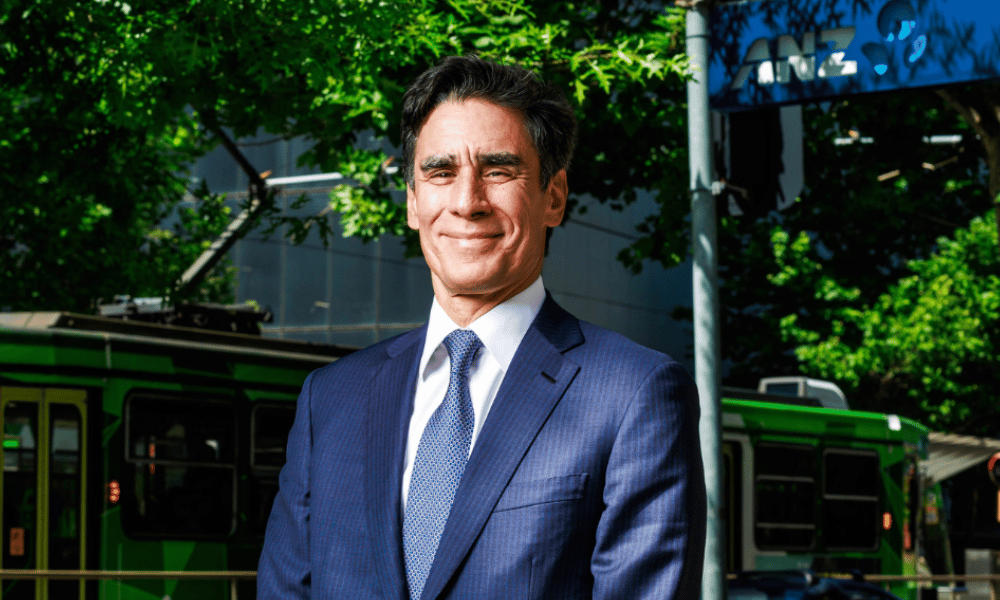
ANZ chief executive Nuno Matos has warned that artificial intelligence could set off an international jobs crisis, and says the world needs global rules to stop it.
If AI led to job cuts of up to 50 per cent, “it’s going to be a global crisis”, Matos told a parliamentary hearing in Canberra on Thursday. He described AI as one of the few areas where he believed global regulation was needed.
His advice for workers in the meantime was more down to earth. Those who build AI skills lower their risk of losing out to more proficient colleagues, he said, pointing to ANZ’s work developing staff capability in-house. For HR leaders, that is the part of his evidence that lands closest to home, because most Australians using AI at work are teaching themselves.
What Matos told the committee
ANZ was the first of the big four banks to appear before the House of Representatives economics committee this week. Asked about AI by independent MP Allegra Spender, Matos said he couldn’t say whether the technology would have a net positive, net negative, or neutral impact on jobs in Australia or globally. He added that anything he said now could be wrong in six months, given how quickly AI is moving.
He told the committee that none of ANZ’s recent job cuts were caused by AI, but he couldn’t guarantee there would be no AI-related job losses in future. Almost 3,500 ANZ employees left in the year to September, the bank reported on Monday. Over the same period, its statutory net profit rose 23 per cent to $7.27 billion.
Matos also said wide adoption of AI without proper guardrails was a serious problem, and that no bank should build AI without the right controls. ANZ is developing its own control platform as it rolls the technology out across the bank.
Offshoring also came up. Of ANZ’s 40,000 employees, about 18,000 are in Australia and 7,000 in New Zealand, with up to 9,000 in India and the Philippines, AAP reported. Matos said offshoring had been standard practice for decades, and that ANZ’s offshore headcount had actually fallen by 600 in 2026.
Read next: CBA reverses AI-triggered employee layoffs
Regulation is coming, but not for most employers
Matos’s call for global rules came days after Prime Minister Anthony Albanese unveiled a plan to legislate safety and security obligations for frontier AI companies operating in Australia, enforced by a new AI safety regulator. Employment lawyers told HRD that most employers are unlikely to be directly covered, because the rules target the companies that build advanced AI models rather than the businesses that use them.
The lawyers still saw a clear signal for HR in the proposal. Dentons partner Paul O’Halloran said organisations should map where AI is used across the business and who is accountable when something goes wrong. In his words, “employers should not wait for the legislation”.
The training gap
Matos’s advice assumes workers can get the skills he’s describing. The local data suggests many are doing it without help.
-
Hays: In its FY26/27 Salary Guide survey of more than 6,500 professionals, Hays found 78 per cent of Australians using AI at work had no formal training. Forty-two per cent said upskilling wasn’t formally supported in their organisation, or they didn’t know what options were available.
-
Dayforce: In research HRD reported in October last year, 81 per cent of employees believed employers should reskill workers affected by AI, but only 17 per cent of organisations were doing so.
-
Employment Hero: A survey by the HR software company found about a third of Australian workers use AI tools at work without their employer knowing.
That last figure matters for Matos’s own argument. Staff using unapproved tools sit outside exactly the kind of controls he told the committee banks need.
The government’s own research also suggests where the pressure will land first. Jobs and Skills Australia’s Generative AI Capacity Study, released in August 2025, found AI is more likely to change jobs than replace them. It also found that administrative roles, entry-level workers and occupations dominated by women are more exposed to automation. Those are the groups HR teams should check first when deciding who gets trained.
Read next: Summit Sessions: Australia’s AI boom is outpacing employee capability
Where the union stands
The Finance Sector Union (FSU) has repeatedly accused banks of using AI to cut jobs. Its most prominent test case came last year at the Commonwealth Bank, which reversed plans to make 45 customer service roles redundant after introducing an AI voice bot. The union had taken the matter to the Fair Work Commission. At the time, FSU national secretary Julia Angrisano said workers expect to be part of the change, not replaced by it.
Responding to the federal government’s AI plan, the FSU called for laws ensuring workers have a say when new technology is introduced and get the training they need to stay in the sector.
Not every bank chief frames this the same way. Westpac’s Anthony Miller said in August that AI would make some roles less necessary. He pointed out that 5,600 people left Westpac the previous year and 5,200 joined, because the skills the bank needed were changing. That is a reminder that “reskilling” in big organisations often means replacing people rather than retraining them.
Read next: Australia’s AI safety proposals: should employers be concerned?
A lesson from the last round
ANZ’s own restructure is a reminder that how change is communicated matters as much as why it happens. In August 2025, Matos apologised after automated notifications about job cuts reached staff before they had heard from anyone in person.
The other banks are under the same scrutiny. Commonwealth Bank is expected to have cut 1,000 jobs by the end of 2026. Westpac flagged 250 job cuts in October. NAB announced 1,500 before Christmas, then pushed them back to late January. NAB also signed a $127 million underpayment undertaking with the Fair Work Ombudsman on the day ANZ appeared.
If a chief executive tells parliament that AI skills are the best protection, staff will reasonably expect their employer to provide them. Organisations that leave workers to learn from YouTube risk the worst of both worlds: uneven capability, and AI use they can’t see or govern.
What a credible AI upskilling plan looks like
-
Map exposure role by role. Start with the groups Jobs and Skills Australia found most exposed: administrative, entry-level and female-dominated roles.
-
Approve the tools and write the rules. Tell staff which AI tools they can use and for what. A clear AI use policy brings hidden use into the open.
-
Train in work time. If upskilling only happens after hours, the workers with the least spare time fall furthest behind.
-
Consult before you deploy. Most awards and enterprise agreements require consultation on major workplace change, including new technology likely to significantly affect employees.
-
Look at redeployment before redundancy. A redundancy is only genuine if the employer has followed its consultation obligations and redeployment wasn’t reasonable, the Fair Work Ombudsman says.
-
Set up an escalation path. Staff need a clear way to report AI errors or misuse, and someone accountable for acting on them.
Read next: Building workforce capability for the AI age