Meredith Crowe says HR can easily become too rigid and explains how Telix protects room to experiment, ahead of HRFest
Innovation has gone missing from HR, according to Meredith Crowe, senior vice president, global people and culture at Melbourne-founded radiopharmaceutical company Telix Pharmaceuticals. She says the profession needs to get comfortable with letting people fail.
“Innovation within the P&C [people and culture] discipline is something that I haven’t heard talked about very convincingly in quite some time now,” Crowe said.
Crowe leads an end-to-end people function at a business she said has grown roughly tenfold in under five years, from about 130 staff when she joined to nearly 1,300 today.
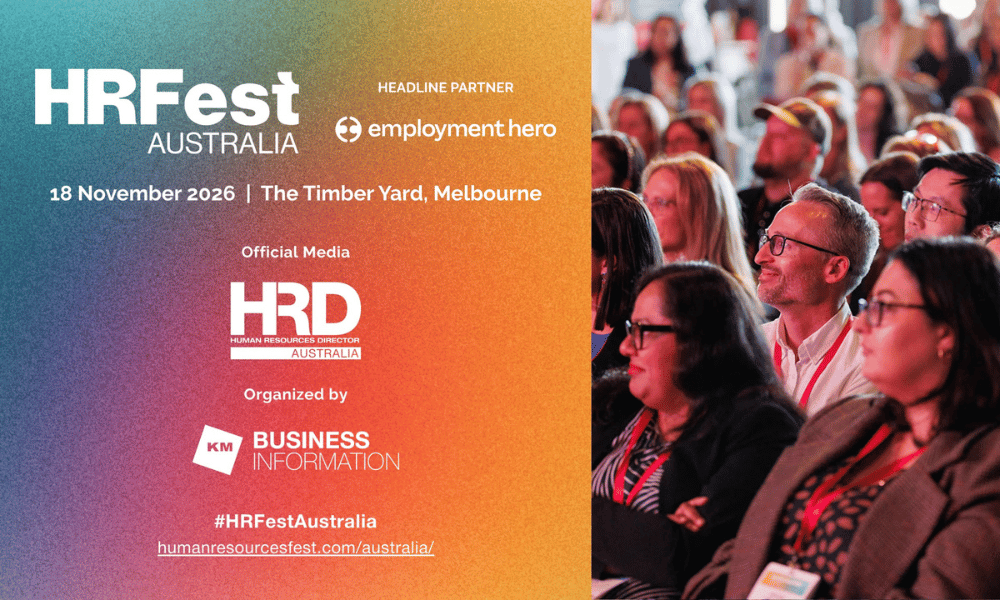
She will share her approach at HRFest Australia 2026, which comes to The Timber Yard in Melbourne on 18 November and is expected to attract more than 700 HR professionals, executives and innovation leaders. The program spans themes from boardroom buy-in to burnout and agentic AI at HRFest 2026, and registration details are in our countdown guide to HRFest Australia 2026.
Why HR innovation stalls
Crowe said the pull towards rigidity is understandable. HR professionals often spot problems early, have an ‘obvious’ solution in mind, and feel responsible for solving them.
“It’s so easy for HR to get very rigid. And I understand why,” she said. “It’s so hard to see something that you think would be a pretty easy fix and hold back from forcing it.”
Holding back is sometimes the better call, she said. If a manager is set on a team structure the people team doubts will work, we will say our piece but ultimately, let the manager try.
“Maybe we’re wrong. Let’s find out,” Crowe said. Though she added that the company would never put anyone in a dangerous or unhealthy situation.
Stop parenting the business
Crowe draws on the parent-adult-child model from transactional analysis. The framework describes how one person’s stance in a relationship prompts the opposite stance in the other. Applied to HR, she said, a controlling people function produces a passive workforce.
“If you have an HR team who behaves parentally towards your employees, you are going to disempower and you are going to get a bunch of people who abdicate decision making responsibility, who wait to be told, who sulk when things don’t go their way,” she said.
Her team’s vision makes the expectation explicit: “We don’t cotton wool everything, we don’t treat people like idiots, and we won’t do the hard stuff for you.”
That trust extends to how people work. Telix operates across time zones as what Crowe calls a “maximum flexibility company”, and she said leaders who need to watch over their staff do not succeed there. “It means that our managers need to manage by output, not by input.”
Innovation is expensive, so target it
Crowe warned against declaring an innovation culture across the whole organisation.
“The problem with promising an innovation culture is that it’s really expensive because a lot of innovation is trial and error,” she said. “Figure out where it actually matters and let people try.”
She said real innovation means people can try something and fail without fearing for their job. In the people space, that could mean testing an unusual team structure, running a change program a different way or taking a risk on a leader.
The same thinking applies to people regulations across a global company. “Most labour law across the globe has the same intent, and you can cover 90% with well designed global policies – paying attention to the best in class jurisdictions in different areas.” Australia remains the benchmark for psychosocial safety, as new psychosocial safety rules put pressure on Australian HR teams.
“In the global environment, we aren’t always going to get it perfect, and certainly our managers with people in multiple countries and continents wont either. Having a foundation of trust and good-will with your workforce means that you do have the opportunity to work things out with people in good faith,” she said.
The learning zone over the performance zone
Telix’s three-tier Rise leadership program puts the philosophy into practice. Its tiers are Basecamp, Ascend and Summit. Participants in the nine-month Ascend program tackle group projects set by the executive team and present their thinking to senior leaders.
Crowe said executives are often surprised by the issues and solutions that are obviously front of mind for that level in the company, and learn a lot from hearing about how the teams have gone about selecting and then solving a challenge.. “The purpose is in the work and it’s in the presentation,” she said.
“Sometimes the presentations are really good, but they haven’t stretched themselves. And sometimes the presentations don’t go that well, but the learning that’s gone in behind it has been extraordinary and that’s actually a better outcome, even though it might not feel that way in the short term.”
The lesson applies well beyond leadership development, she said.
“If you’re too focused on the performance zone rather than the learning zone, then you can do really good things at an excellent level, but you’re not going to do anything new.”