From 20 October 2026, anyone using generative AI in Commission cases must disclose it and have a person verify every fact
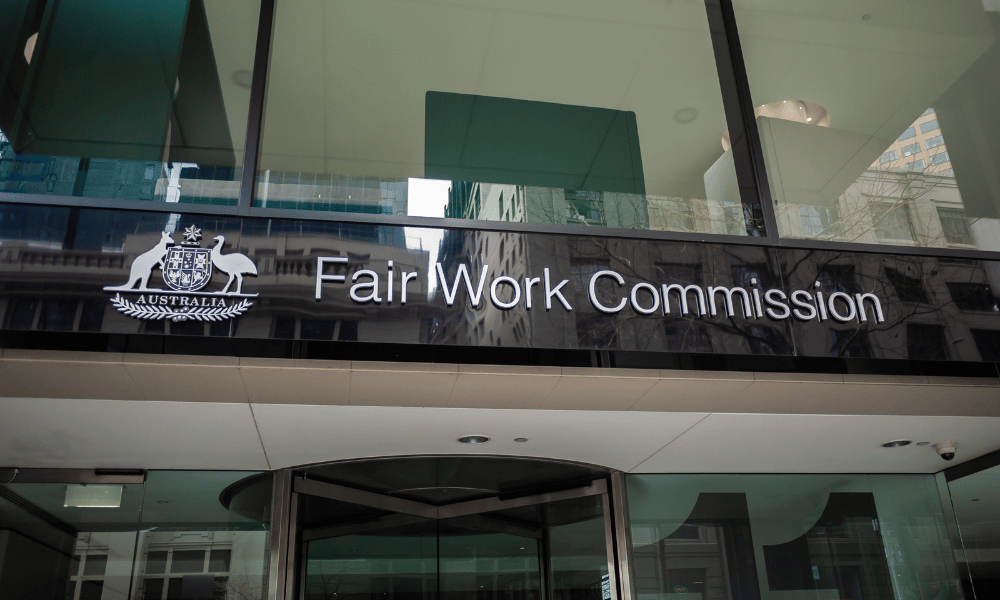
New Fair Work Commission rules on the use of generative artificial intelligence (GenAI) take effect on 20 October, placing fresh disclosure and verification obligations on employers, employees and the HR teams that represent them.
Anyone who uses GenAI to prepare an application, submission, witness statement or other document lodged in a Commission case must now say so, have a person check every fact, case and quote, and declare that the check was done. The requirements are set out in the Commission's Guidance note: Use of generative artificial intelligence in Commission cases.
Employment lawyers say the rules cut both ways – and that HR teams defending claims face the same scrutiny as self-represented workers bringing them.
What the Fair Work Commission's GenAI rules require
The Guidance Note sets three requirements. First, a party must state in the document that GenAI was used and how. Second, the document must be checked so that every fact and piece of evidence exists, every case, statute and article exists and supports the position claimed, and every quote comes from its stated source. The party must then declare that the check has been done.
That checking must be done by a person. The Guidance Note states plainly that asking the same or a different GenAI tool to review the document does not count.
Third, witness statements and declarations must reflect the witness's own knowledge and own words, and be declared true to the best of their knowledge. Using GenAI only to check spelling or grammar, or to format a document, falls outside the rules.
Legal practitioners and professional representatives must also hyperlink every case they cite. Notably for employers, the Guidance Note's definition of a professional representative includes a human resources adviser employed by the party they represent.
The consequences of non-compliance are significant. Documents may be given less weight or disregarded, a party may be ordered to pay the other side's costs, or a case may be dismissed. The Guidance Note also warns against entering personal or confidential case information into public GenAI tools such as ChatGPT, Claude, Copilot or Gemini.
Why the Commission moved on AI-assisted claims
Fair Work Commission President Justice Adam Hatcher said in August 2026 that the Commission's workload had grown by more than 70 per cent in three years, a rise he linked to the spread of GenAI tools rather than labour market conditions, in a President's statement released with the Guidance Note.
HRD has previously reported on how the Fair Work Commission set its new rules for AI use when the final Guidance Note was released.
Tinashe Makamure, special counsel and employment law specialist at Barry Nilsson, said the technology has lowered the barrier to litigation, allowing people to generate submissions that resemble a lawyer's work, sometimes with hallucinated case and legislative references.
"The Guidance Note demonstrates that Tribunals are on the one hand, embracing it as a new reality of litigation, but also (quite rightfully) looking to regulate it and guide its usage in an effort to stem the flow of voluminous misconceived material being filed without consequence," Makamure said.
Makamure said the volume has driven up the time and cost of litigation, particularly for businesses. "The increase in time is also causing delays across the board and is disadvantaging those who do have legitimate claims."
On whether the rules balance access to justice against the integrity of proceedings, Makamure said: "I think it does. At its core, it places self-represented workers on notice of their responsibility to ensure accuracy and the consequences of failing to do so. While a useful tool, Gen AI does not absolve personal responsibility."
Brittany Byrne, practice leader at Citation Legal, part of Citation Group, said it is the first time the Commission has set formal requirements for GenAI use in its cases. "For employers, the important thing to understand is that the rules cut both ways, because unchecked AI-drafted material can be given less weight or disregarded, and non-compliance can lead to costs orders or a case being dismissed."
What should HR leaders do now?
Byrne said the first step is to map where AI is already used in the HR function. Citation's Workforce Pulse 2026 survey found 73 per cent of large businesses and 65 per cent of medium businesses use AI at work, but only 29 per cent of those users strongly agree it is being used safely and beneficially, she said.
"Before anything goes to the Commission, a person, not another AI tool, needs to check every fact and legal reference," Byrne said. "HR should also keep original records and make sure witness statements are in the witness's own words, and they should never put employee details or confidential information into public AI tools."
Makamure said HR directors should work with IT and privacy officers to require job applicants, staff and contractors to declare GenAI use, with express notice of the consequences of failing to do so.
"If they have not already done so, clear policies should be put in place that regulate how and when Gen AI may be used in businesses with careful attention paid to privacy obligations," Makamure said.
Accountability should be shared across the business, Makamure added, with ultimate responsibility depending on its size and structure.
The largest risks for HR teams, according to Makamure, are failing to review material, failing to declare GenAI use and missing hallucinated text. Makamure said even experienced HR teams have been seen quoting a case with the correct name but the wrong citation – an error that can carry significant consequences where no declaration has been made.
Internal grievances and the long-term outlook
Makamure does not expect mandatory disclosure to cut the number of AI-assisted claims immediately.
"I don't think it will reduce the number of AI-assisted claims in the first instance. I think a reduction will come after a few people have been reprimanded for failing to use it in accordance with the guidance and those people face consequences," Makamure said.
The effect is already reaching workplace complaints, as HRD reported in its analysis of how AI is turning employee grievances into legal-grade filings. Makamure said employers should apply similar standards, tailored to their business, to internal grievances.
"Employers may need to invest in 'Counter-AI' measures to help HR Teams detect the undisclosed use of GenAI as its use becomes more mainstream."
Byrne cautioned that AI involvement does not change how a complaint should be handled. "When an employee lodges an AI-assisted complaint, it should be assessed on its merits like any other, because procedural fairness still applies."
Byrne expects disclosure to become routine in workplace disputes, as it is becoming in the courts. "We've already seen a worker ordered to contribute to his former employer's legal costs after he kept relying on AI-generated arguments despite repeated warnings from the Commission," Byrne said, in a case HRD covered when an Aldi worker was ordered to pay legal costs.
Citation's research found 44 per cent of businesses have no clear approach to managing HR and people, Byrne said, meaning many employers have work to do.
"The employers in the strongest position will be those with clear AI policies, human review of decisions and good record-keeping."