New guidance requires GenAI disclosure in unfair dismissal and other Commission cases from 20 October
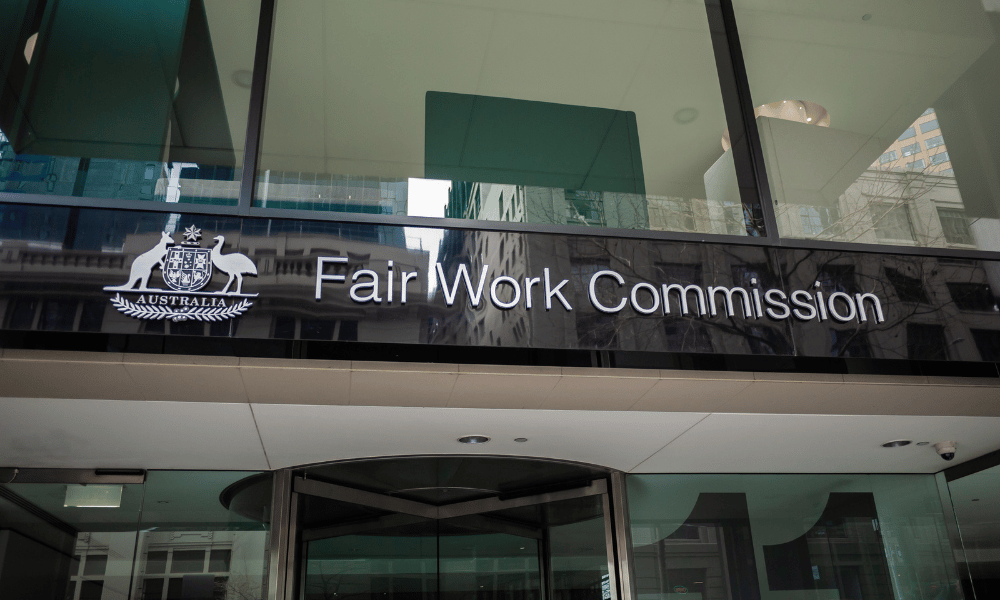
The Fair Work Commission (FWC) has published its final Guidance Note on the use of generative artificial intelligence (GenAI) in Commission cases, requiring anyone who uses tools such as ChatGPT, Claude, Copilot or Gemini to prepare an application, submission or witness statement to disclose that use and verify the accuracy of the resulting document.
The rules take effect on 20 October 2026 and apply to all individual rights matters, including unfair dismissal and general protections applications.
President Justice Adam Hatcher said the reform responds to "unprecedented growth" in the tribunal's workload, which he attributes principally to the spread of GenAI tools among applicants rather than to any shift in the labour market. By the end of the 2025–26 financial year, the Commission's total caseload is expected to have grown by more than 70 per cent over three years.
The Guidance Note, released alongside a research report and updated online resources, sets out three requirements for anyone using GenAI to prepare a Commission document:
- Disclosure – state in the document that GenAI was used and explain how.
- Verification – check that all facts, evidence, legislation, case law and quotes are accurate and genuinely exist, and confirm in the document that this checking has been done.
- Authenticity – for witness statements and declarations, the witness must confirm the content reflects their own knowledge and words.
Legal practitioners and other professional representatives, including in-house human resources advisers representing a party, face an added obligation to hyperlink any case law they cite.
Non-compliance carries real consequences: the Commission has warned that offending documents may be given less weight or disregarded entirely, that costs orders may follow, and that a case could be dismissed.
Knowingly giving false or misleading information to the Commission remains a criminal offence under section 137.1 of the Criminal Code, punishable by up to 12 months' imprisonment.
For HR teams, the requirements sit alongside a broader pattern the Commission has been tracking for the best part of a year, HRD's earlier coverage of AI-driven workplace disputes has followed as it escalated from isolated cases to a system-wide compliance issue.
Research points to a workload driven by AI, not the labour market
The Guidance Note is underpinned by a research report from Pivot Management Consulting, commissioned in February 2026 and comprising 18 interviews, surveys of 408 applicants and 211 respondents, and workshops with Commission staff, Workplace Advice Service partners and the Small Business Reference Group.
It found that roughly 40 per cent of surveyed applicants used GenAI to prepare or manage their case, with ChatGPT the most common tool, used by about 77 per cent of GenAI users, and around 60 per cent relying on the free tier.
The research describes a spectrum running from disciplined "GenAI-assisted" users, who cross-check outputs and prompt the tool to argue against their own case, through to "GenAI-dependent" users, who tend to accept fluent, confident answers at face value.
It found the latter group is more likely to lodge claims with weaker merit, inflated settlement expectations and, in some instances, fabricated case citations. Internally, Commission Members reported identifying signs of GenAI use by one or both parties in 50 to 75 per cent of the cases they handled in the six months to March 2026 – a trend already visible in a recent unfair dismissal decision where an applicant's AI-generated legal citations turned out not to exist.
A measured tone, not a crackdown
Notably, the Commission has chosen not to frame the reform as a warning against AI use. Following feedback from its consultation process, which drew 28 submissions after the draft was released in March 2026, the final materials emphasise responsible and effective use of GenAI rather than discouraging it outright.
The research found applicants are more willing to disclose AI use when they believe doing so will not be held against them, which shaped the Commission's decision to pair the new disclosure requirement with practical prompting guidance rather than blanket cautionary language.
For employers and HR practitioners, the update is a reminder that scrutiny of AI-assisted material now cuts both ways. As HRD reported when the draft Guidance Note was first released for consultation, respondents are increasingly turning to the same tools to draft their own responses, and the Commission's new disclosure and verification obligations will apply equally to material lodged on the employer's side of a dispute.
The Commission says the Guidance Note will be reviewed regularly as GenAI technology and its use in Commission proceedings continue to evolve.