Teams at the big four bank are reportedly reapplying for their own jobs
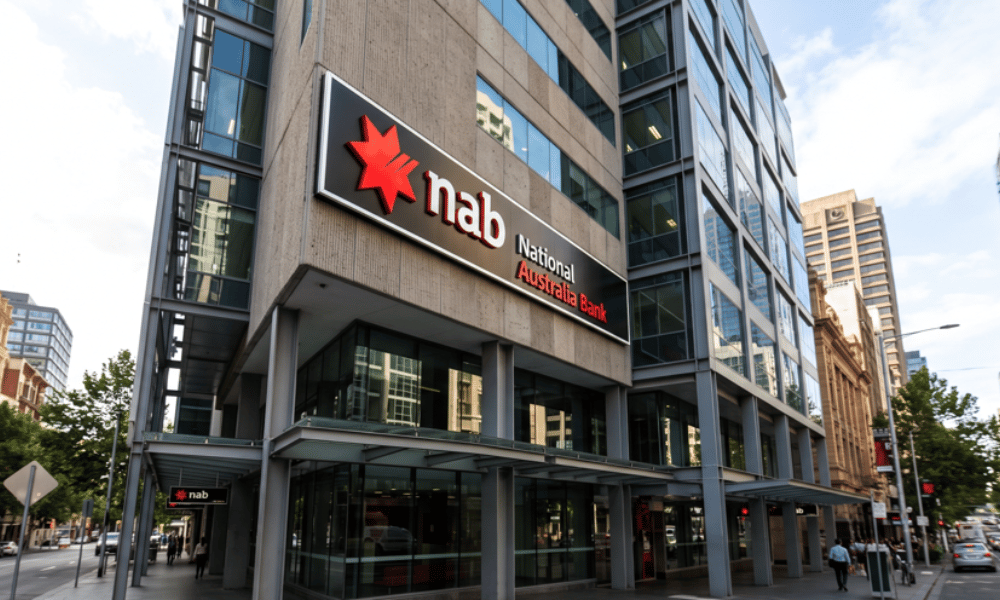
For some people at National Australia Bank, the run-up to Christmas is going to feel like a job interview they never applied for.
The bank told the ASX on 20 October that it expects to cut up to 2,500 internal roles, about 6 per cent of its workforce, during the 2027 financial year. As many as 1,500 of those roles will go before the end of 2026, and NAB will also materially reduce its use of consultants and contractors. HRD reported on the scale of the NAB restructure the day it was announced. Since then, details have emerged about how some of the cuts will be decided.
Staff in at least one technology team told ABC News they have been asked to compete for a smaller number of positions in a spill and fill, where every existing role is declared vacant and the incumbents apply for what is left. The ABC reported that NAB declined to comment on the staff claims.
The bank's public line is that the cuts target corporate functions and duplication, and that customer-facing banking roles will not be materially affected. Chief executive Andrew Irvine said: "We will treat every person with dignity and respect." NAB has promised consultation, redeployment and reskilling opportunities, career transition support and redundancy entitlements under the relevant industrial instruments. It expects a pre-tax restructuring charge of about $300 million in FY27, up from roughly $80 million in each of FY25 and FY26.
Read next: No warning, no consultation: Fair Work rules redundancy dismissal unfair
Why spill and fill raises the legal stakes
Employers like spill and fill because it looks even-handed. Everyone can apply and nobody is singled out.
Under section 389 of the Fair Work Act 2009, a dismissal is only a genuine redundancy if the employer no longer needs the job done by anyone because of operational changes, it has met any consultation obligation in the relevant award or enterprise agreement, and redeploying the worker elsewhere in the business, or in an associated entity, would not have been reasonable.
When a team of 10 becomes a team of eight, it is usually easy to show that two roles have gone. It is harder to defend how the eight were chosen, and whether the two who missed out could have been placed somewhere else in a group with more than 40,000 staff.
Joel Hayden, employment practice group leader at LegalVision, told HRD in May that restructure disputes usually turn on process rather than on whether a role was needed, especially where the process was "rushed, inconsistent or poorly documented". He also warned against employers choosing the person first and building the redundancy case around them afterwards.
The Fair Work Commission has taken a hard line on redeployment this year. In March, Triple Zero Victoria lost its genuine redundancy defence because its People and Culture team did not follow the organisation's own redeployment policy, even though the commission accepted the role itself had been abolished.
Consultation has caught employers out too. In July, a Sydney childcare operator found that using the word "consultation" in a meeting script is not the same as consulting; the commission found none had taken place and ruled the dismissal unfair.
There is no set number of days that satisfies the test. In February, the commission found just over a week of consultation was enough when a consultancy removed an entire management layer and had nowhere to redeploy people. A big four bank with offices in several countries would likely struggle to run the same argument.
Large restructures also carry a notification duty. An employer considering 15 or more redundancies must notify Services Australia in writing as soon as possible.
Read next: AECOM's 48-hour redundancy timeline proves too narrow at Fair Work
The AI question still hanging
NAB's announcement listed fast-moving technology among the pressures behind the restructure, alongside tougher economic conditions, rising customer expectations and stiff competition. It did not mention artificial intelligence.
The Finance Sector Union (FSU) says NAB executives would not confirm whether AI was a factor when they met union representatives on announcement day. The union also says it has been told about 180 roles will move to NAB's offices in India and Vietnam. NAB has not publicly confirmed that figure, and HRD has not independently verified it.
Earlier this month, NAB's group executive for technology and AI, Pete Steel, told the parliamentary Joint Select Committee on AI that the bank had not yet lost full-time equivalent staff to the technology, and had instead moved people into customer-facing work and new AI-related roles. But he added: "We also need to be upfront that jobs will change, some will go".
Senator Tony Sheldon described the cuts as "deeply disappointing" and questioned whether NAB's future workforce would be Australian or built on AI and offshore staff.
Mixed messages about why jobs are going are also a safety issue. Safe Work Australia lists poor organisational change management among the psychosocial hazards employers must manage under the model WHS laws, and the Commonwealth's 2024 code of practice on psychosocial hazards also names job insecurity.
In August 2025, the Commonwealth Bank reversed 45 customer service redundancies it had linked to a new voice bot, admitting its assessment had been wrong and the roles were not in fact redundant.
Read next: CBA reverses AI-triggered employee layoffs
Much of the union's anger is about how staff were told. The FSU says thousands of staff found out "through an email, with little detail about which roles will be affected". National assistant secretary Nicole McPherson went further, saying NAB "sees its workers as a barrier to profits"
The union also says NAB staff were already reporting stress from heavy workloads left by earlier rounds of cuts. Those who keep their jobs will pick up much of the extra work.
Up to 1,500 roles are due to go before the end of the year, and the ABC reported that some staff have been given exit dates in December, when leave plans, school holidays and family costs are already front of mind.
Read next: ANZ email error tells staff of job loss before official communication
What HR leaders can take from it
For any employer planning a spill and fill, a few lessons from NAB's restructure apply.
Publish the selection criteria before the spill. Tell people how they will be assessed, then keep records of how each decision was made. Inconsistent selection is where challenges tend to start.
Run redeployment as a real search. Look across the whole group, including associated entities, and document what was considered. Triple Zero Victoria's loss shows a policy on paper is not enough.
Be straight about the drivers. If automation or offshoring is part of the picture, saying so early is easier than explaining it later in front of a union, a tribunal or a parliamentary committee.
Plan for the survivors. Redesign workloads before the restructure takes effect, not after, and manage the change as a WHS risk, which is how regulators now treat it. Ashurst's employment team made a similar point in a 2025 podcast on redundancy processes: a referral to the EAP on its own is unlikely to be enough, while clear communication, clear timeframes and certainty about the process do more to reduce psychosocial risk.
NAB will release its FY26 results on 5 November, when it has promised more detail on its cost outlook for FY27. For staff reapplying for their own jobs, the more pressing date is when they hear back.