UNSW will back-pay more than 33,000 casual and professional staff after a Fair Work Ombudsman investigation into systemic underpayments
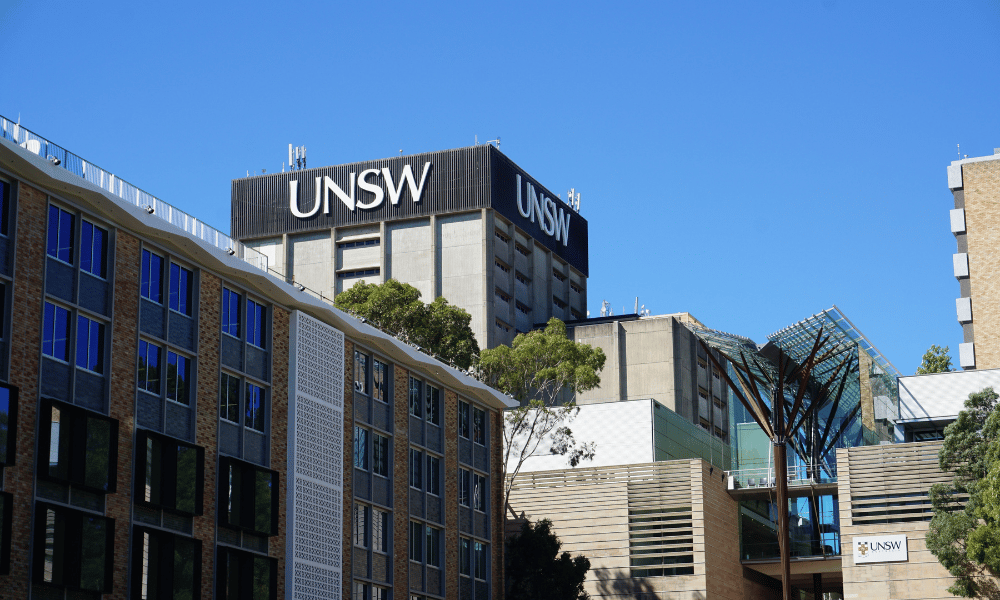
The University of New South Wales (UNSW) has entered into an enforceable undertaking with the Fair Work Ombudsman (FWO), committing to more than $32 million in rectification payments to over 33,000 current and former staff, the regulator confirmed today (3 July). The figure includes underpaid wages, interest and superannuation, and covers underpayments dating back to 2014.
Under the terms of the undertaking, UNSW has admitted to underpaying entitlements owed under its enterprise agreements between 2014 and 2023, and to breaching record-keeping and pay slip requirements. The university must also pay a $500,000 contrition payment to Commonwealth Consolidated Revenue.
Most of the affected staff were casual academics who were not paid correctly for activities including lectures, tutorials, demonstrations, course coordination meetings, exam supervision and marking. A smaller group of professional staff – including laboratory assistants, administrative and research staff, technical officers, library staff and employees at UNSW Canberra – were also shorted on minimum wage rates, overtime, allowances, shift loadings and long service leave.
Affected employees worked across UNSW's Sydney and Canberra campuses as well as regional NSW sites in Albury, Coffs Harbour, Griffith, Port Macquarie and Wagga Wagga. Individual back-payments range from less than $1 to more than $398,000, according to the Fair Work Ombudsman.
The case traces back to 2018, when a casual academic in the UNSW Business School raised concerns with the FWO about missing time records. UNSW's own review, and a subsequent self-report to the regulator in 2020, uncovered underpayments on a much larger scale.
The FWO found the university's record-keeping failures were extensive enough to hinder its investigation, and in December 2025 secured a $213,120 penalty against UNSW in the Federal Circuit and Family Court for record-keeping breaches affecting 63 casual academics – a case HRD Australia covered in detail at the time.
Fair Work Ombudsman Anna Booth acknowledged UNSW's approach to fixing the underlying problems, while noting the university's initial response to its record-keeping obligations fell short. "UNSW deserves credit for committing significant time and resources," Booth said, adding that the university now has a broad range of measures in place to prevent a repeat, including bi-monthly compliance reporting to the FWO, mandatory staff training on engaging casual and professional employees, and a new Employee Advocate Platform for payment claims.
Why are universities so prone to underpayment failures?
UNSW is now the 13th Australian university to sign an enforceable undertaking with the Fair Work Ombudsman since 2022, joining institutions including Monash University, the University of Sydney, the University of Melbourne, the University of Technology Sydney and Griffith University.
Employment lawyers say the pattern reflects structural pressures rather than deliberate wrongdoing. Speaking to HRD Australia about the sector's recurring compliance problems, Julian Arndt, director at Australian Business Lawyers and Advisors, described a "perfect storm" of a heavily casualised academic workforce, unusual pay conditions – such as separate rates for marking and preparation time – and work performed at hours the employer cannot easily supervise or verify.
Arndt noted that even "smart, educated, reasonable, experienced people" can genuinely disagree on how complex industrial instruments should be applied, creating room for honest error to compound into large-scale underpayment.
A heavily unionised sector and sustained regulatory attention have also played a role in bringing these cases to light. The FWO has treated university compliance as a stated enforcement priority since 2022, and has previously reached similar settlements with institutions such as Queensland University of Technology over its own underpayment failures.
What happens next
Beyond the back-payments, UNSW must commission up to two independent compliance audits, establish a Joint Consultative Committee with staff and unions, and continue reporting to the FWO until its remediation program is complete. The regulator has signalled it will keep pursuing enforceable undertakings across the university sector rather than defaulting to litigation, provided institutions engage openly once problems surface.
For HR and payroll leaders outside higher education, the UNSW case is a reminder that casualised, high-autonomy workforces carry outsized compliance risk regardless of industry. Robust time-and-attendance systems, clear award and enterprise agreement interpretation, and early engagement with regulators when issues are identified remain the clearest defences against a multi-million-dollar remediation program.