A Fair Work Commission decision handed down this week shows the real reason behind a dismissal can be very different from the one an employer leads with
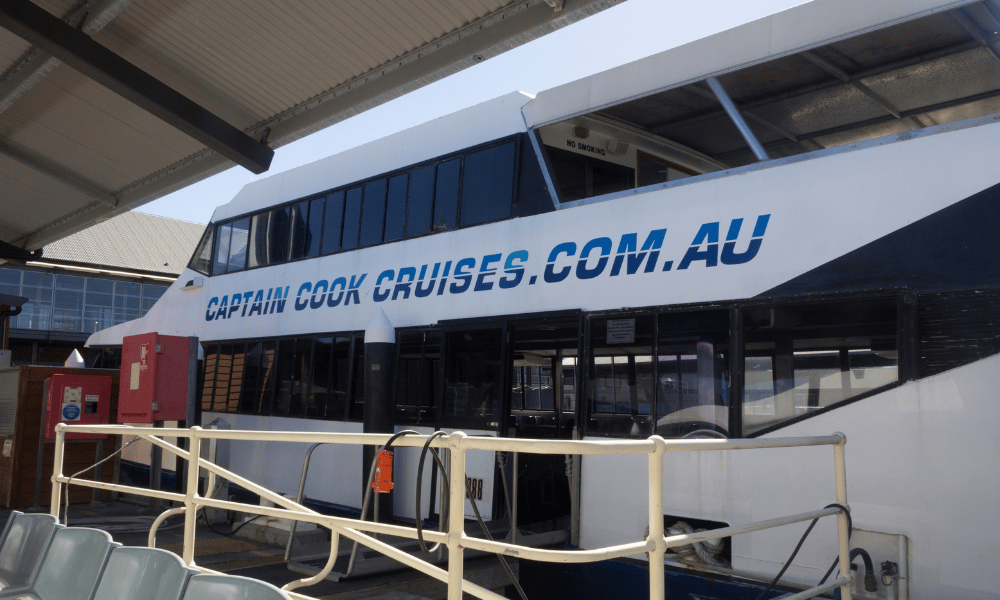
A night porter on a Murray River paddle steamer who spoke rudely to her captain kept her job over that outburst. It was a set of safety logs, signed off before the checks they recorded had actually happened, that ended it.
In a decision published on 8 September 2026, Fair Work Commissioner Rogers dismissed the unfair dismissal application of the worker against Captain Cook Cruises Pty Ltd (CCC). The company had a valid reason to sack her, just not the one it perhaps expected to rely on most heavily.
What counts as a "valid reason"? Under s.387 of the Fair Work Act 2009, the Commission weighs whether there was a sound reason connected to the person's conduct or capacity, whether they were told about it and given a chance to respond, and whether dismissal was a proportionate response overall. An employer can lose on one allegation and still win on another, as CCC did here.
The comment that wasn't the problem
The worker in question was the sole overnight Night Porter on the PS Murray Princess, the paddle-wheeler that cruises the Murray River out of Mannum, South Australia. CCC dismissed her on 5 February 2026 over two things: speaking rudely to the captain on 1 December 2025, and pre-signing engine-room safety logs on 13 January 2026, then denying it when questioned.
On the first, the Commission accepted the worker's admission that the way she spoke to the captain "was inappropriate," but found the comments weren't a valid reason for dismissal, since she'd still carried out her duties that shift. Context mattered: She said she'd been sexually assaulted by a passenger the night before, and that reporting it to the captain left her feeling "shut down and unsupported." The Commissioner didn't need to resolve what happened with the passenger, because the outburst wasn't a sackable offence regardless.
Read next: Reporting workplace harassment 'not worth it' for victims, studies find
Why an hourly signature carries so much weight
As the vessel's only overnight crew member, the worker had to check the engine "on the hour, every hour" and initial the log each time – both to confirm the generator was running safely, and as a welfare check on a worker doing a solo shift. A missing entry tells the captain to go looking for her.
The senior captain found the 4am, 5am and 6am slots already initialled when he checked at 3.50am on 13 January. The worker disputed how many entries were early, but under cross-examination admitted filling in the 4am slot ahead of time and couldn't recall when the 5am one was done. The Commissioner preferred the senior captain’s account, calling it "very clear, consistent and certain" against a backdrop where most other witnesses, including CCC's own People and Culture Manager, gave evidence the decision calls "quite unreliable."
Signing off a time-stamped safety check before it was due was treated as a serious breach in its own right, regardless of whether an accident followed. Other Fair Work Commission rulings on falsified records follow the same pattern: the breach of trust in the paperwork often counts for as much as the task itself.
Read next: Digital evidence seals fate of remote worker in Fair Work ruling
Process, done properly
CCC put its allegations to the worker in writing on 14 January, met with her two days later, and gave her until 18 January to respond after she asked for more time. The termination letter followed on 22 January, upholding two of the three allegations, with her employment ending on 5 February. The Commissioner found she'd been properly notified and given a genuine chance to respond before any decision was made; her complaint about missing CCTV footage didn't succeed either, since CCC hadn't relied on it and she had already admitted pre-filling at least one entry regardless.
Compare that with a separate 2026 decision where the Commission found a valid safety reason but ruled the dismissal unfair anyway, because the employer rushed the process. CCC took the slower route, and it held up.
Read next: If it's not on record, it didn't happen: FWC upholds skipper's dismissal
The complaint the tribunal never touched
What the decision doesn't do is resolve whether the worker had been in fact assaulted, or whether the captain's response was adequate. That leaves an awkward gap: a dismissal can be entirely lawful while a serious, unresolved complaint sits right next to it, untouched simply because it wasn't the legal question in front of the tribunal. Other research has found many workers who witness harassment at work don't speak up, often because earlier complaints went nowhere. Whether CCC's own response met its obligations under work health and safety and sex discrimination law is a separate question this decision leaves open.
Read next: Sexual harassment still a 'critical issue' in Australian workplaces, DCA says
Two lessons sit underneath the ruling. Don't let unrelated conduct issues get bundled into one story – an employer leading with the weaker allegation risks the stronger one getting lost. And treat paperwork in lone-worker safety roles as the safety control itself: a lapse was enough here even though nothing went wrong with the generator, and the Commission has separately found retraining and a clean interim record won't necessarily save a worker from a second safety failure. What tied it together for CCC was process: written allegations, a genuine chance to respond, and no decision made too early.
The application was dismissed. The worker received no remedy.