New ABS data reveals unchanged number of industrial disputes in Australia

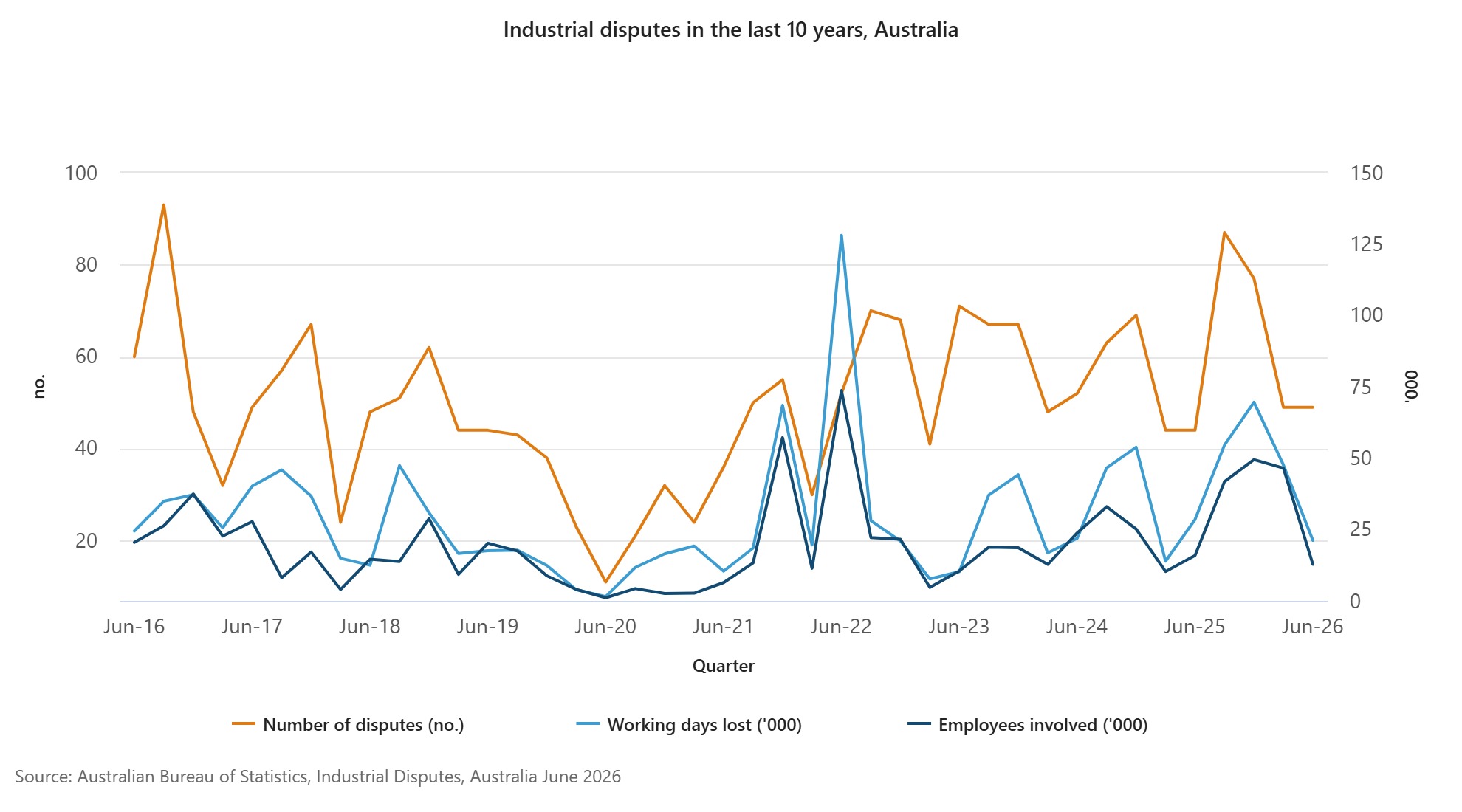
Working days lost to industrial disputes more than halved in the June quarter 2026, even as the total number of strikes and lockouts held steady, according to new data from the Australian Bureau of Statistics (ABS).
Its Industrial Disputes report showed the number of working days lost to strikes and lockouts fell sharply to 21,200 in the June quarter 2026, dropping from 47,600 in the March quarter.
The number of employees involved in disputes also declined significantly, falling to 12,800 from 46,500 in the previous quarter.
The declining figures come even as the total number of disputes held steady at 49, unchanged from the March quarter, indicating disputes were shorter or involved fewer workers despite industrial action remaining active.
Disputes in the June quarter were spread across all eight industries and all eight states and territories, according to the report.
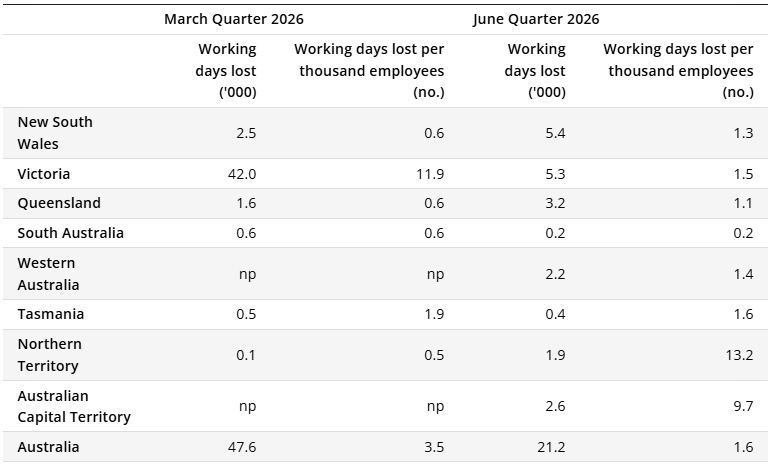
New South Wales recorded the most working days lost of any state at 5,400, followed by Victoria at 5,300 and Queensland at 3,200.
The Northern Territory, however, logged the highest working days lost per 1,000 employees with 13.2 days. This is followed by the Australian Capital Territory with 9.7 working days lost per 1,000 employees.
By industry, the mining sector recorded the highest rate of working days lost relative to workforce size at 13.8 days per thousand employees, with 3,500 working days lost in the June quarter.
Education, training, health care and social assistance contributed 4,200 working days lost, down sharply from 41,200 in the March quarter.
Reasons behind disputes
Enterprise bargaining remained the dominant driver of industrial action.
Of the 38 disputes that ended in the March quarter, 36 were related to enterprise bargaining, with employment conditions cited in 26 cases and remuneration in 10.
Of the same 38 disputes, 37 ended with a pre-determined return to work, with one resuming without negotiation.