Macquarie University faces alleged illegal redundancies, Charles Darwin University hit with underpayments
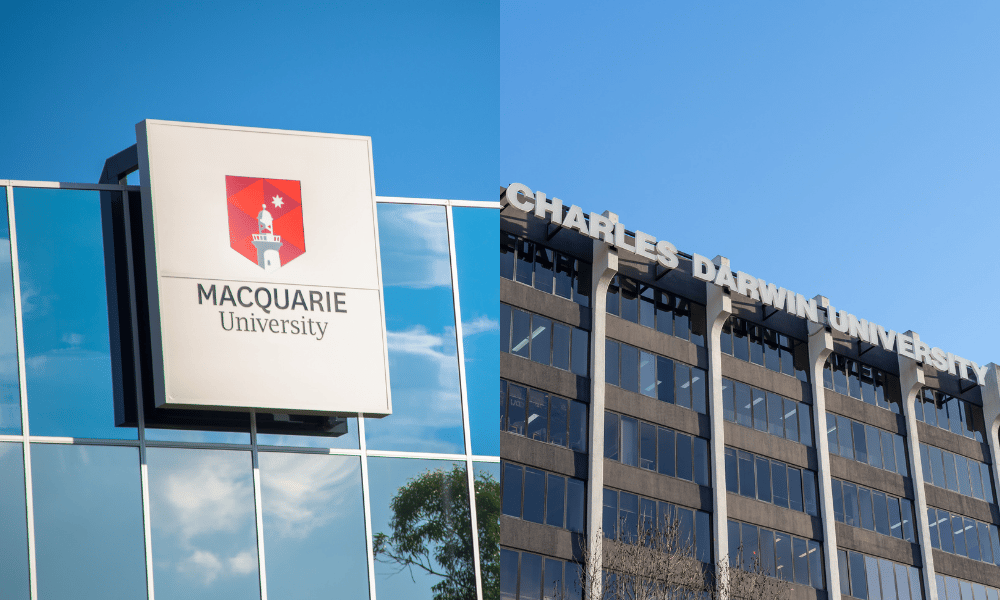
Two universities in Australia are facing controversies for breaches in the workplace, with one involving alleged forced redundancy of academics and another facing underpayments to current and former staff.
Macquarie University is facing the forced redundancy allegations, with two academics from the Faculty of Arts pursuing a claim at the Fair Work Commission (FWC) that they were illegally targeted for their union activities, ABC News reported.
One of the academics, Jo Faulkner, is the vice president of the National Tertiary Education Union (NTEU) at Macquarie University branch.
Faulkner claims that her redundancy was the result of her advocacy and disputes with management, as she was "very much always on the front lines of battles between management and staff."
"I think that's part of the strategy and it's illegal," she said as quoted by ABC News.
The other academic made redundant is Middle East Studies expert Jumana Bayeh, who claimed she became a target after publicly challenging previous management decisions at the Fair Work Commission and a state government inquiry into university governance.
Both academics asked the Redundancy Review Committee (RRC) to examine the layoffs. Two out of the three-person committee found that the university may not have acted "fairly and properly" in Faulkner's redundancy.
In Bayeh's case, the committee was unanimous that the university did not act "fairly and properly" in selecting her for redundancy.
Macquarie University denies accusations
Macquarie University rejected the allegations in a statement to ABC News.
It said the workforce changes resulted in 61 redundancies at the Faculty of Arts and Engineering, with most of the redundancies being voluntary.
It said it was not aware of the union membership details of staff, saying that it was aware that such conduct would be unlawful and that the university has a long history of "facilitating constructive relations with staff union representatives."
On the RRC's findings, the university said the results did not overturn the redundancies, and stressed that the committee is "not a decision-maker" under its enterprise agreement.
"The university's staffing changes of 2025 followed a rigorous and fair process conducted in accordance with the enterprise agreement, university policy and Australian law," it said in a statement.
"Selection decisions were based on objective, forward-looking criteria, including school and faculty needs, demonstrated performance relative to opportunity and alignment with institutional priorities."
Underpayments at Charles Darwin University
Meanwhile, Charles Darwin University (CDU) is also in hot water for underpaying more than $4 million to over 800 current and former casual employees who were engaged in professional and academic roles between 2016 and 2022.
It has entered an Enforceable Undertaking with the Fair Work Ombudsman, and has so far back-paid 612 current and former employees more than $3.5 million.
Over $500,000 is still owed to the affected 211 employees as of January, with a payroll review for another 1,483 current and former employees underway to identify further underpayments.
Fair Work Ombudsman Anna Booth said the university "deserves credit" for committing significant time and resources to corrective measures that will rectify the underpayments.
"Improving workplace compliance in the universities sector has been a priority for the Fair Work Ombudsman. Our preference is for universities to engage openly with us about any compliance failures and for us to work with them to correct their problems," Booth said.
University underpayments
Charles Darwin University adds to the growing list of tertiary institutions in Australia that have had to back-pay employees after massive underpayments.
In March 2026, the NTEU said underpayments across the sector have surpassed $284 million and universities have made provisions for a further $168 million, taking the total beyond $450 million.
Julian Arndt, director at Australian Business Lawyers and Advisors, previously told HRD that underpayments in Australia's tertiary sector are less about greed and more about the complexity of the sector.
Arndt attributed the underpayments to a "perfect storm" of complex conditions, casual-heavy workforces, as well as intense regulatory and union scrutiny.