Research on Chinese officials who fake compliance lands as Singapore employers wrestle with a culture of silence

"When an employee makes a mistake, we issue it loudly, with letters and warnings." That was how one senior leader described Singapore's blame culture at a roundtable held for the Singapore Workplace Report 2026 from Gallup and the Singapore Institute of Directors. The leaders in the room agreed the habit raises the cost of speaking out and keeps staff quiet.
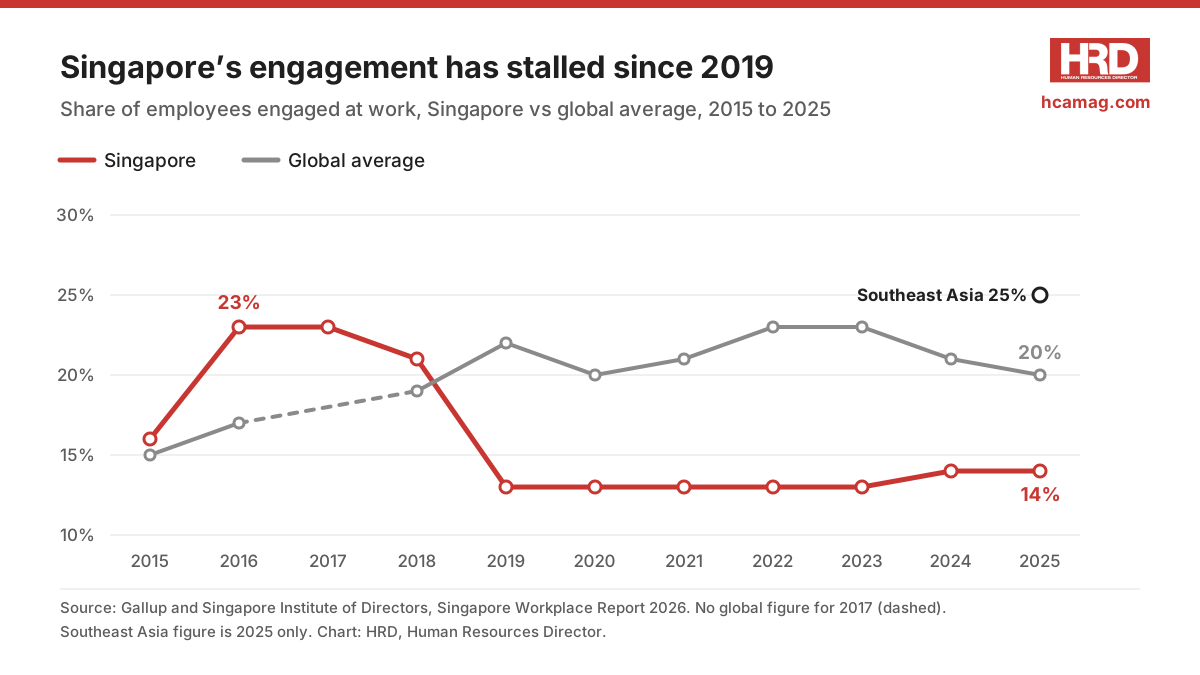
The numbers fit. The report found just 14% of Singapore employees were engaged in 2025, against 25% across Southeast Asia and 20% globally, a level that has barely moved since 2019.
Read next: Singapore's engagement crisis costs economy S$95 billion a year
Silence as a sensible choice
Leadership consultant Crystal Lim-Lange, founder of Forest Wolf, put it plainly at a June event: Singaporeans stay quiet because "they know that their workplaces are not safe enough to speak up," as HRD reported.
When speaking up is risky, people find other ways to show commitment. A Jobstreet by SEEK study of Singapore workers found 63% signal dedication by replying to messages quickly, a habit only 39% of employers say they value. Employers said they mostly want initiative and results.
The view from China
The same dynamic is playing out at enormous scale in China. Xi Jinping has spent more than a decade tightening discipline across the Communist Party, and in a speech published this month he complained that officials feign obedience, likening the corrupt to "sick trees" that should be pulled out. Discipline authorities punished 983,000 people in 2025, up from 889,000 the year before, according to official figures.
Ben Hillman of the Australian National University and co-author Tan Zhao drew on fieldwork in six provinces to study how county and township officials cope. Their study, published in The China Journal in January, found many respond "for the purposes of self-preservation" with formalism: shirking, feigned compliance, falsification and work that values form over substance. Efforts to stamp it out, they argue, are failing and making it worse.
Governments and companies differ in obvious ways. But the behaviour Hillman describes, looking compliant rather than being effective, tends to appear wherever bad news is punished.
Read next: Fewer Singapore employees would recommend their employer
Managers caught in the middle
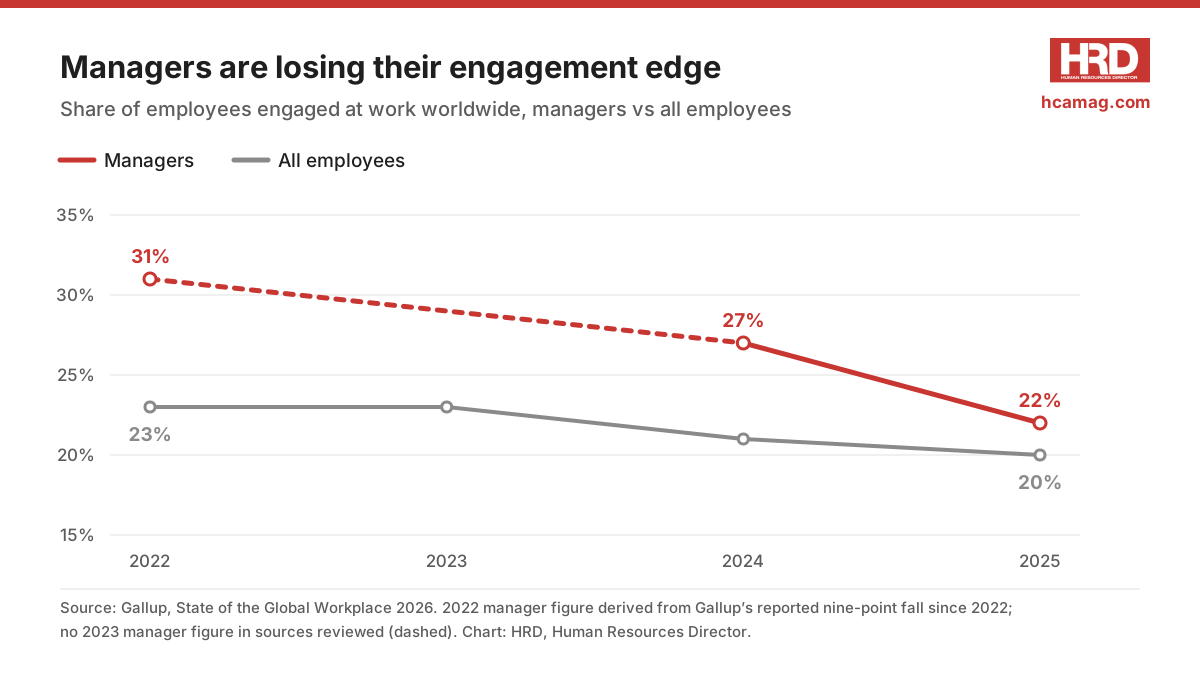
Like county officials in China, managers sit between demands from above and the people expected to deliver them, and they are feeling it. Gallup's State of the Global Workplace 2026 found manager engagement worldwide fell from 27% to 22% in 2025, its steepest one-year fall, pulling overall engagement down to 20%.
Harvard Business School professor Amy Edmondson's research on psychological safety explains the cost. Teams learn when members feel safe admitting mistakes and asking for help. Where people fear the consequences, they protect themselves instead.
What HR can do
Start with what happens after a mistake. If honest errors trigger the same warning letters as misconduct, people will hide them. Treating a first mistake as something to learn from, and repeated ones as a performance issue, changes the calculation.
Next, look at what the organisation rewards. Fast replies and late-night messages are easy to perform and easy to mistake for commitment, so measure outcomes instead. Cut reports that nobody acts on while you are at it.
Finally, close the loop when someone raises a concern. A participant at the Gallup roundtable noted that raising an issue often means being handed the job of fixing it. If speaking up only ever produces more work or more scrutiny, silence is the sensible response.
Read next: Singaporean employees cling to jobs while hunting for new roles
Singapore's leaders already know engagement matters: nearly three-quarters of those interviewed for the Gallup report strongly agreed it is a strategic priority. The research from China suggests the harder task is making it safe to tell them what is going wrong.