The UK's biggest single-price retailer has collapsed, adding to a wave of retail administrations hitting workers worldwide
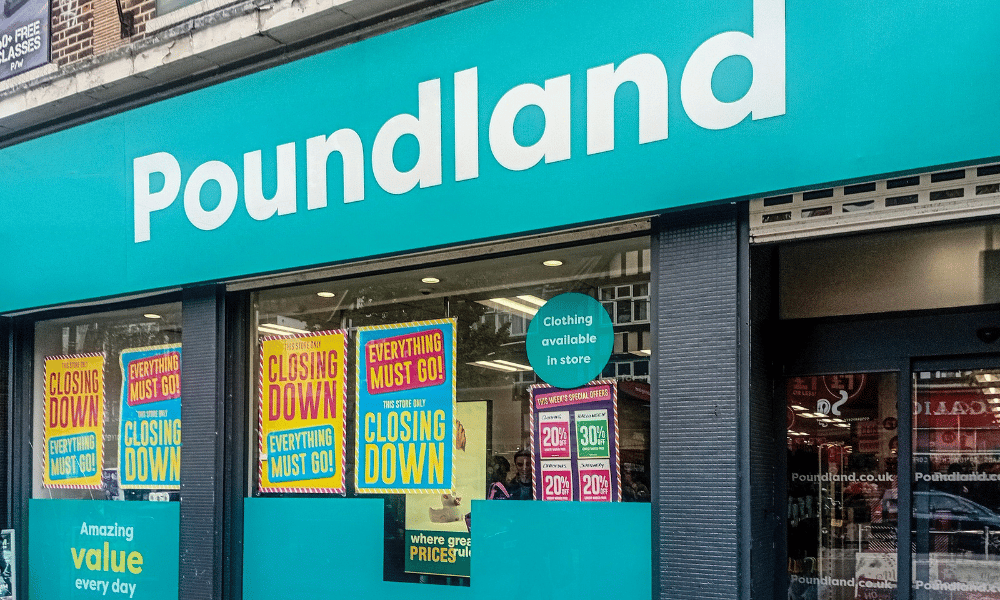
Poundland, the United Kingdom’s largest single-price retailer, went into administration on 25 November. More than 10,000 people now face job losses as Christmas approaches. AlixPartners was appointed administrator after Gordon Brothers, the US finance firm that owns Poundland, withdrew funding. The business, which operates 600 stores across the UK and Ireland, is now expected to be broken up and sold.
For the more than 10,000 people employed by the retailer, the news landed with brutal timing. Poundland had already let go of around 2,000 staff in the month before administration was declared, according to The Guardian. For those who remain, the period ahead is one of deep uncertainty about pay, entitlements and the future of their roles.
HR’s role when a retailer enters administration
For HR professionals and people leaders, that uncertainty is precisely the problem they are responsible for managing. Getting information to workers quickly, accurately and humanely during a corporate collapse is one of the hardest tasks the people function faces. The Poundland administration is a timely reminder of what happens when it goes wrong.
Bally Auluk, a national officer at the Shop, Distributive and Allied Employees Association (Usdaw), called the collapse “devastating news” for members. “There is never a good time for this to happen, but just before Christmas has to be the worst,” he said. “This decision has been made by the owners, Gordon Brothers, despite failing to engage with Usdaw, which is a disgraceful way to treat our members.”
Usdaw’s criticism centred on one failure: the decision was made without consulting the union. That failure points to a wider challenge. HR professionals and people leaders everywhere are increasingly being asked to get one thing right: communicating mass job loss at scale.
We are seeking urgent talks with administrators after Poundland today announced the company is going into administration. Today’s announcement is devastating for staff just ahead of Christmas and we will look to work with administrators to save as many stores and jobs as possible.
— UsdawUnion (@UsdawUnion) November 25, 2026
The clock starts the moment administrators walk in
One of the most common misconceptions in a retail administration is that employment ends automatically when administrators are appointed. It does not. Staff may continue working, stores may keep trading, and HR’s obligations to the workforce remain fully in force – often under conditions of extreme uncertainty and time pressure.
Nicholas Potter, practice leader at LegalVision in Australia, addressed this directly when Australian retailer David Jones entered administration in November 2026. Potter’s guidance on what HR must prioritise when a retail employer enters administration sets out the immediate priorities clearly.
“HR’s first priority should be to work with the appointed administrator to establish what administration means for employees and communicate that information promptly,” Potter told HRD. “This includes confirming whether staff will continue working, how wages will be paid, whether any roles are at risk and what happens to outstanding entitlements.”
Records are equally critical from day one. “HR should also secure accurate payroll, leave and employment records, as these may be needed to establish employee claims,” Potter said. “Entering administration does not automatically terminate employment. Clear communication and accurate records are essential to protecting employees’ rights and managing the process lawfully.”
How to get redundancy communication right
The Poundland administration is not an isolated event. When Hudson’s Bay Company entered liquidation in Canada in 2025, thousands of workers were left without severance. Workers were left without pay or entitlements once the business stopped trading. The absence of a clear HR communication plan made a bad situation worse.
These principles are well established, even when execution under pressure is not easy:
- Communicate before the news cycle does. Workers should not learn about their employer’s situation from a headline.
- Be specific. Avoid vague language such as “we are exploring all options.” State what is known, what is not yet known, and when staff will hear more.
- Contact everyone. Staff whose roles are not at immediate risk still need information – uncertainty affects the whole workforce.
- Avoid announcements that arrive before workers can process them or access support. In Asia, Meta Platforms set a widely criticised precedent in May 2026. Termination notices reached Singapore employees at 4am, before most of the city-state had woken up – technically legal, but broadly condemned.
- Engage worker representatives early. The union criticism directed at Gordon Brothers centred on the failure to do precisely that.
What do workers face once administration begins?
Poundland’s administration is expected to result in store sales to competitors such as B&M and Poundstretcher. Some sites may be acquired, but hundreds of locations could be left empty.
Some workers will be retained under new ownership. Others will face redundancy. Many will remain in uncertainty for weeks.
Ongoing factual updates, access to employee assistance programs, and clear information about redundancy entitlements are all part of a responsible response. In many jurisdictions, they are also a legal requirement. For HR leaders outside the UK, the Poundland administration is a stress test worth examining. The next one may arrive closer to home.