New Zealand employees are increasingly asking AI tools to interpret workplace rights before raising issues with managers or HR
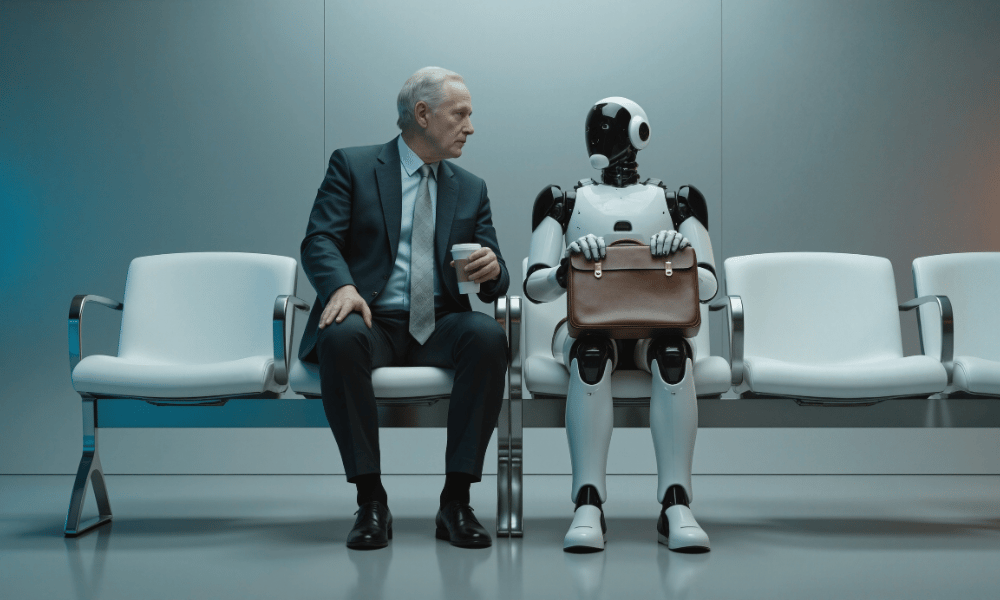
Workplace conversations across Aotearoa are increasingly starting somewhere other than the manager's office. According to Peninsula New Zealand, a workplace relations and health and safety advisory firm based in Auckland, employees are turning to artificial intelligence (AI) tools to understand their workplace rights, evaluate employer decisions and seek guidance on matters ranging from performance management to restructures and dismissals – often before they approach a manager or HR team at all.
Ashlea Maley, director of operations at Peninsula New Zealand, said the shift extends well beyond the automation debate that has dominated AI coverage to date.
"Much of the conversation around AI has focused on productivity and whether technology will replace jobs. However, one of the most immediate workplace changes is already happening. Employees are increasingly turning to AI tools to understand workplace rights, assess employer decisions and seek guidance before approaching their manager or HR team," Maley said.
Maley said many organisations have built policies governing how staff use AI at work, but few have grappled with what happens once employees start treating AI as an informal adviser in live workplace situations.
"Today, every employee has access to information at a scale and speed we haven't seen before. AI can provide instant responses to complex workplace questions, but it doesn't always understand the context, workplace culture or specific employment arrangements involved," she said.
That gap between speed and context is already visible in New Zealand workforce data. The Qualtrics 2026 Employee Experience Trends Report found that just 12% of New Zealand employees said they use only company-provided AI tools – the lowest rate of any market in the study, against a global average of 20%.
What this means for good faith and procedural fairness
New Zealand's employment framework places heavy weight on good faith – a statutory duty under the Employment Relations Act 2000 that requires employers, employees and unions to deal with each other honestly and to actively maintain a productive relationship, particularly during consultation, restructuring and disciplinary processes.
Maley argued that principle becomes more important, not less, as employees arrive at workplace conversations already informed, or misinformed, by AI-generated content.
"Business owners may feel more informed and empowered, but they may also place confidence in information that is incomplete, inaccurate or not aligned with New Zealand employment law requirements," Maley said.
"For employers, this reinforces the importance of clear communication, transparency and consistency in workplace decision-making. Business owners should assume employees are researching workplace issues independently and may be arriving at conversations with information generated by AI tools."
The stakes of getting process wrong are well established in New Zealand case law, such as a recent case where a good-faith breach that cost an employer $100,000 in penalties and arrears, and on the procedural fairness requirements in restructuring and redundancy processes that the Employment Relations Authority continues to enforce closely.
How employers can respond
Maley said the organisations that adapt best won't necessarily be the ones spending the most on AI systems. "The question for employers is no longer whether employees are using AI. The question is whether workplace leadership, communication and people management practices are evolving at the same pace," she said.
"The organisations that will navigate this shift most successfully won't necessarily be those investing the most in AI technology. They'll be the ones investing in strong workplace relationships, effective communication and capable people leadership. Good workplace relations have always mattered. In an AI-enabled workplace, they matter more than ever."
That advice tracks with broader findings on how New Zealand's workforce is engaging with the technology – HRD has reported separately on New Zealand employees feeling conflicted about AI use even as adoption accelerates, underscoring the trust gap employers are now being asked to close.