Research on Chinese officials who fake compliance to protect themselves offers a lesson for NZ employers trying to get people to speak up

Fewer than half of New Zealanders believe they would be safe reporting serious wrongdoing. In a 2025 survey released by the Office of the Ombudsman, just 48% said they would feel safe doing so. Of those who did not, 61% feared losing their job and 41% feared retaliation.
Employers tend to answer findings like that with process: new reporting lines, more signoffs, closer monitoring. Research from China suggests that, handled badly, more process can deepen the silence.
A very large experiment
Xi Jinping has spent more than a decade tightening discipline across China's Communist Party, and he is not easing off. In a speech published this month, he complained that officials feign obedience and likened the corrupt to "sick trees" that should be pulled out. Discipline authorities punished 983,000 people in 2025, up from 889,000 the year before, according to official figures.
Ben Hillman of the Australian National University and co-author Tan Zhao drew on fieldwork in six provinces to see how county and township officials cope with stricter discipline, heavier reporting and detailed performance reviews. Their study, published in The China Journal in January, found many respond "for the purposes of self-preservation" with formalism: shirking, feigned compliance, falsification and a focus on process rather than outcomes.
Beijing has made fighting formalism a priority. The authors argue the campaign is failing and making the problem worse.
Read next: Does a psychologically safe environment lead to better decision-making?
Why pressure produces silence
A one-party state and a Kiwi employer have little in common. The mechanism is what carries over: people who expect to be punished for bad news learn to produce good-looking reports instead.
Harvard Business School professor Amy Edmondson's research on psychological safety describes the other side of that. Teams learn when members feel safe owning up to mistakes and asking for help.
New Zealand research points the same way. A study of lawyers at 12 New Zealand law firms by Emma Clarke and colleagues, including Katharina Näswall of the University of Canterbury, examined how ethical leaders support wellbeing by making it feel safe to speak up, in a profession where hierarchy often keeps junior staff quiet.
Read next: Do employees feel comfortable talking to HR about mental health?
The middle takes the strain
In China, the squeeze lands on local officials expected to deliver central targets with thin resources. In New Zealand organisations, that person is usually the team leader or middle manager.
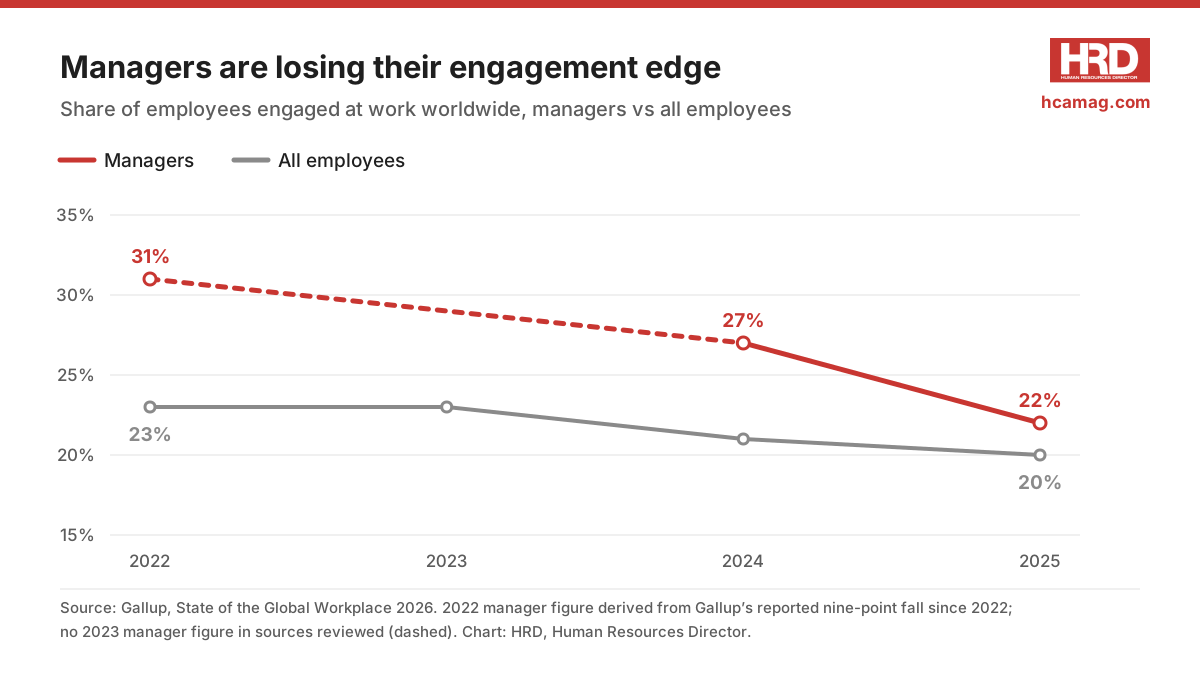
Gallup's State of the Global Workplace 2026 found manager engagement worldwide fell from 27% to 22% in 2025, its sharpest annual drop, dragging overall engagement down to 20%.
What helps
The Ombudsman's figures point to fear of consequences as a major barrier, so the most useful step is showing staff that speaking up works. When someone raises a concern, tell people what changed as a result, even if the change is small.
At the same time, look at what managers are already asked to produce. Reports and sign-offs that nobody acts on cost time and teach people that the paperwork matters more than the result. Numbers that are always on target deserve a second look for the same reason.
Where monitoring is used, keep it narrow and say plainly what it is for. If staff cannot tell what a tool is for, many will assume the worst.
Read next: Do your people feel 'psychologically safe' at work?
The Ombudsman's survey shows where many workplaces start. Hillman and Zhao's research shows where heavy-handed fixes can lead. The aim is a workplace where raising bad news early is safe and is seen to be safe.