CommBank's latest Wage and Labour Insights also shows wage growth at its slowest pace this year

Australia's unemployment rate is expected to peak at 5.1% at the end of 2027, according to the latest forecast from the Commonwealth Bank (CommBank), as labour supply continues to outpace demand.
CommBank economist Harry Ottley made the forecast in the bank's latest Wage and Labour Insights series.
"Labour supply has continued to outpace demand, with participation around historically high levels, lifting the unemployment rate to 4.7% in September," Ottley said in the report.
"We expect employment growth to slow further and the unemployment rate to keep rising, to a peak of 5.1% at end-2027."
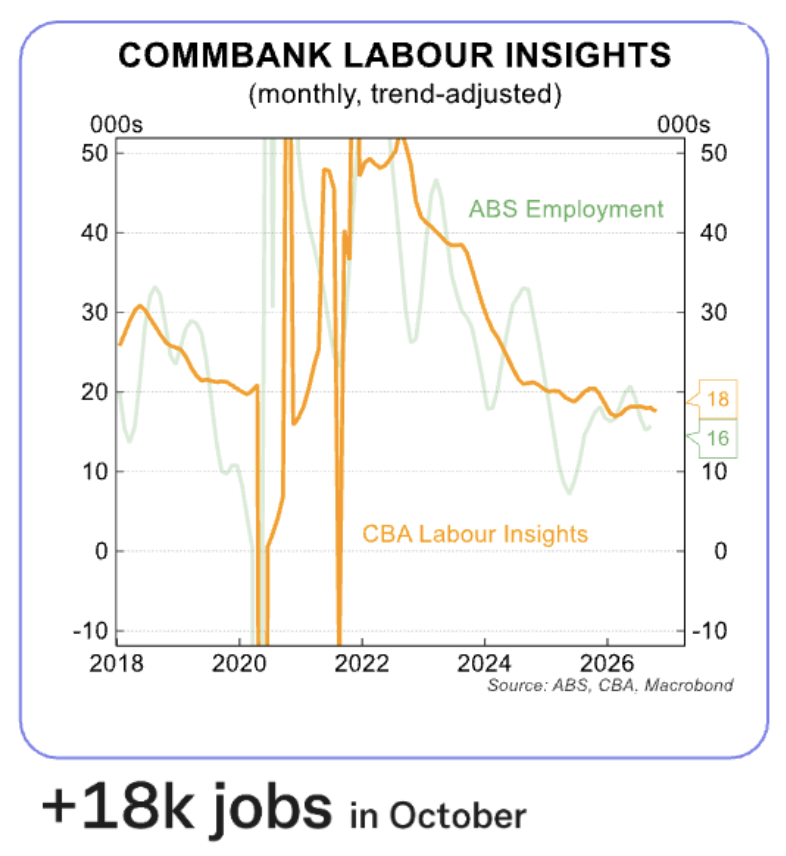
Ottley made the remarks as CommBank's data showed jobs grew by 18,000 in October 2026, unchanged from September's figure, which was revised down from 20,000.
"Labour demand remains somewhat resilient. But the easing at the margin is consistent with a slowing economy, with five rate hikes this year and falling housing prices weighing on activity," Ottley said.
The unemployment rate was 4.7% in September 2026, according to the Australian Bureau of Statistics (ABS), which noted a higher proportion of people remaining unemployed compared with recent years.
Slowest pace of wage growth
Meanwhile, CommBank's latest Wage and Labour Insights series also found that October's monthly wage growth moderated to its weakest pace since December 2025.
In annualised terms, monthly wage growth eased to 3.1% in October, down from the 3.5% recorded in August.
"Our monthly measure on wages shows a clear slowdown and confirms the lift from the 4.75% Fair Work Commission award increase was short and sharp, with a noticeable but limited impact," Ottley said.
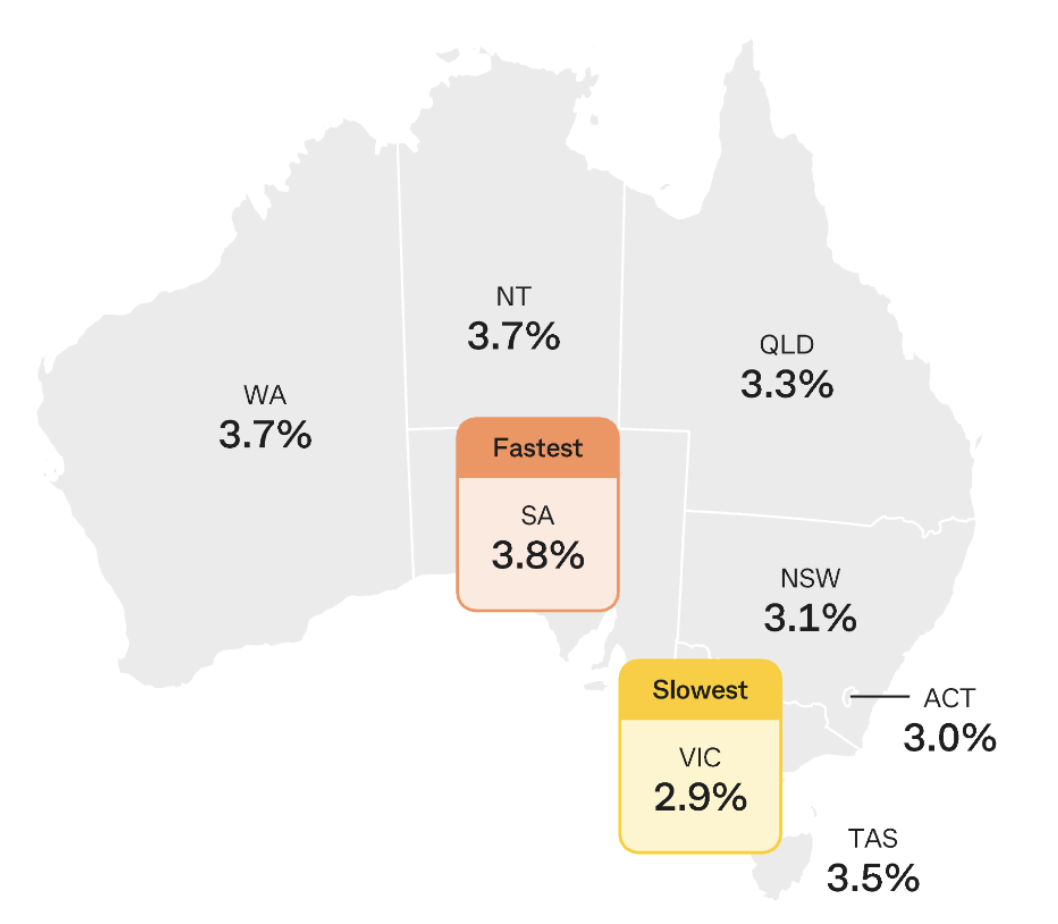
By state and territory, South Australia saw the strongest wage growth at 3.8%, up from 3.7% in September.
Victoria, on the other hand, saw the slowest wage growth after it moderated to 2.9% from 3.0%. This is Victoria's fifth consecutive month at the bottom of the table, according to CommBank.
Are inflation expectations now 'embedded' in wages?
The slowdown in wage growth across the country comes after the Reserve Bank of Australia (RBA) predicted that wage growth would "pick up a little in the near term" following higher inflation outcomes.
"Inflation is now expected to remain above three per cent for the coming year and there is an increasing risk that higher inflation expectations will become embedded," the RBA said earlier this month.
But Ottley said there's still no sign that higher inflation expectations have become embedded in wages.
"Our data shows no sign of that yet as we enter Q4 2026. That should provide some comfort for the RBA, though it has no shortage of other inflation concerns," the economist said.