The ASU's demand for urgent talks with Qantas CEO Vanessa Hudson signals a new era of industrial scrutiny over AI workforce decisions
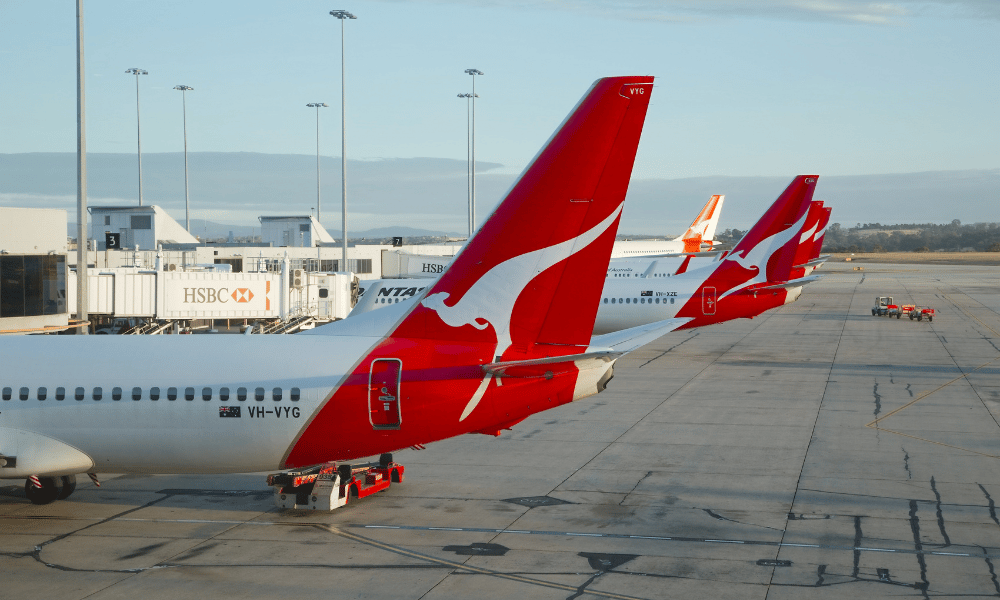
The Australian Services Union (ASU) has put Qantas on notice. In a letter to chief executive Vanessa Hudson, the union representing thousands of the airline's clerical and call centre workers demanded urgent consultation after Hudson publicly committed to accelerating artificial intelligence adoption across the group – comments the ASU says amount to an open declaration of workforce change.
As reported by The Australian, the flashpoint came after Hudson addressed the Macquarie Australia Conference on 5 May, outlining how Qantas planned to embed AI across flight scheduling, aircraft maintenance, rostering, weather forecasting and marketing. She described use cases as "almost limitless" and said the airline was "very excited" about what the technology could do.
For HR leaders watching on, the episode is less a corporate dispute and more a live case study in what happens when AI strategy outpaces workforce communication.
When speed becomes a liability
Hudson's comments were framed largely around operational gains. She pointed to an AI tool built by a team of three in just four weeks – one that integrates maintenance records, rosters, weather data and customer transfer information to produce daily on-time performance predictions. The result, she said, has been a three to four percentage point improvement in punctuality since deployment.
Without AI, she said, the same outcome would have taken six months and millions of dollars.
The business case is compelling. The workforce relations case is considerably more complicated. Under the Fair Work Act, employers covered by an enterprise agreement must consult workers when there is a major workplace change likely to significantly affect employees – including terminations, restructures and changes to hours or job duties. The ASU's position is that an accelerated, company-wide AI program linked explicitly to cost reduction meets that threshold.
ASU assistant national secretary Scott Cohen said the union had previously sought to enshrine AI protections into work agreements during bargaining – and been refused. That context made Hudson's public comments all the more difficult for employees to absorb. "It's a natural concern for employees, what any acceleration of AI will mean for them, and that's why we've written to the company to immediately begin consultation," Cohen said.
The consultation gap
This is not an isolated confrontation. The Australian Council of Trade Unions (ACTU) has written to employer peak bodies reminding them of their obligations under law to consult with workers when they decide to adopt AI, where it is likely to change employees' jobs or how they do them.
ASU national secretary Emeline Gaske has said her members in IT and administrative roles are already experiencing what she describes as "AI-driven productivity demands, after-hours messaging, and the threat of digital surveillance," arguing the best time to regulate is before the damage is done.
For HR leaders, the legal and cultural stakes are converging. A new enterprise agreement between Private Media and the Media, Entertainment and Arts Alliance, approved by the Fair Work Commission in December 2025, introduced explicit restrictions on the use of AI in editorial work and formal consultation obligations with journalists ahead of any implementation of AI tools – described as an industry first. It is unlikely to remain a one-off.
What HR needs to do differently
The Qantas situation illustrates a tension that HR professionals across Australian enterprise are navigating: AI is being championed at the CEO level as a productivity and cost lever, while the people implications are being managed – if managed at all – downstream.
A 2026 report from the Academy to Innovate HR found that while 98% of organisations report increased urgency to deliver on AI, 91% are not fully prepared to build an AI-enabled culture. That readiness gap is precisely where industrial friction finds its footing.
HR's role is not simply to communicate AI decisions after they have been made. As Diversity Council Australia deputy chair Chris Lamb has argued, human-centric AI is about using technology to create better, fairer and more inclusive workplaces – not just more efficient ones.
Cohen struck a similar note from the union side, saying he was hopeful that consultation could produce outcomes that actually expanded human interaction rather than reducing it.
"If it's rolled out in a way just to cut jobs, there'll be worse customer service outcomes for Qantas customers," he said. "I don't think too many people enjoy trying to deal with robots and chatbots in the place of a human who can resolve their query faster."
The broader lesson
Hudson was careful to clarify that Qantas's AI agenda is not simply about headcount reduction – that it would help the airline "do things more efficiently" across the board. That may be true. But in the absence of prior consultation, the distinction is difficult for employees to believe.
Trust, transparency and fairness strongly influence whether employees support or resist AI adoption. Clear principles about how AI is used, open communication about decision processes, and visible human oversight in critical areas all depend heavily on HR expertise and leadership.
The Qantas confrontation is a reminder that announcements made at investor conferences carry weight on the shop floor. When a CEO publicly connects AI acceleration to cost reduction – even with caveats – the workforce hears the unvarnished version.
HR leaders who are not in the room when those decisions are made, and who are not shaping the communication strategy around them, are likely to be managing the fallout.
The question for HR teams across Australia is not whether AI will arrive in their organisations. It already has. The question is whether their people will hear about it from a conference speech, or from them.