The union asked four questions - Airservices Australia liked none of the answers
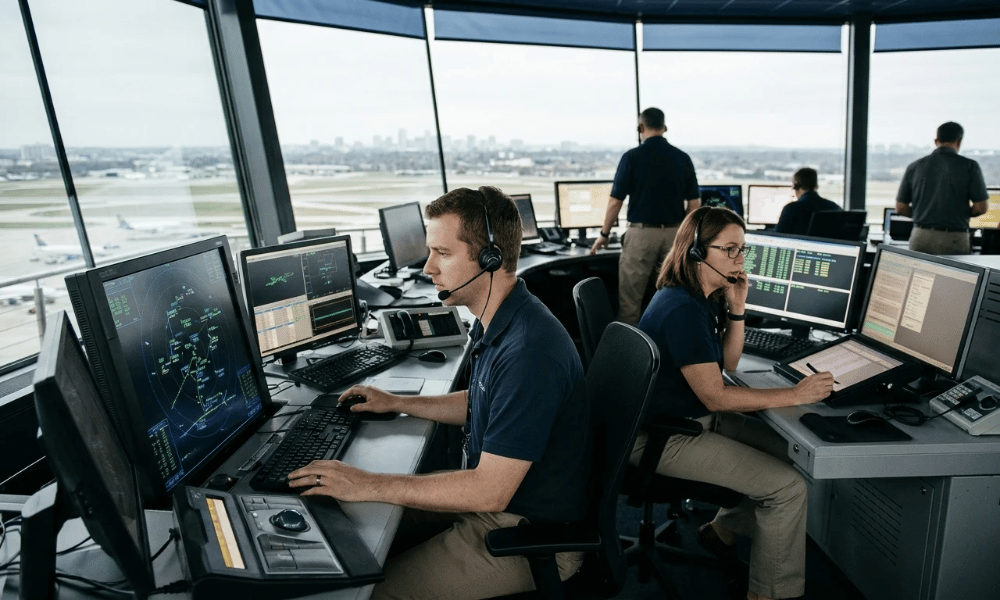
Australia's air traffic controllers will not receive redundancy-style severance if they cannot - or will not - obtain a new national security clearance, the Fair Work Commission has determined.
The October 20 decision sided with Airservices Australia on every one of the four questions the controllers' union, Civil Air, had put to the Commission. The answer to each was the same: no.
The dispute turns on a major operational shift. Airservices Australia is rolling out CMATS, a new integrated civil and military air traffic management system. Once it goes live, controllers will handle classified information far more often than they do now - and every air traffic controller covered by the enterprise agreement will need a national security clearance. Right now, only some hold one.
Getting cleared is no small ask. Applicants must hand over employment, financial, travel and education history. Background checks run through an ASIO assessment and a financial-probity review. Higher clearance levels add a psychological assessment. Applicants may also be asked about intimate relationships, sexuality, drug and alcohol use, and government contacts. Non-citizens face an additional hurdle: a Citizenship Eligibility Waiver, valid for just 12 months.
Some controllers do not want to go through with it. Others may not qualify. The union wanted to know: if those employees are terminated, are they entitled to redundancy-style severance under the enterprise agreement?
Civil Air built its case around clause 62 of the Airservices Australia (Air Traffic Control and Supporting Air Traffic Services) Enterprise Agreement 2024-2027, which kicks in when an employee becomes a "potentially surplus employee." The benefits on the table are substantial - four weeks' salary per completed year for the first five years, three weeks per year after that, plus a pro rata amount for completed months, capped at 75 weeks.
The union ran two arguments. First, that controllers without a clearance form a "class" of employees surplus to requirements. Second, that CMATS is a technological change that makes the current role's core functions obsolete - controllers do the job one way now, and once the new system arrives, that way of working disappears.
Airservices Australia pushed back. It argued the security clearance is a condition of employment, not a change in job functions. Controllers still do exactly what they have always done: keep aircraft safely separated during take-off, flight and landing. Switching software platforms does not change the job. And the employer does not have too many controllers - "if anything, it's the opposite," it submitted.
The Commission found the employer had the stronger case.
On the surplus question, the agreement requires a class of employees to be "formally identified" by the employer as being in excess of need. Airservices Australia had never done that. The Commission found that allowing employees to effectively self-select into redundancy through their own conduct "sits uncomfortably" with how the clause was designed to work. Even if some controllers cannot perform the role without a clearance, the total number the employer needs does not shrink. The class would be "deficient in size, not in surplus."
On the technological change argument, the Commission held that the core function of the role - keeping aircraft safely separated - is not changing. CMATS is a new platform for performing the same function, not a replacement of the function itself.
The decision did not accept everything the employer put forward. The Commission cautioned Airservices Australia against understating the difference between existing security requirements, such as the Aviation Security Identification Card, and the new clearance process. The union's description of the change as "radical" may have been too strong, the Commission said, but the employer "should be careful not to understate and underestimate the degree of difference."
Then there was the question nobody asked. What actually happens to a controller who cannot get cleared and cannot be redeployed? The Commission looked at clause 64 of the agreement, which deals with loss of an "essential qualification," but found it did not fit either. That clause covers qualifications an employee once held and then lost - not a new type of clearance that did not exist as a requirement when the employee started. The Commission declined to answer the question definitively, noting it had not been asked to do so.
That gap remains open.
For HR teams navigating technology-driven changes to role requirements, the decision draws a practical line: an employer needing the same number of people to meet a higher standard is not the same as an employer needing fewer people. The first does not trigger redundancy. What it does trigger - when an employee simply cannot meet the new standard - is a question Airservices Australia and its controllers may yet need to resolve.