Instead of job hunting, he spent months renovating his partner's four beauty salons
A Queensland mining worker who won his unfair dismissal case has had his back pay cut roughly in half after the Fair Work Commission found he spent most of 16 months unemployed not looking for work - choosing instead to do unpaid renovations at his partner's beauty salons.
The decision, handed down on October 19, 2026, is the third ruling in the same matter. The worker was dismissed from OS MCAP Pty Ltd on May 6, 2025. The Commission found the dismissal was unfair on June 1, 2026, and ordered reinstatement on September 11, 2026. What remained was the money.
The employer's evidence estimated that the worker's lost earnings totalled $220,807.53 inclusive of superannuation, based on what he would have earned had he remained in the role - including an adjusted rate that factored in salary, a production bonus and a safety incentive under a regulated labour hire arrangement at the Goonyella mine.
The worker had been earning $2,603.85 per week before his dismissal. He sought lost pay from May 2025 through to his reinstatement date, less five weeks' notice already paid on termination.
There was just one problem. He had not looked for a job.
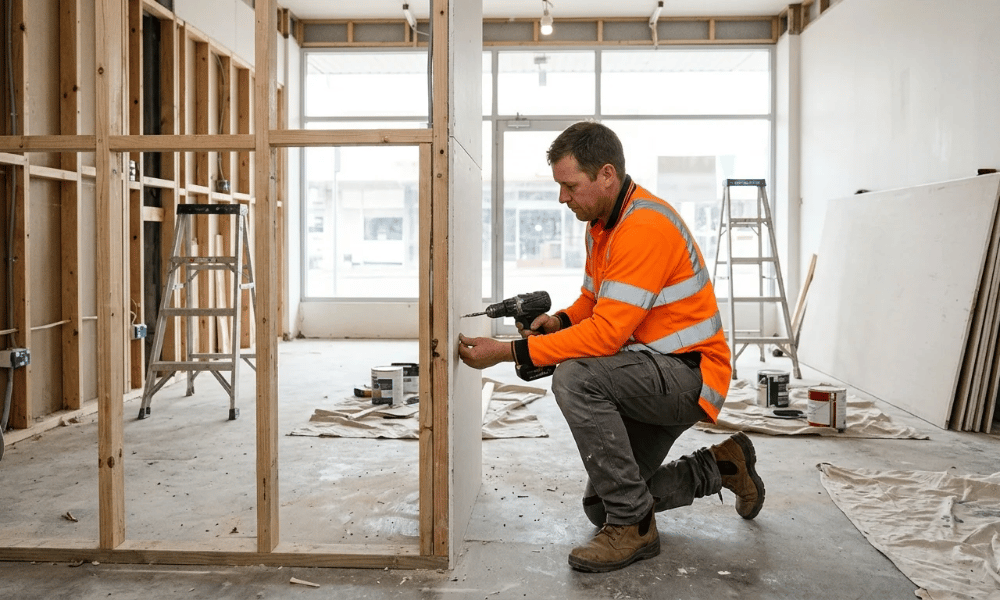
During the hearing of his original unfair dismissal application in September 2025, the worker gave evidence that he had not sought paid work since being dismissed four months earlier. He told the Commission he had been living with his partner, who owned four beauty shops, and had been doing unpaid plumbing work, replacing walls, bricks, roofing and guttering across her shops while she paid his rent and car repayments.
The Commission had warned him about this. At a telephone conference in July 2025, the worker was urged to find employment and not to "sit on his hands." He confirmed he understood, but said there had been "a lot of work to do" at the salons.
When pressed at the September 2025 hearing - "So despite my urging at the conference, you still haven't found paid employment?" - the worker's answer was simply: "No."
He later separated from his partner and began sharing rental costs with housemates, paying $750 per week in rent with housemates contributing $375. His savings dwindled. Still, he did not start applying for jobs until April 2026 - nearly 11 months after his dismissal.
When the remedy hearing arrived in September 2026, the worker suggested that any emails predating April 2026 may not have been stored in his account. The Commission called that claim "a complete nonsense," noting that emails are not automatically deleted unless the account holder authorises it. An order requiring SEEK to produce the worker's application records confirmed he had not applied for any roles on the platform before April 2026.
He did line up a role in April 2026, but the employer pulled the offer before he started.
The Commission accepted the worker had been represented by lawyers throughout the process and could not claim ignorance of his obligation to mitigate his loss.
Rather than awarding nothing or the full amount, the Commission broke the 16-month period into segments and adjusted the rate for each based on the worker's job search efforts - or lack of them.
For the first five weeks after dismissal, already covered by notice pay, the worker received nothing. For the 14 weeks he lived with his partner and did no job searching, the Commission awarded just $300 per week plus superannuation - enough, it found, to cover basic living expenses while being housed. After the relationship ended and his costs rose, that figure doubled to $600 per week plus superannuation for the next 30 weeks, reflecting his continued refusal to look for work even as his circumstances changed.
It was only from April 9, 2026 - when the worker finally began applying for jobs - that the Commission awarded the full adjusted weekly rate of $3,337.61 plus superannuation. That figure was derived from the approximately one-year calculation of $173,555.67 divided by 52 weeks, inclusive of a $15,000 production bonus the Commission accepted the worker should receive in full. The Commission acknowledged that its own delay in issuing decisions had affected both parties, and noted it would not have been appropriate for the worker to seek alternative employment after the June 2026 decision foreshadowed reinstatement.
The final order: $98,965.03 in gross wages and $11,875.80 in superannuation - totalling $110,840.83. Roughly half the $220,807.53 the employer had estimated as the full amount the worker would have earned. The employer was given 28 days to pay.
Both the original unfair dismissal finding and the reinstatement order have been stayed as at the date of this decision.
For HR teams, this case is a concrete example of how the Commission will scrutinise a dismissed worker's job search efforts week by week - and reduce a back pay award accordingly when those efforts fall short.