Split decision leaves union with a consultation win but no new allowances
A union backed cross-divisional training for years - then asked the Fair Work Commission to pay for it. It got half of what it wanted, and none of the money.
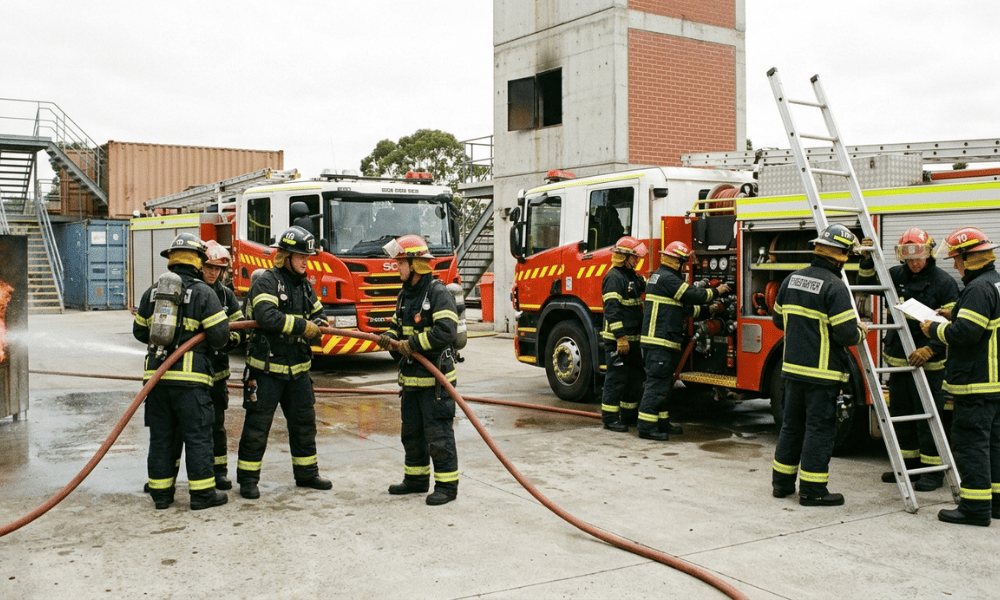
The Commission handed down a split decision on September 10 in a dispute between the United Firefighter's Union of Australia and Fire Rescue Victoria over a program that trains career firefighters to work across two legacy divisions of the fire service.
The backdrop is the Victorian Government's 2020 merger of the Metropolitan Fire and Emergency Services Board and the Country Fire Authority into a single entity, Fire Rescue Victoria. That merger left FRV with two operationally distinct workforces - Division A (former MFB stations) and Division B (former CFA stations) - each governed by different terms under a single interim enterprise agreement.
To bridge the gap, FRV developed the Interdivisional Firefighter Program, a training course that qualifies firefighters and officers to crew trucks and manage incidents in the other division. A separate pathway, the Interdivisional Firefighter Recruit Code, recognises that newer recruits who completed a harmonised training course already hold the cross-divisional competencies.
The program started as a pilot in early 2021 and expanded steadily. By 2024, FRV had delivered 48 courses and more than 1,400 firefighters had been through the program or held the recruit code.
The union supported the program from the start, participating in consultative committee meetings and endorsing proposals as they moved through subcommittees. But it maintained that its support was always contingent on firefighters being paid for holding the new qualifications and performing the cross-divisional work.
That is where the two disputes diverge.
The consultation question
The union argued that the whole program - the qualification, the recruit code, and the deployment of firefighters across divisions - amounted to a change in the employment relationship requiring formal consultation and consensus under the enterprise agreement. Without that consensus, the union said, FRV could not require the work.
FRV pushed back. It pointed to years of consultative committee endorsements, organisational policies approved through proper channels, and the fact that firefighters had been voluntarily completing the training and performing the work since 2021 without complaint.
The Commission found the union's position had a gap it could not paper over. There was no formal record of the consultative committee endorsing the creation of the qualification itself. The recruit code had been referred to a subcommittee that never reported back. FRV conceded as much.
The determination: the program had not been agreed in accordance with the consultation clauses in the enterprise agreement.
The money question
That consultation win did not translate into dollars.
The union claimed three new hourly allowances: $1.77 for holding the recruit code, $1.77 for holding the qualification, and $0.88 for actually performing cross-divisional work.
The Commission declined all three.
On the recruit code, the reasoning was direct. The interdivisional training is one component of the compulsory recruit course that every new firefighter must complete. Paying an hourly allowance for it would amount to a wage increase for the entire incoming workforce, the Commission found.
The qualification allowance met a similar fate. The Commission accepted that firefighters who complete the course learn different processes, equipment and ways of working, but it was not persuaded that simply holding the qualification warranted ongoing payment. It compared the claim against existing allowances in the agreement for specialist skills such as fire investigation, urban search and rescue, and marine response - and found the cross-divisional qualification did not compare.
The interdivisional work allowance was the union's strongest argument. The Commission acknowledged real differences between the two divisions. Division A uses the Greater Alarm Response System and radios. Division B relies on pagers and requires firefighters to manage wildfire responses alongside CFA volunteers. Different appliances, different equipment, different administrative systems.
But the work remained, at its core, firefighting performed at the same rank and level. And it was entirely voluntary - a firefighter had to agree to each assignment, and FRV had to work through up to six procedural steps before it could even make the offer.
FRV's financial position also weighed against the claims. The organisation was operating at a forecast deficit of $390.59 million for the financial year ending June 30, 2025. The estimated first-year cost of the allowances - which FRV put at $5,831,513, not including all components - would have required drawing on cash reserves or seeking supplementary government funding. The Commission noted the union's "somewhat blithe view" of the financial impact of claims it had advanced with little detail.
The Commission added a broader observation on the allowances and the harmonisation process. Paying firefighters specifically because the two divisions do things differently would, in its view, only entrench the operational differences the merger was meant to dissolve. It called this "the antithesis of harmonisation."
For HR professionals managing post-merger workforce integration, the decision cuts both ways. Support-in-principle through committee processes does not automatically amount to the formal consensus an enterprise agreement requires. And a union that backs a program for years without raising the pay question in any recorded forum may find the Commission unsympathetic when it finally does.