A partly completed form was not enough to kill a jurisdictional objection
An employer's partly completed response form sparked a Full Bench appeal - and handed it a procedural win.
Aurecon Australasia had a Fair Work Commission certificate thrown out on October 21, 2026, after a Full Bench found the Commission skipped a threshold question it was required to answer first: had the worker actually been dismissed?
The worker filed a general protections application on June 23, 2026, claiming she had been constructively dismissed - meaning she resigned, but says the employer's conduct left her no real choice. She alleged the dismissal was a form of adverse action taken because she had exercised workplace rights.
Aurecon pushed back. In its formal response, the company argued the worker had not been constructively dismissed at all. She resigned voluntarily, the company said, and if there was no dismissal, the entire application was "jurisdictionally flawed."
The tick box that started it all
Here is where it gets procedural - and interesting.
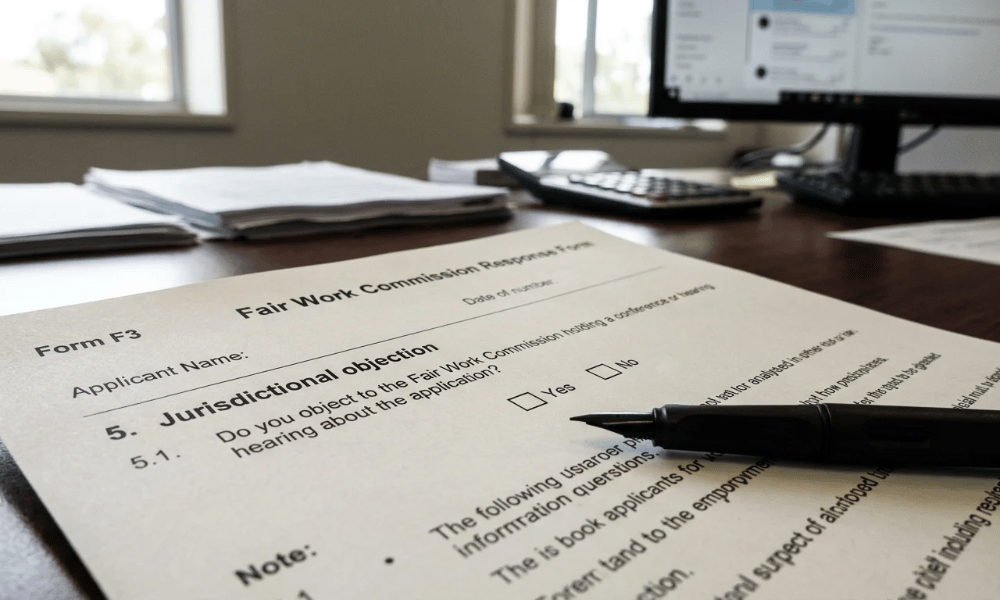
The response form includes a section asking whether the employer objects to the Commission holding a conference on jurisdictional grounds. Question 5.1 is a simple yes-or-no tick box. Aurecon left it blank.
But in the very next field - question 5.2, which asks what the objection is - the company spelled out its position: the worker was not dismissed, she resigned.
The Commission listed the matter for a conciliation conference anyway. No party objected. The conference went ahead on September 9, 2026, run by a staff conciliator. It did not settle.
After the conference, the Commission emailed the parties confirming the matter had not resolved and that a report would go to a Commission member, who would then decide whether to issue a certificate for the dispute to move to court.
Things moved fast from there
The next day, the worker's lawyers asked for the certificate to be issued. Within half an hour, Aurecon's lawyers objected, arguing the jurisdictional question - whether there had been a dismissal at all - had to be decided first.
The worker's side fired back: the tick box had not been filled in, the matter had already been to conciliation, and the objection was not properly raised. Aurecon replied that its position was plainly stated in the form regardless.
The Commissioner issued the certificate on September 14, 2026. That same afternoon, Aurecon asked for it to be revoked. The Commissioner declined, reasoning that Aurecon had not elected to pursue the objection through the designated tick box and had participated in the conference.
The Full Bench disagreed
The appeal turned on the Federal Court's earlier decision in Coles Supply Chain Pty Ltd v Milford. That case established that when there is a dispute about whether an applicant was actually dismissed, the Commission must resolve that question before it can move to conciliation and certification. Whether a dismissal occurred is not the dispute the Commission is empowered to conciliate - it is a prior question about whether the Commission has the authority to act at all.
The Full Bench found that despite the blank tick box, the response form as a whole made Aurecon's position unmistakable. Nothing that followed - not attending the conference, not failing to object to the listing - amounted to withdrawing that dispute. Immediately after the conference, Aurecon reiterated its objection in writing.
The panel also noted that consent between the parties cannot give the Commission jurisdiction it does not have. Even if Aurecon had been taken to have waived a procedural right, the substantive dispute about whether a dismissal occurred remained live. The certificate should not have been issued while that question was unresolved.
The Full Bench granted permission to appeal, allowed the appeal, quashed the certificate, and sent the matter back for the dismissal question to be properly determined.
A law that has since changed
One wrinkle worth noting: amendments to section 365 of the Fair Work Act took effect on July 7, 2026. Under the new law, a person who merely alleges they have been dismissed can apply to the Commission. But the worker filed her application on June 23 - before the change kicked in - so the old rules applied, and the Commission was required to be satisfied a dismissal actually occurred before it could act.
For HR teams contesting constructive dismissal claims at the Commission, the practical takeaway is clear: jurisdictional objections need to be resolved before conciliation can validly proceed - and filling in every field on the response form, tick boxes included, removes any doubt about whether the objection was pressed.