Facing a skills shortage, employers should treat First Nations talent as core strategy, not diversity
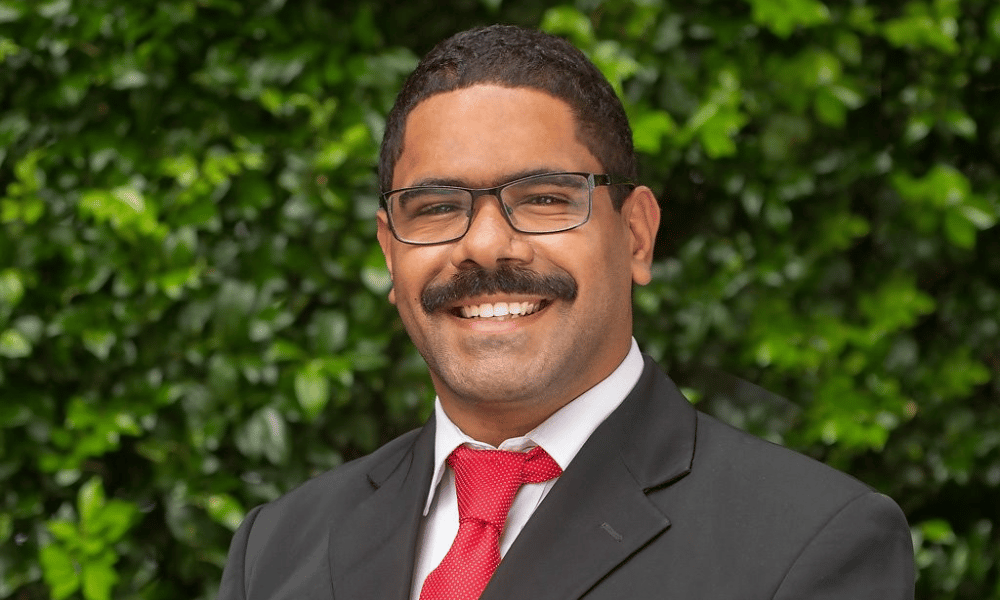
Australian employers trying to close skills gaps are missing an obvious solution by treating Indigenous employment as a diversity project instead of a core part of workforce planning, according to Hayden Charles, general manager of indigenous services at SKG.
Charles, a Wiradjuri man, says the habit of separating commercial performance from social responsibility is costing businesses access to the workers they need.
“Part of the problem is that businesses have traditionally separated commercial performance from social responsibility. Workforce planning is viewed as an operational priority, while Indigenous employment is often treated as a diversity initiative or reconciliation commitment. In reality, the two are closely connected,” Charles said.
Government data supports his case. The Jobs and Skills Australia (JSA) Jobs and Skills Report 2025 found that 34 per cent of occupations where First Nations people made up less than 0.5 per cent of the workforce were in shortage, compared with 29 per cent of occupations with higher First Nations representation.
“If organisations are struggling to attract skilled workers, they should be looking at every opportunity to strengthen their workforce, including engaging with communities they may not have traditionally reached,” he said.
Why Indigenous employment figures only tell part of the story
Employment is one of the few bright spots in national Indigenous policy. The Productivity Commission’s 2025 Annual Data Compilation Report listed employment (Target 8) among just four Closing the Gap targets that were improving and on track to be met.
Charles said that headline figure hides as much as it reveals.
“National employment figures only tell part of the story. From my perspective, the more important question is what happens after someone enters the workforce. Are they developing their skills? Are they gaining qualifications? Are they progressing into more senior roles? And are employers creating workplaces where people want to stay and build meaningful careers?” he said.
Seniority remains the sharpest gap. Research reported by HRD, including Indigenous Employment Index findings on senior leadership representation, found that Indigenous people held just 0.7 per cent of senior leadership roles across the 42 participating organisations.
“An organisation may successfully recruit Indigenous employees, but there is still more work to do if those employees are not represented in supervisory, management or executive positions. Likewise, recruitment targets mean little if retention is poor or development opportunities are limited,” Charles said.
Cultural safety as an everyday leadership practice
Rather than hunting for the moment Indigenous workers leave, Charles urged HR leaders to audit the whole employee journey.
“I would encourage HR leaders not to look for a single point of failure, but instead examine the systems that shape an employee’s experience from start to finish,” he said.
“HR leaders should ensure their induction processes, mentoring programs, performance management frameworks and employee support systems are working effectively. Cultural safety must also be embedded into everyday workplace behaviours and leadership practices rather than existing only in policies or annual awareness activities.”
The need is pressing. The Gari Yala 2 study by the Centre for Indigenous People and Work at the University of Technology Sydney surveyed more than 1,100 Aboriginal and Torres Strait Islander workers and found 53 per cent still encounter inappropriate race-based comments and assumptions at work.
“For me, cultural safety is about how people are treated every day. It means listening, showing respect and creating environments where people feel comfortable speaking up. It’s not something that can be achieved through a single training session,” Charles said.
He added that accountability cannot sit with one function. “Indigenous employment should also sit within a broader organisational framework with clear accountability, ownership and reporting. It cannot be the responsibility of one team alone. It requires collaboration across HR, operations and executive leadership.”
How HR leaders can build an Indigenous talent pipeline
Charles noted that intent means little without real jobs attached. For HR directors starting from scratch – a challenge explored in HRD’s insights from employers tackling the Indigenous employment gap – his advice is to begin with commercial need.
“For any HR leader wanting to establish a similar initiative, my advice would be to start with the business need. Identify workforce gaps, determine which roles can provide meaningful entry points and map out the skills required for progression. Then work with Indigenous organisations, training providers and community representatives to create pathways that are both commercially realistic and genuinely beneficial for participants,” he said.
As for telling genuine commitment from box-ticking, Charles said the answer lies in behaviour. “I look at what an organisation is willing to change, not simply what it is willing to say,” he said.
“Many businesses make public commitments to reconciliation, diversity and Indigenous participation. The real test comes when those commitments influence decisions around recruitment, procurement, budgets, leadership accountability and day-to-day operations.”
His advice to CEOs is to keep testing themselves. “Organisations need to measure outcomes and be prepared to ask themselves difficult questions. Did we make a difference? What worked? What could we do better? Genuine commitment is about continuous improvement, not simply meeting a target.”