Psychology researcher Dr Gemma Perry says ten minutes of chanting can lower cortisol and calm anxious teams
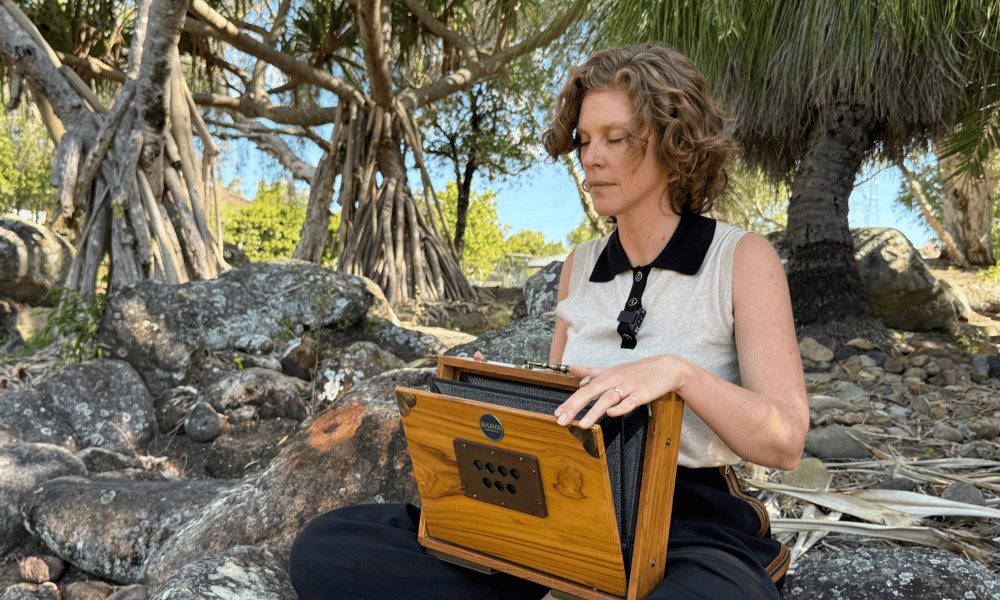
Dr Gemma Perry, a psychological scientist and yoga teacher, will lead a live, participatory session at HRFest Australia this November designed to strip the mysticism out of sound meditation and replace it with hard data on stress.
The session, titled The Science of Sound: Regulating the Post-AI Nervous System, will invite HR leaders to experience a collective "nervous system reset" while Perry unpacks the neuroscience behind why humming, chanting and rhythmic sound can calm an overloaded workforce.
Perry, who has spent a decade studying the psychology of chanting, says the timing is deliberate. Workplaces are more fragmented than ever, and leaders are increasingly outsourcing decisions to artificial intelligence rather than sitting with discomfort long enough to think clearly.
"We've all got a few calendars, a few emails to keep up with, and people constantly getting in touch with us, and we're multitasking all day," Perry said. "Our attention is so fragmented, and we'll be looking at practices that can help to train our attention to get us back into kind of a focus state where we're able to make better decisions and not have to outsource all of our decisions to AI."
A scattered nervous system
Perry's HRFest session responds directly to a workplace mental health picture that Australian HR teams already recognise. The 2025 TELUS Mental Health Barometer found 61 per cent of Australian employees feel somewhat or extremely burnt out, with high workload cited as the leading driver – a trend HRD Australia has tracked as AI adoption both fuels and eases burnout in Australian workplaces.
Against that backdrop, Perry's pitch to HR leaders is unusually direct: the fix does not require an app, a retreat or a belief system, just a few minutes of vocalised sound.
"We can just sit down and hum or make these sounds and regulate our nervous system pretty quickly," Perry said. "And when we do it together in teams and that kind of thing, we find in the research that it also promotes this connection and a sense of belonging, which is also so important in the workplace, like, especially in terms of psychological safety."
What the research actually shows
Perry's confidence is backed by her own published research rather than tradition alone. In a controlled study of group chanting published in the Journal of Religion and Health in 2024, Perry and colleagues Vince Polito and William Forde Thompson measured salivary cortisol – the body's primary stress hormone – before and after 12 minutes of group "Om" chanting. Both vocal and silent chanting produced significant drops in cortisol, while self-reported anxiety fell more sharply after vocal chanting than silent chanting.
A separate 2021 survey of 464 chanters across 33 countries, published in Brain Sciences, found that 60 per cent of participants reported experiencing a "complete mystical experience" during chanting, with higher scores linked to traits including absorption and religiosity – though Perry stresses the psychological benefits do not depend on spiritual belief.
Her most recent work, a 2025 systematic review in Wiley Interdisciplinary Reviews: Cognitive Science, examined 24 neuroimaging studies and found consistent activation of brain regions involved in attention and emotional regulation, including the prefrontal cortex, insula and cingulate gyrus, alongside deactivation of the default mode network – the brain system associated with mind-wandering and rumination – and increased theta wave activity linked to relaxation.
For HR leaders wrestling with the demands of Australia's tightened psychosocial safety obligations, discussed at length in HRD Australia's coverage of why psychosocial safety is now central to job security, Perry's data offers a low-cost, evidence-based addition to existing wellbeing strategies rather than a replacement for structural fixes.
Making it stick in a real workplace
Perry is realistic about how these practices land in a corporate setting. Uptake depends on framing sound practice as a skill to be learned and repeated, not a novelty to be endured once.
"I would actually organise a team, like a workshop that's facilitated in some way that people learn the techniques and then there's a few ways in which people can carry that over," she said, adding that follow-up sessions individualised to each person's stress triggers tend to sustain engagement better than a single all-staff activity.
She is equally candid about resistance. Employees can feel wary of "another activity that we have to participate in," Perry said, but reports that novelty and variety – mixing serious, focus-building exercises with lighter, more playful ones – keeps groups engaged over time.
That same tension between structural burnout, discussed in HRD Australia's report on the burnout crisis in Australia's executive ranks, and individual coping tools is one Perry says leaders need to hold rather than resolve.
"I would just emphasise the point that it's so easy, it's simple, it's efficient and accessible," Perry said of sound practice. "You've just got this once you know the technique, you've just got it in your pocket like all day, every day."
Attendees at Perry's HRFest Australia session can expect no slides and no lecture – just a live demonstration of what she says the data has shown for a decade: that a roomful of stressed-out professionals can shift their physiology together, in minutes, without needing to believe in anything at all.