What are the top drivers of stress and burnout in the workplace?

The share of employees experiencing workplace stress hit an all-time high in 2026, according to a new report, with heavy workload and long hours emerging as the top drivers of stress.
The 16th annual Aflac WorkForce Report revealed that stress and burnout have become common across the workforce, with employee wellbeing emerging as a broader concern.
According to the report, 75% of employees are now experiencing workplace stress, including 35% who are suffering from high or very high stress levels.
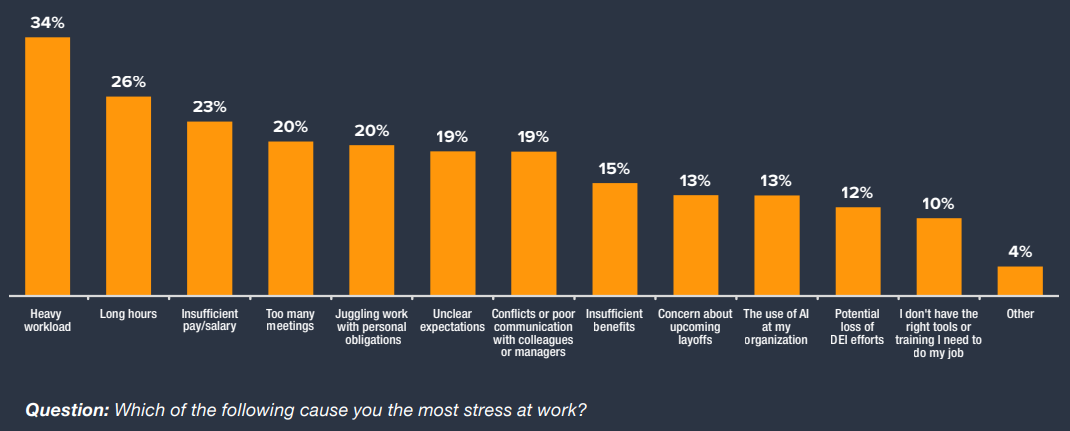
More than a third of employees (34%) cited heavy workload as their top stressor at work, followed by long hours (26%) and insufficient salary (23%).
Burnout at work
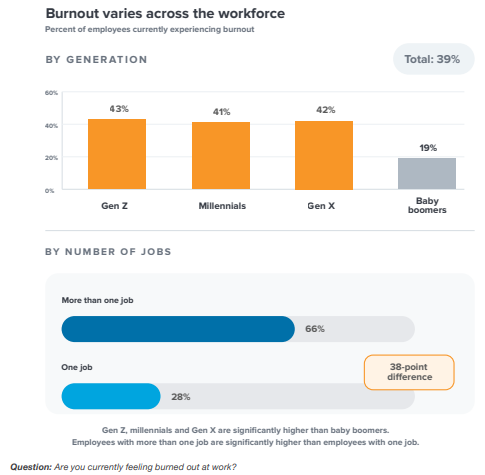
Meanwhile, the report also found that 39% of employees are currently burned out, with younger employees and those with more than one job more likely to say they are experiencing it.
"Workplace strain is not experienced uniformly across the workforce," the report read. "Younger employees may be navigating the early stages of work, while multiple-job employees are managing a direct constraint on time, energy, and financial security."
The report warned burnout has "significant" consequences in workplaces, saying that its impact can affect more than just the individual employee.
According to the findings, burned-out employees report lower job satisfaction, are less likely to believe their employer cares about their mental health, and are substantially more likely to expect to look for another job.
"These relationships do not establish that burnout alone produces each outcome, but they show that burnout is embedded in employees' broader experience of the workplace," the report read.
What can employers do?
Employers already have an indication of the current state of employee wellbeing as 45% of them noted that mental wellness claims have increased in the last year, according to the report.
But it warned employers that burnout cannot be addressed with a wellness resource alone, noting the variety of factors influencing it.
"Work design, management, flexibility, benefits, and financial security can each affect how manageable work feels, even though no one factor alone accounts for the full experience," the report read.
"What is clear is that employers should look beyond overall burnout rates to understand which groups are experiencing the greatest strain and may need more support."
It stressed that no benefits programme can compensate for unsustainable workloads or poor management, as it urged employers to tailor their wellbeing strategies based on what's causing employees strain.
It noted that flexibility, mental health resources, added financial protection, and visible employer support can reduce specific sources of strain for employees.
"Heavy workloads, financial pressure and limited flexibility all contribute to burnout, but they require different combinations of workplace changes, benefits and support," the report added.